


MOUTASEM PHOTOGRAPHY/Shutterstock
We may receive a commission on purchases made from links.
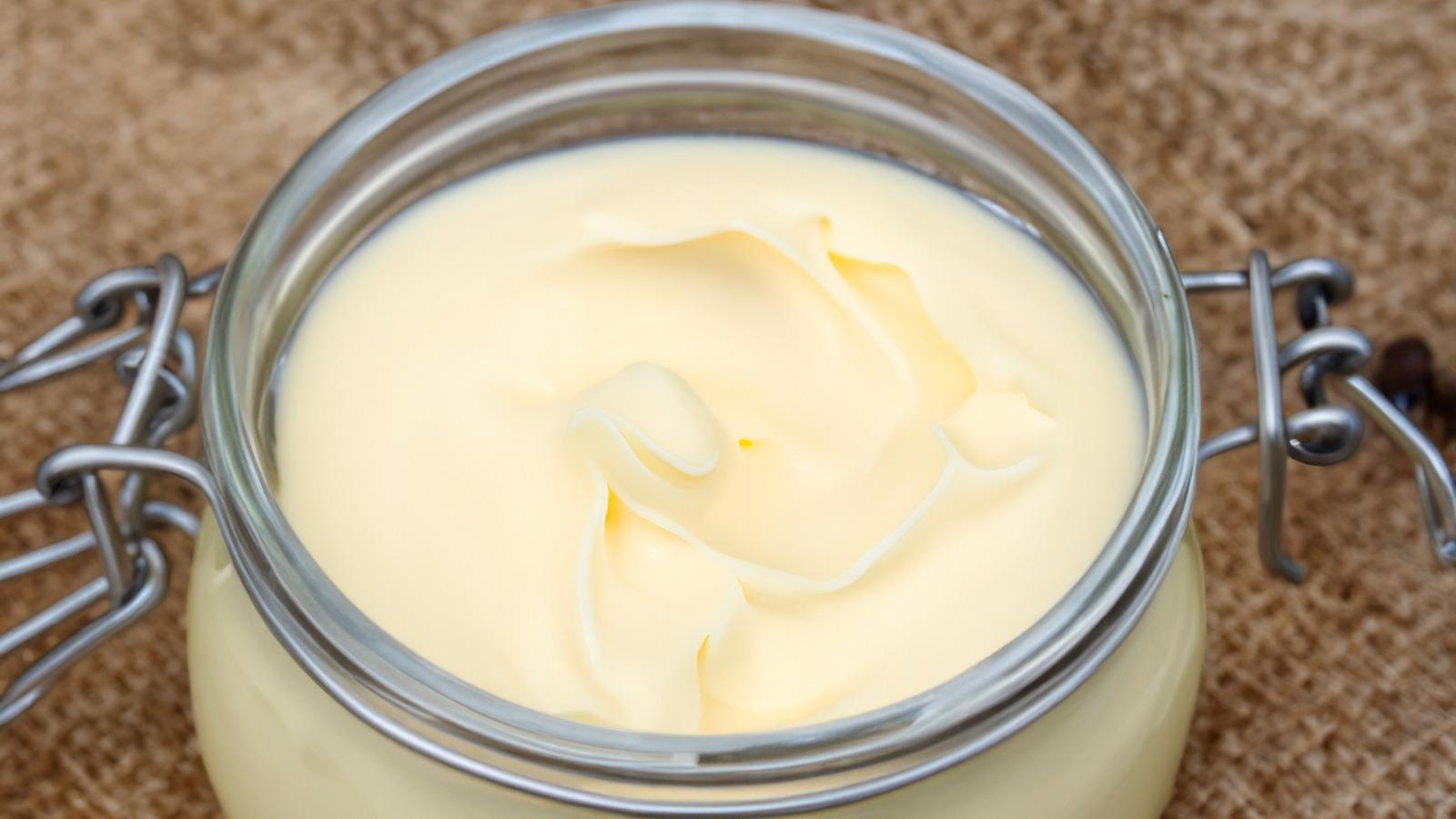
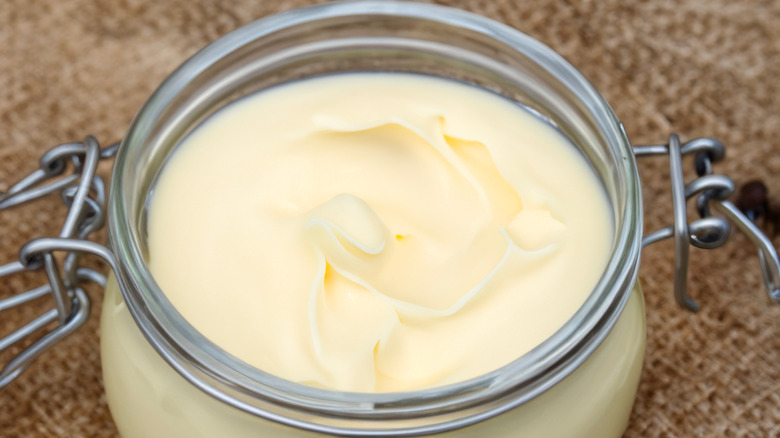
From beef tallow fries to the fat's new position near the top of the American food pyramid, beef tallow is picking up steam. In 2025, beef tallow saw a whopping 96% increase in sales. It's among the foods health and human services secretary Robert F. Kennedy Jr. eats in a day, and is earning a reputation as nutritious — although this remains contested by scientists. If you've hopped on the trend, you may be wondering how long beef tallow lasts. As a general rule, beef tallow should last between 12 months and more than two years, but you need to store it correctly.
There are three ways to store tallow: at room temperature, in the fridge, or in the freezer. Due to what tallow is, a white fatty tissue substance surrounding organs, it's more shelf-stable than other animal-based products. The method of storage, however, varies its shelf life considerably. Tallow can last for about 12 months at room temperature, 18 months in the fridge, and two years or more in the freezer.
There are other variables to consider. Room temperature tallow can last as little as 10 months or as long as 18, depending on factors like product quality and exposure to moisture or sunlight. Homemade tallows tend to spoil more quickly as home-rendering lacks professional safeguards (like monitoring water activity) that prolong longevity. To know if your tallow has gone bad, look for signs like foul odors, yellowing, separated layers, and a coarse or gelatinous texture.
Best practices for storing beef tallow
Smith Collection/gado/Getty Images
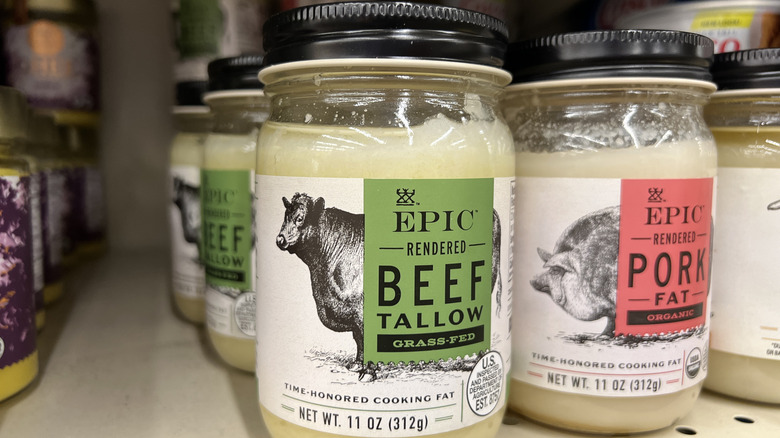
Proper storage helps you make the most of your beef tallow. First, the container matters. Ideally, store beef tallow in a glass jar or stainless steel container. Avoid other types of metal containers, as they can impact your tallow's flavor. Containers should always be airtight to prevent oxidation. Be sure to fully seal your container after using your tallow. Containers should also be labeled with a date to keep track of their shelf life.
It is not necessary to refrigerate beef tallow, but it should be stored at temperatures below 70 degrees Fahrenheit in a dark location with minimal exposure to light and moisture. Temperatures should also be fairly stable, so storing your tallow near your oven, for example, is a bad idea. The same basic rules apply to refrigerated storage. Opt for a dark, dry area in your fridge that sees minimal changes in temperature.
To freeze tallow, use an airtight, freezer-safe container or a freezer bag. Tallow expands when frozen, so leave some headroom in whatever vessel you use. Fully seal and date the container. When you're ready to use frozen tallow, place it in your refrigerator overnight to thaw.

 Arabic
 French
 Spanish
 Portuguese
 Deutsch
 Turkish
 Dutch
Dutch
 Italiano
 Russian
 Romaian
 Portuguese (Brazil)
 Greek
Greek