


Fokusgood/Getty Images
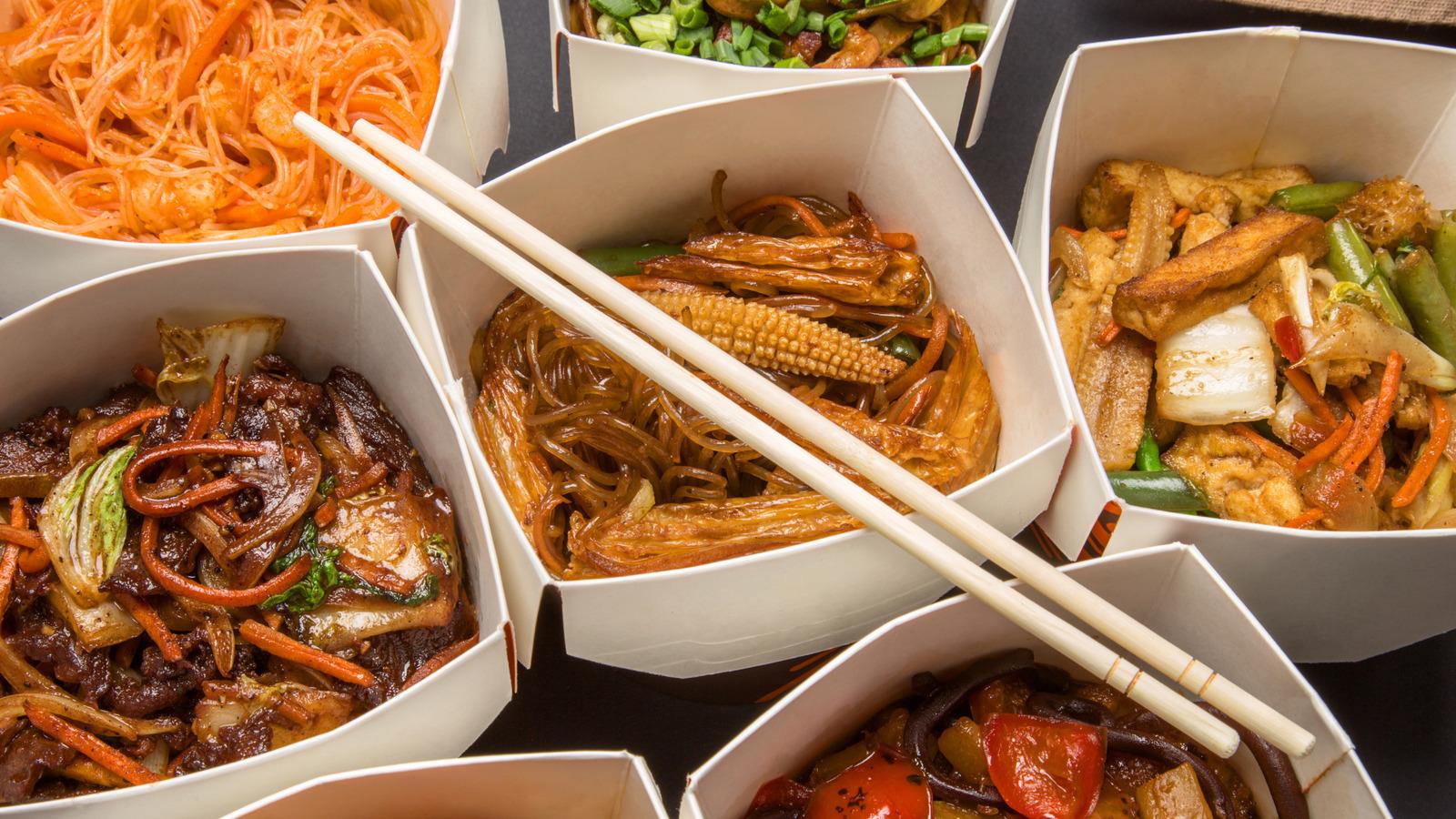
If you're like us, your home has a designated wooden chopstick drawer that's been growing since time immemorial. Or maybe you have the opposite problem and find yourself with a dearth of essential utensils. There are plenty of ways to creatively repurpose extra chopsticks, like using them to snack on Flamin' Hot Cheetos, thereby saving your fingers from neon-orange dust. But what about reusing those disposable chopsticks you get with succulent Chinese takeout? The good news is that disposable wooden chopsticks can be used again, provided that you care for them correctly after meals.
Immediately after eating, gently hand-wash the chopsticks with dish soap and water. Rinse thoroughly, then place the chopsticks in an area that gets decent airflow. You can repeat this cleaning process a few times, but discard the chopsticks when you notice any cracks or splinters. Disposables are often made with less robust materials, like birch wood, which doesn't offer the durability and antibacterial properties of bamboo. That's why people rub cheap wood chopsticks together to remove splinters, even though it's considered a major dining faux pas because it infers that your host has terrible taste in tableware.
Disposable chopsticks won't last forever, but you have alternatives
Allison H. Smith/Shutterstock
Think of your home's chopstick drawer as a microcosm of the world. Consider that billions of disposable chopsticks are manufactured each year, which contribute to ever-expanding landfills around the globe and massive deforestation throughout Asia. Greenpeace has even undertaken campaigns to call attention to the chopstick problem, but sadly, they remain a staple of dining establishments.
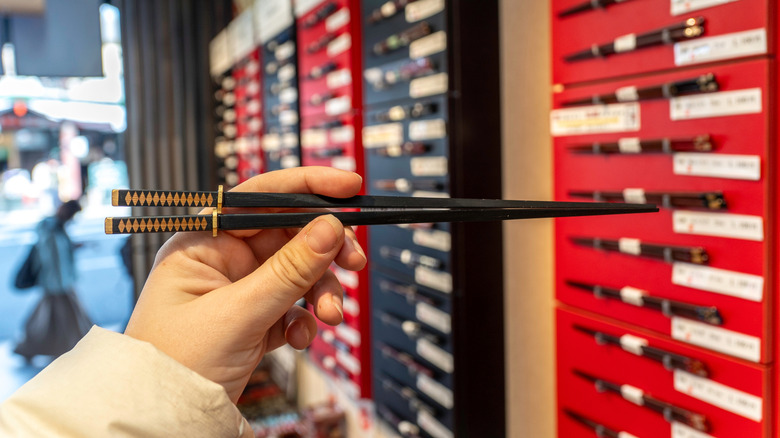
While it's ultimately up to restaurants and food service companies to cease using disposables, reusing cheap wood chopsticks is a modest but meaningful way to do your part for the environment. Investing in a pair of reusable chopsticks is another great idea, and there are many solid options to choose from. For instance, you can snag a respectable set of wood chopsticks for less than $10, or you can go all out and splurge on a $50 stainless steel and bamboo set that comes with its own carrying case. While they're not commercially available, researchers at Tokyo's Meiji University even developed a pair of electric chopsticks, which replicated the flavor of salt in low-sodium foods to aid people with certain dietary restrictions.

 Arabic
 French
 Spanish
 Portuguese
 Deutsch
 Turkish
 Dutch
Dutch
 Italiano
 Russian
 Romaian
 Portuguese (Brazil)
 Greek
Greek