


Towfiqu ahamed barbhuiya/Shutterstock
We may receive a commission on purchases made from links.
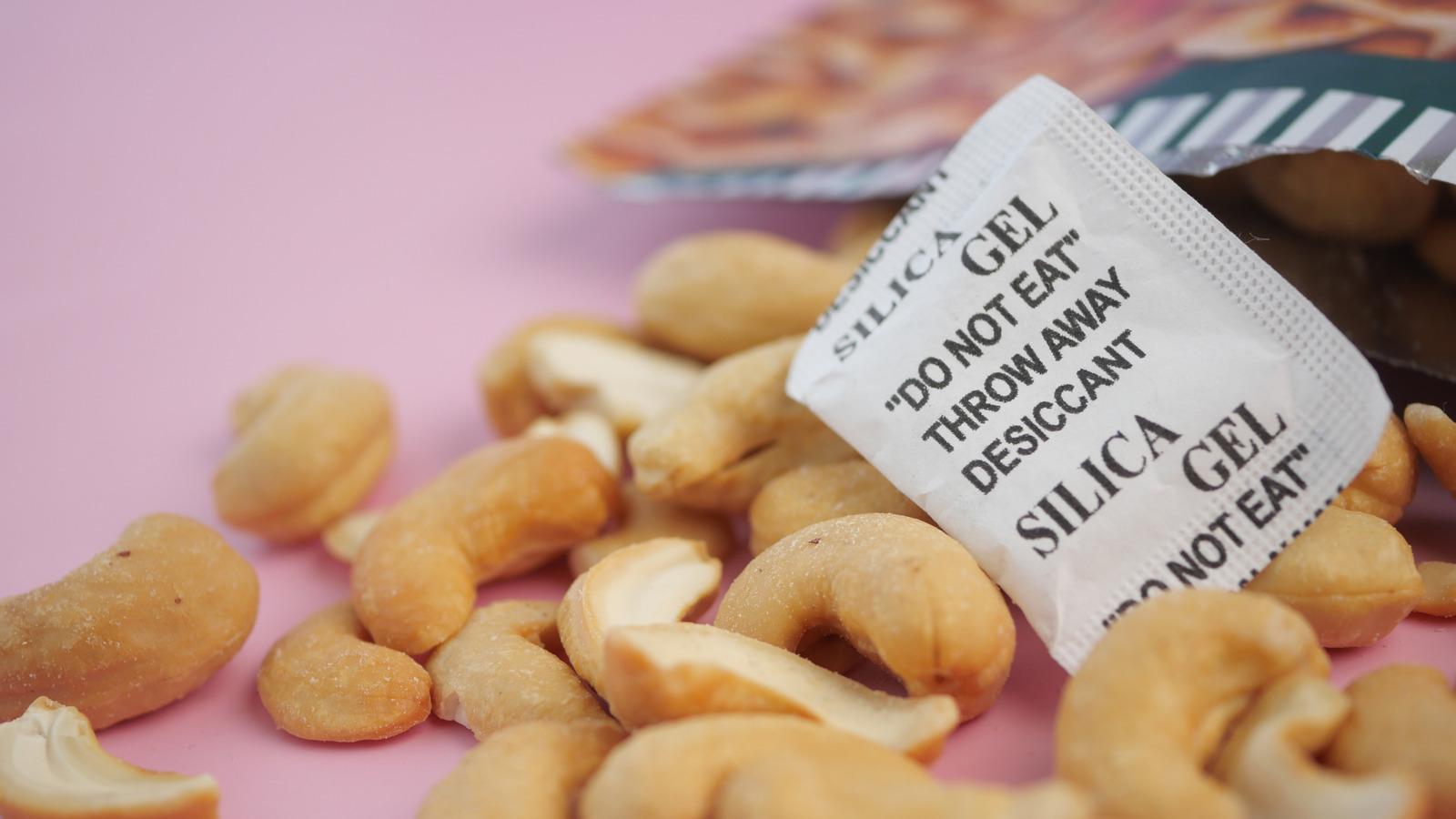
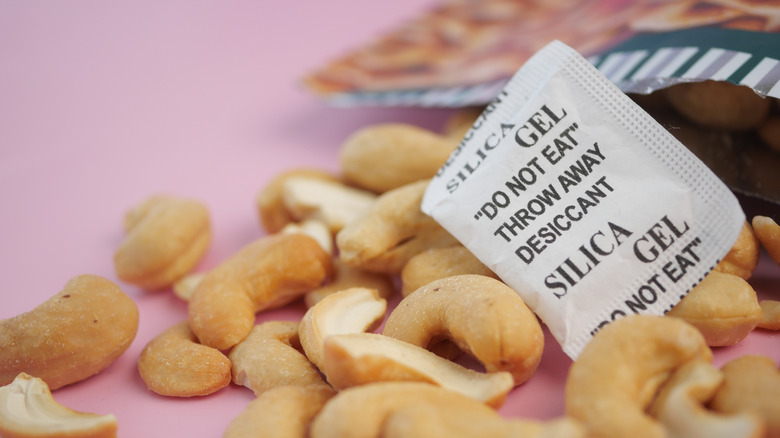
When was the last time you opened a pack of dried food, and a little, innocuous white packet was among the packet's contents? Odds are, it was somewhat recently, and the packet was clearly labeled with "silica gel", "desiccant", and "do not eat" (likely in all caps). You learned, probably from older family members or teachers, that this helps keep food fresh. How does silica gel work? And, can you reuse the packets?
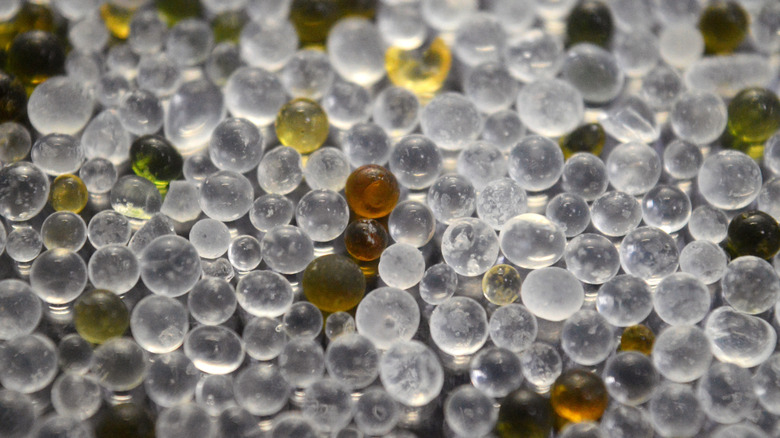
Silica gel, a form of silicon dioxide, is often manufactured as tiny, clear-colored beads or granules. They are sealed inside small, permeable packets, which are further distributed in commercial product packaging, be it electronics, clothing, or food. These packets physically draw moisture from their immediate surroundings. The surface of each bead is highly porous, allowing it to adsorb moisture (meaning, the moisture will stick to its surface), rather than absorb it (pull moisture into the bulk of its matter). The result is a drier environment that slows down food spoilage caused by mold and prevents staleness. Absorbent meat pads are made with silica gel, but a more malleable form of it.
We don't recommend reusing absorbent meat pads, which come in direct contact with uncooked meat, fish, and poultry, but silica packets found inside items like crackers, dried grains, and powdered spices are safe to reuse. You can place a silica packet in a closed container with almost any type of dry food product to keep it dry. A bag of ground coffee, a tin of mixed nuts, a box of beans — any of these can benefit from the moisture-wicking properties of silica gel, making it one of the food storage hacks to try to keep food fresher for longer.
Best practices for using silica packets with food
Tamer A Soliman/Shutterstock
If you have ever lived in a place with high humidity, you would quickly learn not to store certain ingredients, like garlic powder, at room temperature, as the granules soon retain enough moisture from the air to form a solid clump. Dropping a packet of silica gel into a food container before it gets degraded by excess moisture is among the simple strategies that help reduce food waste.
That said, silica gel can lose its efficacy over time. Thankfully, you can "recharge" silica beads by drying them out in the oven. According to Beyond Photo Tips, all you need to do is spread out the silica packets in an oven-safe dish and put them in an oven set at 250 degrees Fahrenheit for 1 to 2 hours. This slow, low heating dries up the moisture, freeing up the surface of the gel beads to adsorb moisture from the next food item you need help with. Be careful not to heat the packets at too high a temperature or for too long, as this can degrade the structure of the beads, rendering them much less effective.
Packets that have been "recharged" at least once will eventually need to be replaced. You can also purchase brand-new silica packets to pop into containers of dry food at home. Just make sure that they are labeled "food-safe" before you buy. Some versions of silica gel contain toxic color-changing dyes.

 English
 Arabic
 French
 Spanish
 Portuguese
 Deutsch
 Turkish
 Italiano
 Russian
 Romaian
 Portuguese (Brazil)
 Greek
Greek