




Print Collector/Getty Images
Among Europe's wine-producing nations, Serbia may not be the first place to come to mind. France, for instance, is famous for its wine, especially its longstanding tradition of Champagne production, while Sicily's eruptive Mount Etna is home to a multitude of volcanic wines. However, Serbia nurtures a wine culture that's lesser known — but no less historic. The country's wine heritage dates back to the 12th century's Nemanjic dynasty, with some of the best wines ever made in monasteries, but it's also linked to a pivotal 20th-century disaster, specifically a Serbian dessert that wine was served on the ill-fated Titanic.
"Bermet [wine] was so famous that very often you hear it was on the wine list of the Titanic," Bojana Sestovic, a Serbian tour guide, tells Mashed. Bermet, asweet dessert wine from Serbia's Fruska Gora region, appeared on the Titanic's wine list as a delicacy for guests to sip and savor. It was also enjoyed throughout European royal courts, rendering Bermet something of a regal wine.
Now, Bermet is produced by local and family-run wineries in Fruska Gora. There, between the mountains and the Danube River, the Serbian village of Sremski Karlovci excels in the dessert wine, Sestovic explains. Among the region's top wineries, the Museum of Beekeeping and Wine House Živanović produces Bermet in three distinct styles. This trio maintains the Titanic-era tradition, passing down Bermet's well-balanced sweetness and herbaceous flavor.
Taste Serbia's Titanic-worthy Bermet in red, white, and rosé varieties at the Museum of Beekeeping and Wine House Živanović
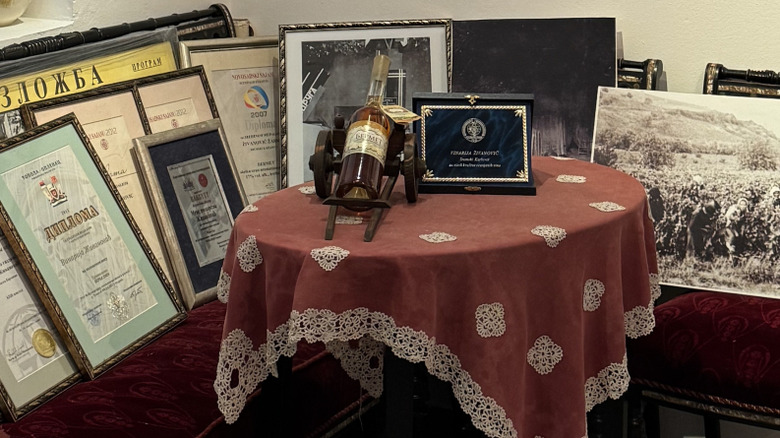
Anna Staropoli/Mashed
There's good news for wine drinkers who alternate between red and white wine: Bermet comes in both styles. The Museum of Beekeeping and Wine House Živanović adds a third kind of Bermet to the mix. Visitors can try red, white, and rosé Bermet. Whether they pick up a bottle or opt for a sit-down tasting, the wine is best paired with the museum's equally extensive honey varieties.
But how does Bermet taste? "The main characteristics of Bermet wine are sweet, fruity, and herbal," said Bojana Sestovic. However, she states that every winery puts its own twist on the blend, as recipes extend as far back as the 18th century and are often passed down within wineries. "Every — usually family — winery has their own recipe," explains Sestovic. "Serbian wine producers are very proud that they maintain [the] tradition of growing old and endemic sorts of grapes."
Regardless of which Bermet you try, the dessert wine, which is typically enjoyed cold before or after a meal, promises a sweeter sip than rakia, Serbia's national spirit made with raisins and grapes. Bermet has also long been believed to have medicinal properties, so, at the Museum of Beekeeping and Wine House Živanović, you're in for a drink that's both historic and possibly healing.

 Arabic
 French
 Spanish
 Portuguese
 Deutsch
 Turkish
 Dutch
Dutch
 Italiano
 Russian
 Romaian
 Portuguese (Brazil)
 Greek
Greek