


Gwenael Le Vot/Getty Images
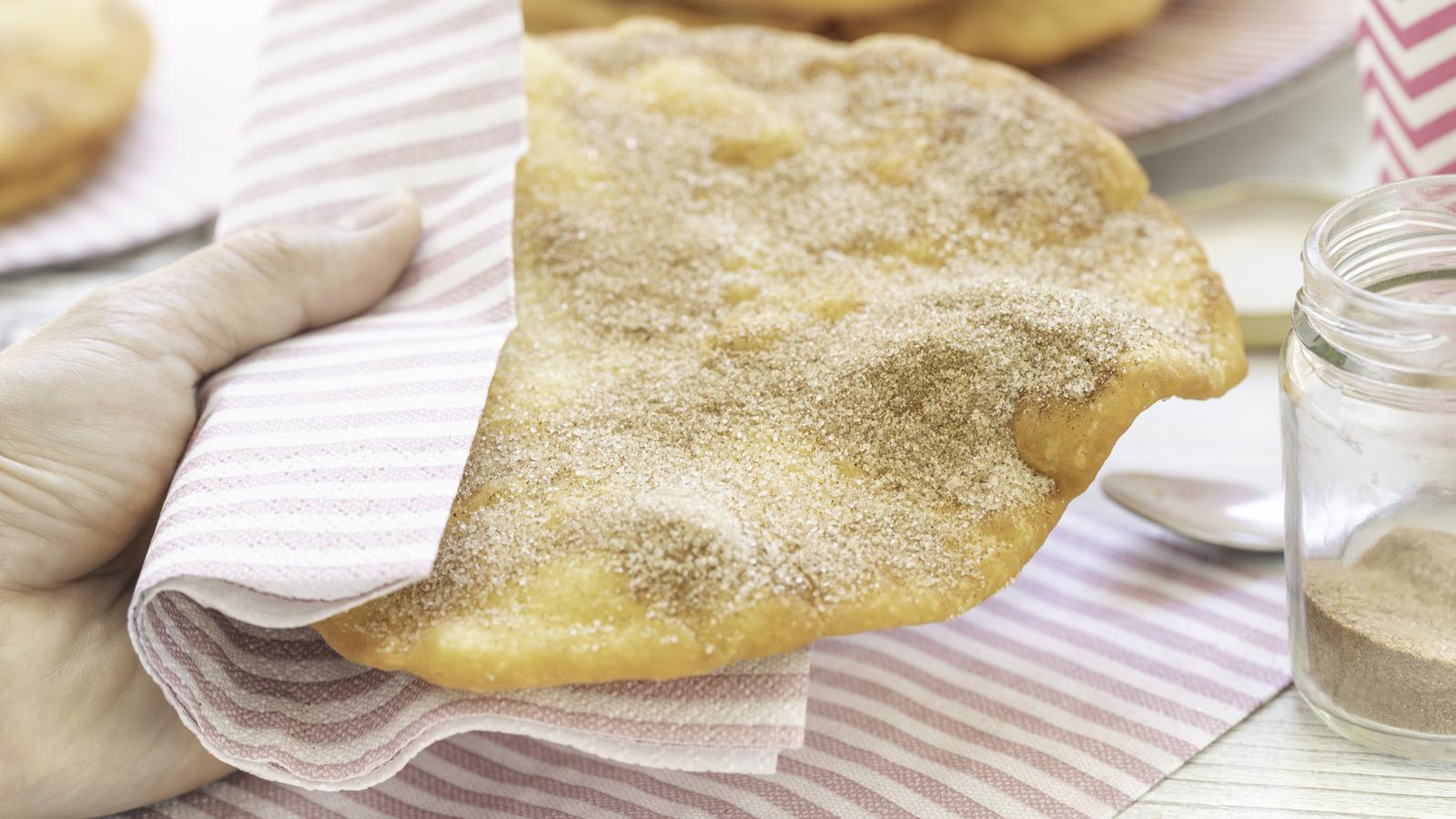
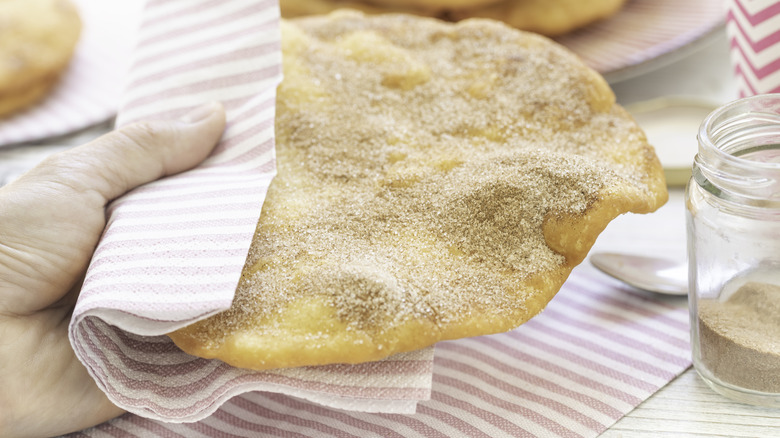
Some of the most exciting seasonal food in America has to be fair food, typically seen in the warm weather months, when state and county fairs pop up around the country. For the most part, fair food favorites include corn dogs, fresh lemonade, popcorn, candy apples, frozen bananas, barbecue, funnel cakes, deep-fried everything, and a tasty treat known as elephant ears. These flat, fried pieces of dough get their sweetness from a coating of cinnamon and sugar. They are warm, crispy yet chewy, and easy to carry around as you navigate through rows of carnival games, rides, and livestock pens. Depending on the seller and where you are in the country, you may also hear elephant ears referred to as fry bread, beaver tails (mostly in Canada), doughboys, fry dough, or frying saucers. As to why so many purveyors call them elephant ears, well, one glance tells you why.
The large, irregular shape of the treat looks remarkably like the floppy ears of the beloved pachyderms, but many point out that the confection's taste is similar to another fair favorite, funnel cakes. The difference between funnel cakes and elephant ears is that funnel cakes consist of a self-rising batter, and elephant ears are made from a yeasted dough (although yeast isn't always used) that is rested and manually stretched, which is why the shape isn't uniform. A finishing of melted butter and cinnamon sugar is just one of many ways an elephant ear can be served. You might also find them garnished with savory toppings, fruit pie fillings, custard, and chocolate. Of course, you don't have to wait for fair season to enjoy them; you can easily make elephant ears at home.
Elephant ears originated from Native American fry bread
Grandriver/Getty Images
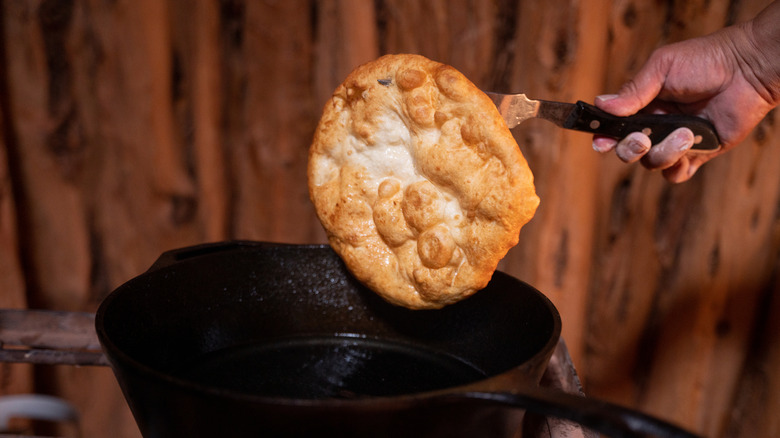
Sometimes, elephant ears go by the names American Indian fry bread or Native American fry bread. Some agree that traditional fry bread is a little thicker, as it often holds savory ingredients (like taco fixings). Still, the terms elephant ears and fry bread are often used interchangeably. Native American fry bread came first. In the mid-19th century, members of the Navajo Nation were forced to move from Arizona to New Mexico. They didn't just leave their homes behind, but their entire way of life, including what foods they had access to. As the Navajo people were forced out, the federal government (the entity behind their displacement) provided them with flour, lard, sugar, and canned ingredients. Fry bread was a dish they created using these pantry items.
Some groups reject the dish, observing it as a reminder of persecution, but other Native American groups celebrate it as a symbol of resilience, resourcefulness, and cultural pride. It's eaten by itself, with a variety of toppings, or as an accompaniment to stews, soups, and chili. In the Southwest, you can find fry bread used as a substitute for a hamburger bun, or treated similarly to how elephant ears are served, in other words, sweet (sometimes served warm with ice cream!).

 English
 Arabic
 French
 Spanish
 Portuguese
 Deutsch
 Dutch
Dutch
 Italiano
 Russian
 Romaian
 Portuguese (Brazil)
 Greek
Greek