




Tkpond/Getty Images
Of all the red flags to look for when buying bread, a long ingredient list is one of the foremost. Anyone who's made bread at home knows the recipe for a simple white bread loaf calls for very few ingredients: flour, yeast, salt, sugar, and oil. Store-bought varieties, on the other hand, can be packed with all manner of additives to improve flavor, texture, and shelf life. Unfortunately, these ingredients can also make the loaf not-so-healthy for the consumer. The mind-numbing variety of loaves on offer at the supermarket means the only way to get a handle on a loaf's nutritional value (or lack thereof) is to read the label.
The main culprits to look for are high fructose corn syrup, added sugars, soy lecithin, hydrogenated oils, flavor enhancers, and various agents. Such ingredients take a loaf from the processed to the ultra-processed category. While the former gets a bad rap, it includes essentially any food that's not whole farm produce. Therefore, many foods, including homemade bread with a short list of ingredients, are actually considered processed foods per the NOVA food classification system. It's the ultra-processed breads, made using industrial equipment and long lists of ingredients you usually don't find in a home kitchen, that you have to watch out for.
Is a long ingredient list for bread ever a good thing?
Lauri Patterson/Getty Images
Long ingredient lists are generally a substitute for time and cost since they allow mass production with cheaper ingredients. Such ultra-processed bread is often made using the Chorleywood method from the 1950s, which pioneered the use of additives in the dough to speed up the process. The resulting pillowy yet unhealthy supermarket loaves made with extra fats, emulsifiers, and refined flour are also much easier to gobble up, so one is likely to eat more of them (compared to wholegrain or sourdough breads) before feeling full.
Herein, however, lies the caveat — sometimes even breads with short ingredient lists aren't the best. Take brioche, for example. The popular French loaf is more pastry than bread and made with large amounts of butter (mostly saturated fats). The ingredient list is short, but with some recipes calling for almost 25% of the loaf's weight in butter, the bread is certainly one that requires careful moderation.
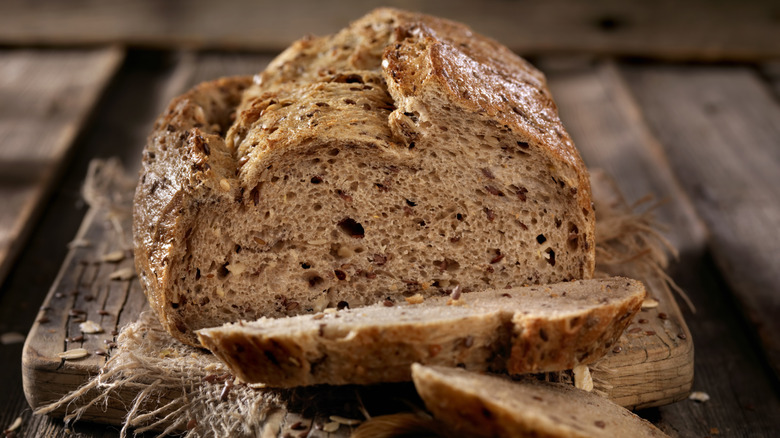
Similarly, a long ingredient list can sometimes be a positive signal when picking grocery store bread, as in the case of multi-grain breads. If it's made with a variety of whole grains, the label lists them out. Since they are in the order of proportion contained in the loaf, look at the first few ingredients to see what the bread predominantly consists of. Nutritionally fortified bread is another example of a long ingredient list signalling a healthy option. Vitamins, minerals, and proteins added to fortify the loaf are listed in the ingredients. This is the kind of long list worth picking up. Still, watch out for refined sugars and oils, which sneak into foods that claim to be healthy.

 Arabic
 French
 Spanish
 Portuguese
 Deutsch
 Turkish
 Dutch
Dutch
 Italiano
 Russian
 Romaian
 Portuguese (Brazil)
 Greek
Greek