


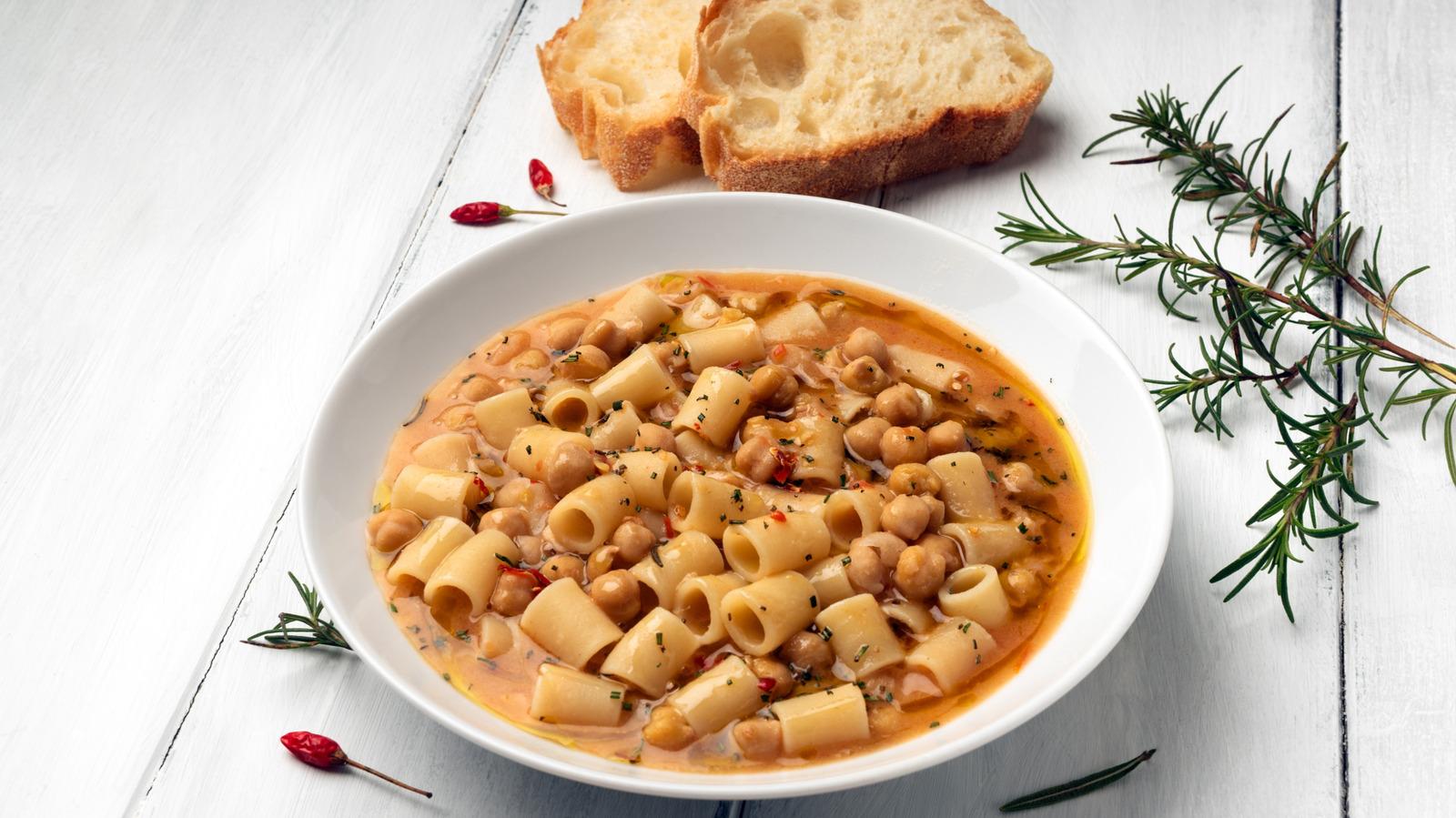
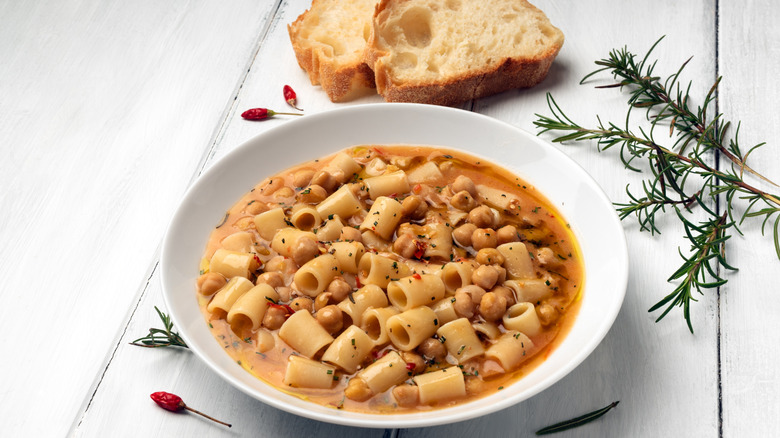
Alessio Orru/Shutterstock
If you're bored of pasta, you're probably doing it wrong. Many pasta dishes eaten outside of Italy can get repetitive. They often feature tomato sauces or ragus, creamy sauces like Alfredo, or one kind of pesto or another. But, it doesn't have to be like that; there are so many lesser-known pasta dishes that often get passed over for the more popular classics.
I grew up in an Italian family. My dad was born and raised in Italy and I spent long summers there when I was a kid, eating my nonna's cooking and developing a lifelong obsession with pasta. I know all about the pasta dishes that rarely make it onto restaurant menus in the U.S., but are beloved in homes all over Italy. It's a shame that such delicious home cooking should get overlooked, so I'm about to put it to rights.
I'm going to talk you through some of my favorite pasta dishes that you probably haven't heard of. Whether you're stuck in a dinner rut and want to find some inspiration or you're curious about what gets served in real Italian homes, you're about to learn a thing or two. Here are 11 overlooked pasta dishes you need to try, according to an Italian.
Pasta e lenticchie
noemi_foodpictures/Shutterstock
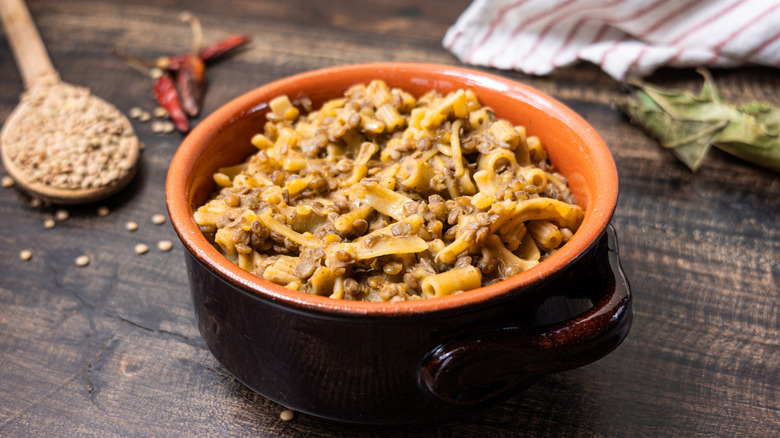
Pasta e lenticchie translates to pasta and lentils. If that doesn't sound all too exciting to you, stick with me. This is one of my go-to dishes, especially in the cooler months when warming, hearty meals are the order of the day. Whenever I make it for friends and family, it's a hit. And that surprises even me. It seems to be one of those dishes that is way more than the sum of its parts. Though, to be honest, that could be said about a lot of Italian home cooking.
Like most pasta dishes, there are hundreds of different ways to make it, rather than one master recipe. But, a big part of getting a good flavor is cooking the lentils from scratch. One of the mistakes people make with lentils is using the canned variety, which you'll risk overcooking. Any brown or green lentils will do — Italian ones are great, but any you can pick up at the store will go just fine. Avoid red lentils, though, as they won't give you the right flavor or texture.
The way I make it is to sauté diced onion, celery, and carrot until soft, then add lentils, a couple of large sprigs of fresh rosemary, and some bay leaves, then simmer the whole lot in salted water. Once the lentils are soft, you add dried pasta and more salted water — just enough for everything to cook through. Once the pasta is done, it's ready to eat. Serve it with a drizzle of good extra virgin olive oil.
Pasta con broccoli ripassati
Ghischeforever/Shutterstock
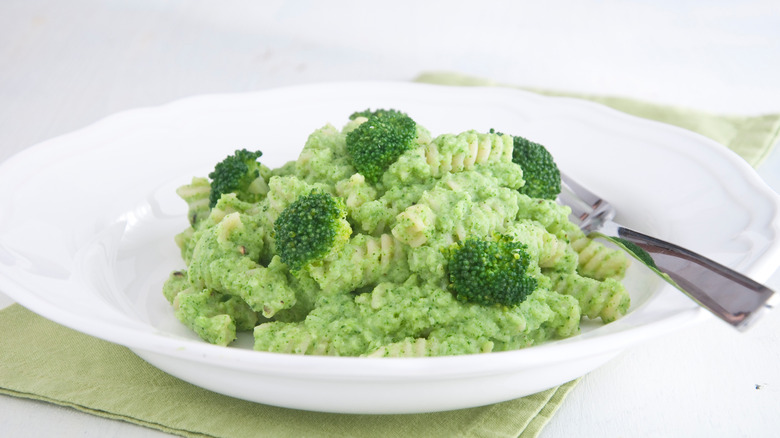
You might have tried broccoli pasta dishes in your time, like our easy broccoli pasta salad recipe, but we bet you haven't had anything quite like this one. Rather than containing pieces of broccoli in a cream or tomato sauce, pasta con broccoli ripassati has a sauce that is made pretty much entirely from the green vegetable itself. "Ripassati" literally means repassed; in this context, cooked twice. This is what gives the dish its unique texture and flavor.
I usually like crisp broccoli, but this homely pasta dish is the exception. To make it, you first boil florets of broccoli until they're soft enough to be easily pierced by a fork. You can also use the broccoli stems, as long as you peel away any fibrous skin. You then transfer the cooked veggies to a pan with a generous glug of olive oil, in which you've gently sauced minced garlic. It's fine to take a bit of the water with the broccoli, as this will help form the sauce.
As the broccoli stews in the pan, mix it up and mash it slightly with your wooden spoon or utensil of choice. This will help it turn creamy and saucy. Meanwhile, cook the pasta (you can use the broccoli cooking water), then transfer it to the cooked broccoli sauce. Finally, add a bit of pasta cooking water to emulsify the sauce. This is one of the tastiest ways to eat your greens.
Pasta e piselli
from my point of view/Shutterstock
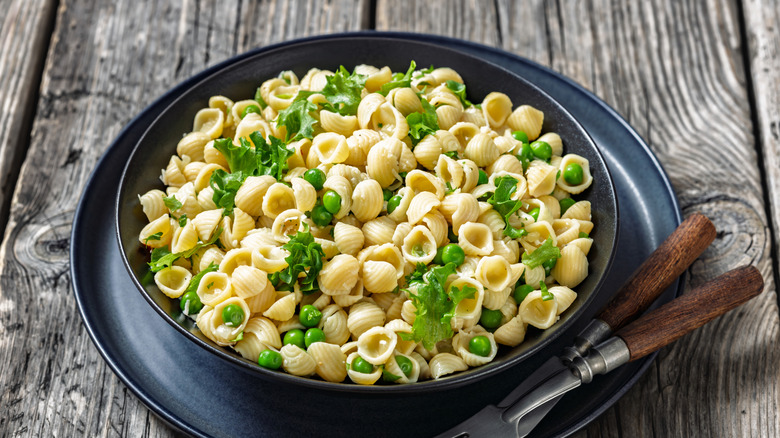
Pasta e piselli is pasta and peas. And if that sounds basic, well, hopefully you've got the gist by now. Growing up, I didn't like peas, except when my nonna made them. That's the power of Italian cooking. It makes everything more delicious. But, the fact is, it doesn't take much to cook peas the Italian way. Just an onion sauteed until sweet and aromatic before adding the peas, and you're already most of the way there.
To make pasta e piselli, you start this way, by cooking peas with an onion — frozen peas will do the trick and, in fact, often have a less mealy texture than fresh peas, as they're frozen within hours of being harvested. Once the peas are cooked through, you can choose to blend about half the mixture, if you want it creamier and saucier.
After blending, return it to the pan with the rest of the peas and incorporate into the cooked pasta, along with some of the cooking water. Or you can simply stir the pasta through unblended peas and add a drizzle of olive oil for a chunkier version. Either way, this is a quick and easy dish made with ingredients you may well already have on hand. It's one of the more unexpected ways to use peas, but it's worth a try if you have some in your freezer.
Pasta con porcini
Food magic/Shutterstock
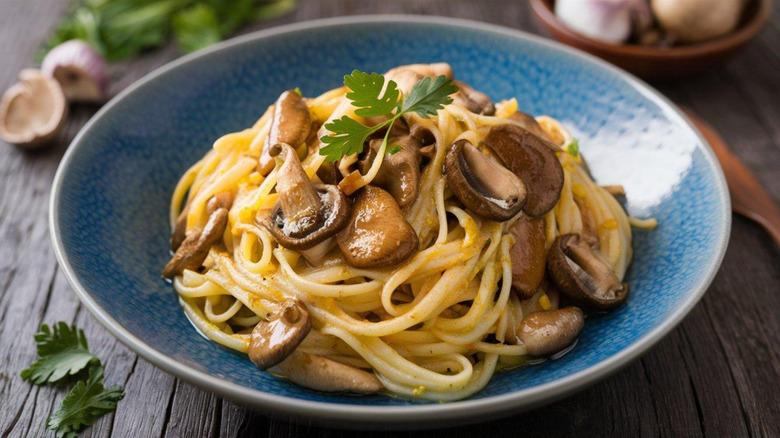
The deep, rich flavor of porcini mushrooms is a staple in Italian cooking. Although they grow around the world, these mushrooms have become particularly associated with the cuisine of Italy. Of all the types of mushrooms, these are among the most intensely flavorful, so if you think you're not a huge mushroom fan, you might be surprised. Pasta con porcini is a simple pasta dish, but one that's sure to make it into your regular dinner rotation once you try it.
This dish is often made with tagliatelle, and it's my favorite choice of pasta shape for this one, but you can make it with whatever you have in the pantry. In its simplest form, you just sauté porcini mushrooms in butter with some garlic, and then stir it through pasta. But, there are a range of ways to level it up, such as adding a glass of white wine or some fresh herbs. I recommend trying it the basic way first, though, as you might find it's perfect as is.
While fresh porcinis are often used in Italy, they're harder to come by in the U.S. If you can't find them, dried porcinis do the trick, and have an even more intense mushroom flavor from the drying process. You can mix half dried porcini (soaked before adding to the dish) with half cremini mushrooms to balance out the flavors and textures.
Malloreddus alla Campidanese
Alessio Orru/Shutterstock
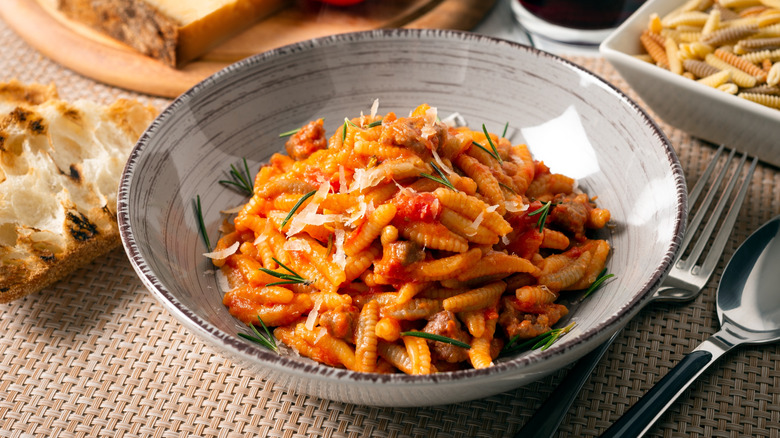
My family hails from Sardinia, which is where I would spend summers as a child. Malloreddus is a typical pasta shape from the island, also known as Sardinian gnocchi. Unlike the more commonly known gnocchi, it's made from durum wheat rather than potato, so it's essentially regular pasta in a gnocchi-like shape. Malloreddus alla Campidanese is a traditional Sardinian dish from the island's Campidano region, so it holds a special place in my heart.
It's essentially a ragu sauce with a slight twist. The meat used in the ragu is a type of Sardinian sausage with fennel seeds inside. I, personally, use vegan sausages and add fennel seeds separately for a similar result. The other big difference is that the sauce is infused with saffron. This adds a complex earthiness to the ragu that makes it unlike any you'd tasted before. A nice long simmer time helps meld the flavors together and add depth to the sauce, so this is a dish worth taking your time over.
Serve it with a good quality pecorino cheese. This is a Sardinian hard cheese made using sheep's milk, rather than cow's milk, so it will finish the dish off nicely. Some fresh basil leaves and a glug of extra virgin olive oil won't go amiss, either.
Pasta mollicata
DronG/Shutterstock
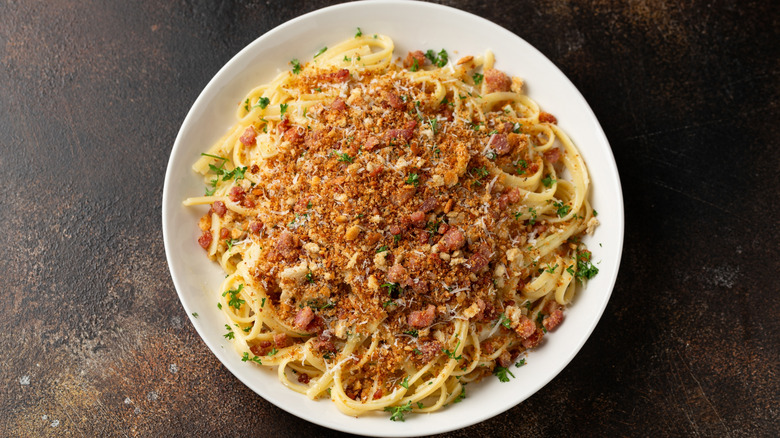
Pasta mollicata is pasta with breadcrumbs. I know how that sounds, but come at it with an open mind and you'll be rewarded with one of the most simple, yet delicious, dishes you've ever tried. The trick is not just using some dry old breadcrumbs you found at the back of your pantry shelf. Make those breadcrumbs yourself and the difference is enormous. In the South of Italy, homemade breadcrumbs have often been used as a cheaper alternative to cheese for finishing dishes, and they're surprisingly good at being a finishing touch.
All you need to do to make the breadcrumb part of the dish is blitz pieces of bread in a food processor until you get a coarse crumb. You don't want extremely fine crumbs here, but not huge chunks, either. Then you fry them in olive oil until browned and crispy. You can choose to add some garlic later in the frying process to add flavor without burning the garlic, which you might do if you added it too early.
Then you cook pasta and toss it with some olive oil and garlic, along with a little pasta water, which will emulsify and make a light sauce. Mix some of the breadcrumbs through the pasta and then top it with the remainder. Some chopped fresh parsley doesn't go amiss here either. Always use flat leaf parsley or nonnas everywhere will get mad.
Pasta e ceci
Salvomassara/Shutterstock
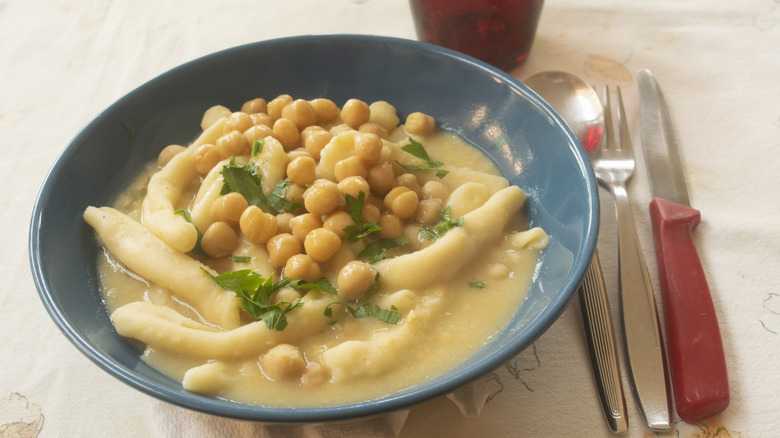
Pasta e ceci translates to pasta and chickpeas. It's another one of those dishes where everyone makes it a little different. Ask 100 Italians how they make their pasta e ceci and you'll get just as many answers, so don't feel like there's a right way or a wrong way to do it. If your main ingredients are pasta and chickpeas, you're heading in the right direction.
My nonna's version that I grew up with is chunky and brothy. It's a bit like a mix between minestrone and pasta e fagioli. You get a clear broth with whole chickpeas and chunks of other vegetables, like carrots, celery, and potatoes, plus some variety of small pasta shape — whatever she has on hand. But, the way I like to make it is by simmering chickpeas with fresh rosemary or bay leaves and blending them up into a smooth, creamy sauce. You can choose to blend some or all of the chickpeas, depending on how much sauce you like and whether or not you like it chunky.
Some people stick to just chickpeas, while others use more vegetables. Sometimes it's like a soup, other times it's more like a conventional pasta sauce. You can use chickpeas from a can for speed, or cook them from scratch for the best flavor and texture. It's a dish that you can make your own.
Spaghetti alla Nerano
Frank2512/Shutterstock
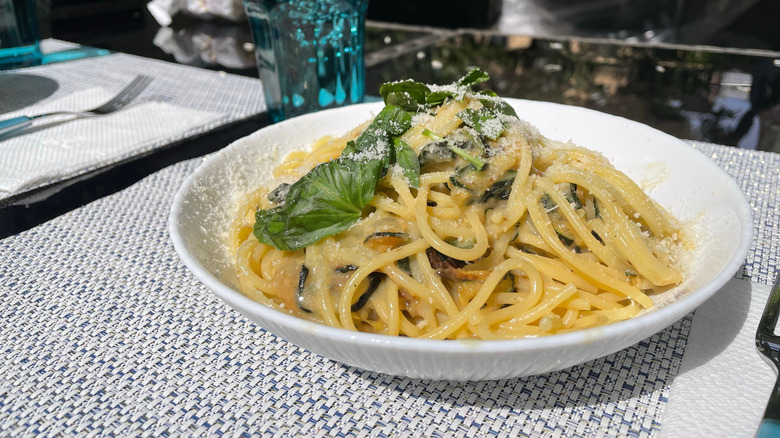
Nothing says summer to me quite like zucchini, and adding it to pasta is the logical step to someone who loves noodles as much as I do. Spaghetti alla Nerano originated in Sorrento and isn't something I grew up with, but it's a dish I've grown to love. It highlights the simple flavors of zucchini with just a little garlic to elevate it. Traditionally, it's made with spaghetti, though you can use other noodles if you prefer.
You start by thinly slicing and frying zucchini, being careful not to crowd the pan. You'll probably need to cook it in batches. Then you sauté a little garlic in the remaining oil and set it all aside until later. Frying the thin zucchini slices until browned brings out their sweetness. They don't have a punch flavor, but you might be surprised how tasty they are when you cook them this way.
Next up, cook the pasta, and when it's a minute or so from being done, drain it and add it to a skillet with the zucchini, garlic, and a ladle of pasta cooking water. Cook this for a couple of minutes, until the zucchini has broken down slightly and the pasta is perfectly done. You can also make a similar dish with sauteed shredded zucchini instead of slices.
Pasta e patate
glbN/Shutterstock
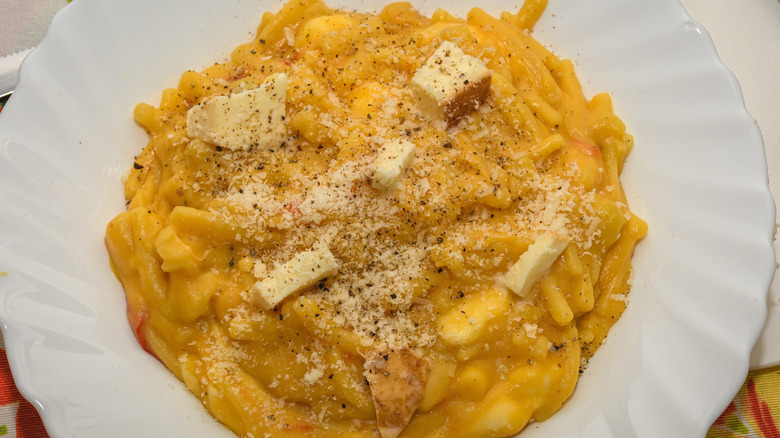
Pasta e patate is one of the tasty ways to cook potatoes that you never thought of before. Nobody thinks twice about eating carbs-on-carbs in Italy, whether mopping up pasta dishes with bread or eating French fries on pizza. So, it seems obvious that there would be a dish combining pasta and potatoes — and it really deserves more love outside of Italy.
The dish starts by sautéing onions and celery in a pot to build flavor. Some versions include pancetta, tomatoes, or more aromatics like garlic, carrots, and herbs. You then add small cubes of potato to the pot along with some lightly salted water, simmering until they're almost tender. Next, you add pasta to the same pot, add more salted water until it's just covered and continue simmering until the pasta is cooked.
As a one-pot dish, this meal is extremely simple to throw together and keeps the washing up to a minimum. The potatoes break down slightly as they cook, creating a starchy sauce that coats the noodles. Finishing it off with some fresh herbs, a glug of good quality olive oil, and some hard Italian cheese ties the whole dish together.
Pasta alla crema di porri
Kiian Oksana/Shutterstock
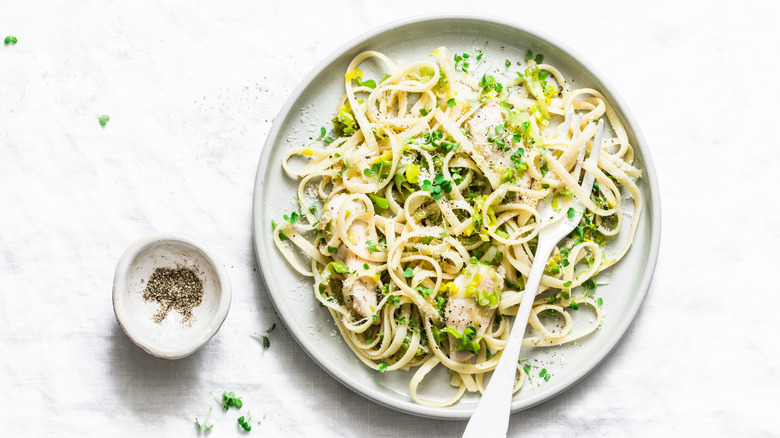
If you love leeks, this dish is for you. Pasta alla crema di porri is pasta with creamed leeks. It's often made with spaghetti, but other long noodles work well. You can also make it with robust short pasta shapes, such as rigatoni. Sweeter and milder than onions, leeks bring a lot to the party here, creating a dish that's extremely flavorful, but not overwhelming.
When I make this dish, I use just the white and light green parts of the leek, as these cook down nicely. You need to slice them thinly so they get meltingly soft and meld into the sauce. Cooking them slowly in butter or olive oil over a low heat is the way to go here. You don't have to watch the clock, necessarily, just wait until they no longer have any bite to them. Cover the pan while you're cooking them so they don't dry out.
Once they're done, add cream and seasoning. Some recipes also blend in egg yolks to get a similar emulsified sauce to carbonara, but just cream does nicely, too. Stir the creamed leeks into cooked pasta and you've got a pasta meal. Some homemade fried breadcrumbs — or pangrattato — finishes off the dish, adding some texture to contrast the soft leek cream.
Pasta con salsa fresca
Nunung Noor Aisyah/Shutterstock
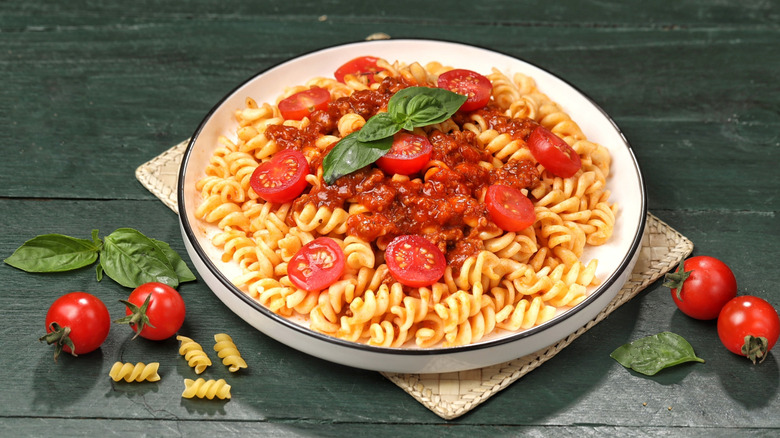
In Italy, no weather is too hot to turn the stove on and cook pasta, but sometimes you want the sauce to be fresh and light. Salsa frecsa is a fresh tomato sauce that's one of the go-to dishes my nonna makes in the warmer months. It uses uncooked tomatoes, creating a bright, summery dish that comes together in as long as it takes to boil some pasta.
While the noodles are cooking, you make the sauce. The way I learned to make it, you blend up the tomatoes, along with salt and pepper, extra virgin olive oil, fresh basil leaves, and a little tomato paste to thicken it up. However, some versions use finely chopped fresh tomatoes instead of blending them. Some garlic can make a nice addition, but too much of it raw can be overwhelming.
The main thing that makes or breaks the sauce is the tomatoes. You might want to do some research into different tomato varieties and find the sweetest, juiciest ones you can get your hands on. It's the kind of dish that's best made at the height of summer when tomatoes are particularly sweet and delicious. This isn't the place for sad, watery toms.

 English
 Arabic
 French
 Spanish
 Portuguese
 Turkish
 Dutch
Dutch
 Italiano
 Russian
 Romaian
 Portuguese (Brazil)
 Greek
Greek