


Here's who to trust with your privacy (and money).
By

Haley Henschel
Senior Shopping Reporter
Haley Henschel is a Chicago-based Senior Shopping Reporter at Mashable who reviews and finds deals on popular tech, from laptops to gaming consoles and VPNs. She has years of experience covering shopping holidays and can tell you what’s actually worth buying on Black Friday and Amazon Prime Day. Her work has also explored the driving forces behind digital trends within the shopping sphere, from dupes to 12-foot skeletons.
on
All products featured here are independently selected by our editors and writers. If you buy something through links on our site, Mashable may earn an affiliate commission.

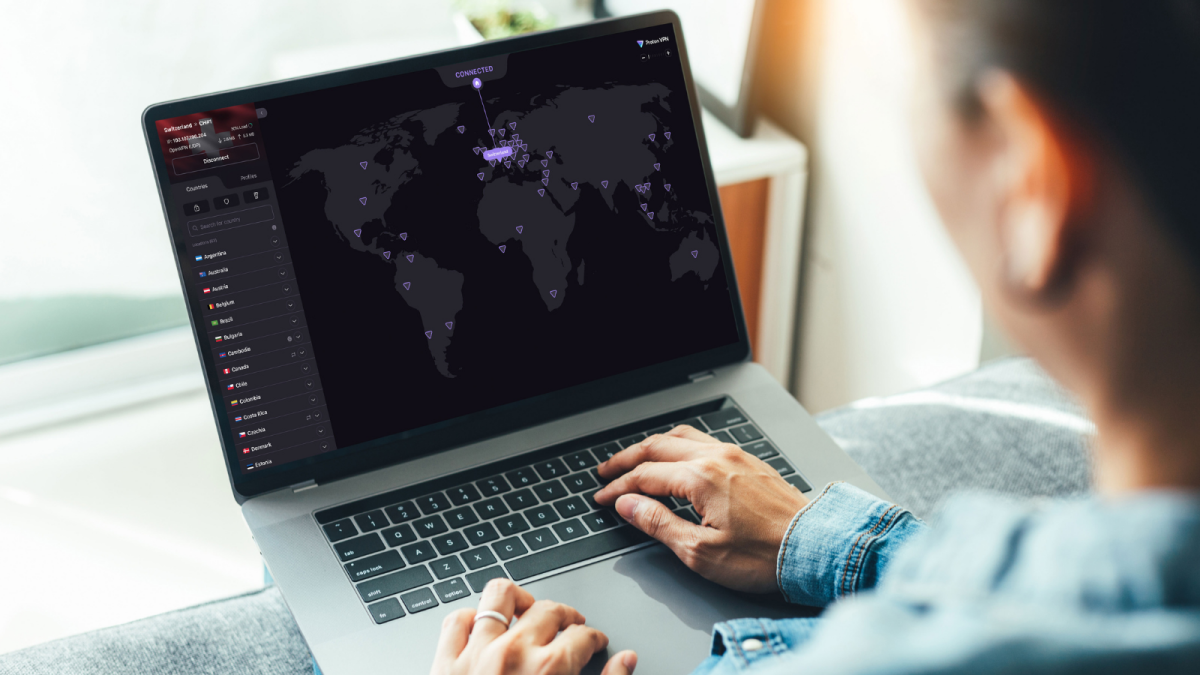
Credit: Proton VPN
Don't let it go to your head, but everybody wants you — more specifically, your browsing data. Personal information about the links you click on and the sites you visit is highly valuable to third parties, including your internet service provider (ISP) and Google, who may want to share or monetize it. Certain government and law enforcement agencies may also be eager to peek at your activity online for their own purposes.
One way to reclaim some of your digital privacy is by getting a virtual private network, or VPN, a service that creates an encrypted connection between your device and one of the VPN provider's private, remote servers before spitting it out onto the open web. In plain English, a VPN lets you browse the internet more stealthily than usual. With the best VPN services on your side, you can browse the internet without worrying too much about your privacy.
Overview
Table of Contents
Why do you need a VPN?
Even the best VPNs can't make you 100 percent anonymous on the web. Cookies and other trackers can still follow you around, and your ISP can see that you're using a VPN. But a good VPN will secure your traffic and hide your true IP address so that prying eyes on the outside can't see which sites you're visiting, what you're downloading, or your general location. The most trustworthy VPN providers operate transparently and abide by independently verified no-logs policies to prove that they don't collect or store any user data in the process.
For casual users, VPN services are useful tools for staying safe on public WiFi networks. For journalists, activists, and those in critical situations where digital privacy is paramount, the best VPN can be a legitimate lifesaver.
Beyond these scenarios, the top VPN services also have a popular secondary use case as location-spoofing tools. By connecting to a VPN server across a border or ocean, you can bypass geo-restrictions on content that isn't available in your own country or region. This is pertinent intel for folks in France, the UK, and 23 U.S. states where sites with explicit content are restricted by age verification laws.
The best VPN for 2026? Proton VPN.
I believe Proton VPN is the top VPN for most people. It's the most privacy-forward VPN I've tried, with open-source apps, a no-logs policy that's held up in court, and a history of supporting digital freedom efforts. It's also a stellar value: Paid Proton VPN users get full access to its huge fleet of reliable servers and useful features like multi-hop and split tunneling, with up to 10 simultaneous VPN connections per account. Their subscriptions also include bonus security tools like a password manager, encrypted cloud storage, and ad, tracker, and malware blockers.
The free version of Proton VPN is extremely limited in comparison, but it's the only free VPN I've encountered with unlimited data and zero ads. For all these reasons, Proton VPN is the first (and only) VPN to win a Mashable Choice Award.
FYI: Prices for most VPN providers' long-term plans change frequently. The rates listed here were accurate at the time of publication.
Our Pick

The Good & The Bad
- Excellent privacy practices, including regular audits, open-source apps, and bug bounty program
- No-logs policy that's held up in court
- Track record of supporting online freedom efforts
- Extensive server network with city-level selection
- Can unblock regional content
- Multi-hop ("Secure Core")
- Kill switch
- Split tunneling available on most platforms
- Anonymous payment options
- Fast customer support via live chat
- 30-day money back guarantee
- Offers free tier with no data limits
- Has only audited its no-logs policy since 2022
- Free servers can be crowded and unreliable
Who it's for
After years of testing, we still think Proton VPN is the best VPN for most people, including power users and those with critical VPN needs. It makes a point to prioritize user privacy, it has a gigantic network of servers that perform well, and it comes with all of the essential security features I look for in a premium VPN (plus a few extras).
ProtonVPN is very worth paying for, though it also offers a free tier that you can use whenever you'd like. It limits you to a handful of crowded servers and omits most features, but the simple fact that it doesn't have any data limits (or run ads) makes it the best free VPN in my book.
Read Mashable's full review of Proton VPN.
Why we picked this
Proton VPN is the first and only Mashable Choice Award-winning VPN, scoring high in our measures for trustworthiness, performance, user-friendliness, and value. The first one is most important and what really sets this service apart from its peers: Proton VPN seems to actively care about digital privacy, not just use it as a marketing tactic. It was the first VPN to open-source its apps in 2020, and it's had its infrastructure and operating procedures audited annually to verify its strict no-logs policy since 2022. Anyone can read the results of these audits without needing to make an account first. (It would be better if the company had started doing these audits upon launch in 2017, but it helps immensely that this no-logs policy held up in court back in 2019.) Proton VPN has maintained a transparency report for even longer — since 2018 — which shows that it's never complied with any legal requests for information to date. The company also has a long record of publicly supporting online freedom causes across the world. It practices what it preaches.
Performance-wise, the paid "Plus" version of Proton VPN felt great in my testing — mostly because it didn't feel like I was using a VPN at all. All the servers I tried were reliable and fast, no matter where they were located. (I was also successfully able to skirt a geo-restriction on a UK streaming service from my home in Chicago.) Proton VPN's gigantic server network now includes more than 18,000 locations in 129 countries as of February 2026; it's unrivaled in size and geographic diversity.
Proton VPN's sleek, cyberminimalist app contains a list of these servers and a map of them alongside some features to customize the type and extent of one's protection, including multi-hop servers ("Secure Core"), an ad/malware/tracker blocker ("NetShield"), a kill switch, Tor servers, and split tunneling. Plus, users get up to 10 simultaneous connections and on-demand support via live chat. There's a 30-day money-back guarantee if you decide it's not the right VPN for you, or if you want to downgrade to Proton VPN Free.
While Proton VPN's free tier has its restrictions, there's no limit on the amount of data you can use. It's subsidized by the provider's paid subscribers, so there are no ads, and you don't need to fork over any credit card information at signup. You do forfeit access to most of Proton VPN's features if you go this route, save for its kill switch and its proprietary "Stealth" protocol for avoiding censorship. You also lose out on full access to its server network, including the ability to choose which server you're connected to (i.e. location spoofing and content unblocking).
In my experience, most of Proton VPN's free servers were pretty full and slow. This would be less forgivable if you were actually paying for the service, and ultimately, I think it's usable for regular browsing if you can take the time to find a less congested server.
Details

The Good & The Bad
- Excellent privacy practices, including regular audits and bug bounty program
- No-logs policy has held up in a criminal investigation
- Kill switch
- Split tunneling
- ShuffleIP feature changes your IP address constantly
- Up to 14 simultaneous connections, depending on the plan
- Can unblock regional content
- Widespread server network with city-level server selection and a big U.S. presence
- Comes with bonus security features like an ad blocker and an email aliasing service
- Fast customer support via live chat
- 30-day money-back guarantee
- No multi-hop
- Fewer servers than the competition
- Long-term plans renew at much higher rates
- Has only been publishing transparency reports for two years; audits could be updated more frequently
- Parent company has a sketchy past
Who it's for
ExpressVPN is my top choice for anyone who needs a VPN while they're traveling. It's a well-established provider that offers city-level access to servers throughout the entire U.S. Plus, some of its plans come bundled with useful bonus tools — including an eSIM with several days' worth of unlimited data.
ExpressVPN launched a separate free VPN service called EventVPN in September 2025. I haven't tested the free version yet, but it seems promising: Users get access to servers in over 35 countries with zero data limits. (Proton Free restricts you to servers in 10 randomly selected countries, while TunnelBear's free tier caps you at 2GB of data per month.) The only catch is that EventVPN makes you watch ads before every session. I'll update this guide with my thoughts once I've tried it.
Read Mashable's full review of ExpressVPN.
Why we picked this
ProtonVPN may have the bigger global server network, but ExpressVPN has a few advantages over its competitor when it comes to travel. For one thing, it's the rare VPN provider with servers in all 50 U.S. states. (ProtonVPN and other premium VPNs stick to major U.S. cities.) Anyone working or living abroad won't have trouble accessing content back home. Additionally, ExpressVPN Pro and Advanced subscribers get access to a holiday.com eSim with a couple of days of unlimited data, among other extra privacy features that make its plans a decent value. An eSim will let your phone connect to a cellular network outside of your home country without a physical SIM card.
ExpressVPN's heavy U.S. presence also makes it great for unblocking local content — say, regional sports games or adult sites. (For legal reasons, I'm not telling anyone to break laws or violate streaming services' terms of use.) VPN servers that are close to your actual, physical location will be faster and more reliable than those further away.
Going broader, ExpressVPN has over 3,000 servers in 105 countries worldwide. That's a pretty small network overall, but there's still a good amount of global geographic diversity. ProtonVPN's network is bigger and more spread out, while TunnelBear has more servers but a vastly less extensive reach.
ExpressVPN's privacy and transparency practices are top-notch. Its privacy policy is thorough and clear on the kind of data it does and doesn't collect. Most importantly, it never logs users' browsing history and other sensitive data. This policy has been vetted in independent audits along with ExpressVPN's apps, server technology, browser extension, and more. (The company started doing these audits in 2018, and since 2022, it's undergone nearly 20 of them.) It's only been issuing biannual transparency reports since 2024, but its no-logs claim held up in court way before then. Like ProtonVPN, it offers a bug bounty program.
In my testing, browsing while connected to ExpressVPN servers felt no different than browsing unprotected. It didn't have a noticeable impact on my connection speed. It was also able to unblock streaming services in the UK, no problem. You get 10 to 14 simultaneous connections, depending on your subscription tier. All plans are backed by a 30-day money-back guarantee and include 24/7 live chat support.
The ExpressVPN app has a clean Corporate Memphis look, and it's super easy to navigate. As far as features go, you can turn on a kill switch and a split tunneling tool that lets you choose which apps and websites get sent through your VPN tunnel. ExpressVPN lacks common advanced VPN tools like multi-hop and Tor over VPN, which offer extra layers of protection. However, there is a neat built-in "ShuffleIP" feature that swaps your IP address every time you visit a new website, making you tough to track.
As a final note, I think it's important to mention that ExpressVPN's parent company doesn't have the best reputation in the cybersecurity space. My take is that the severity of its issues hinges on your use case. Privacy sticklers and users with critical VPN needs will probably use them as reasons to rule out ExpressVPN entirely, but more casual users might be inclined to brush them off. For more details, read my ExpressVPN review in full.
Details

The Good & The Bad
- Transparent, easily understandable privacy policy
- Regular security audits and transparency reports (available for anyone to read)
- Simple, adorable interface is very beginner-friendly
- Unlimited simultaneous connections
- Good-sized server network
- Some form of split tunneling ("SplitBear") available on all platforms
- Kill switch ("VigilantBear")
- Decent free tier for occasional use
- No money-back guarantee or on-demand support
- Not available on a ton of platforms
- No multi-hop connections
- Server network isn't very widespread
- Couldn't unblock regional content in testing
Our review
TunnelBear is ideal for users with simple browsing needs. I also recommend it to anyone who's never used a VPN before. If you didn't know what "VPN" stood for prior to reading this guide, look no further.
Like Proton VPN, TunnelBear also offers a free tier. It's less workable for everyday use because it has a 2GB monthly data cap — TunnelBear recommends treating it like a "try before you buy" option — but it has the advantage of country-level server selection. I rely on it often for quick location spoofing, though it can't unblock georestricted streaming services.
Read Mashable's full review of TunnelBear.
Why we picked this
McAfee's TunnelBear democratizes the VPN experience, forgoing supplementary security features and convoluted industry lingo in favor of a charming, basic app. It'll underwhelm power users, but first-timers should find it refreshingly approachable.
Users can connect to servers by sending a little bear to yellow pipes on its posterized map interface — pretty cute — or by selecting locations from a list. It was reliably fast during testing, if sometimes slow to connect initially. With more than 8,000 servers in 47 countries, TunnelBear's network is decently large but not very geographically diverse, and it couldn't unblock regional content. Split tunneling is available on all platforms, though it's usually limited to web- or app-based traffic, not both. There's no multi-hop.
TunnelBear gives users the option of signing up for a free tier, which includes one connection, country-level server selection, and 2GB of browsing data per month. Free users are funded by the provider's paid subscribers, per a TunnelBear rep, and there are no ads. If you decide to upgrade, a paid Unlimited plan unlocks unlimited bandwidth, unlimited simultaneous connections, and city-level server selection. Users should be mindful that TunnelBear doesn't offer any sort of money-back guarantee, and refunds are only available on a case-by-case basis.
TunnelBear gets special props for its accessible, plainly written privacy policy, and for its commitment to transparency. It was the first consumer VPN to publish a third-party audit of its infrastructure and technologies back in 2017. It's done one every year since, and the eighth and most recent one was published in November 2025. (You can read it in full without needing to make an account.)
TunnelBear also posts transparency reports about the government authority requests it gets. It's twice confirmed that a user has a TunnelBear account, but it's never coughed up any browsing data.
Details
What's new
I didn't love ExpressVPN the first time I tried it in 2023. But after re-testing and re-evaluating it in early 2026, I've decided to make it a new top pick. The company has expanded its server network, redone its

 English
 Arabic
 French
 Portuguese
 Deutsch
 Turkish
 Dutch
Dutch
 Italiano
 Russian
 Romaian
 Portuguese (Brazil)
 Greek
Greek