


Enterprise NLP Consulting & Development Services
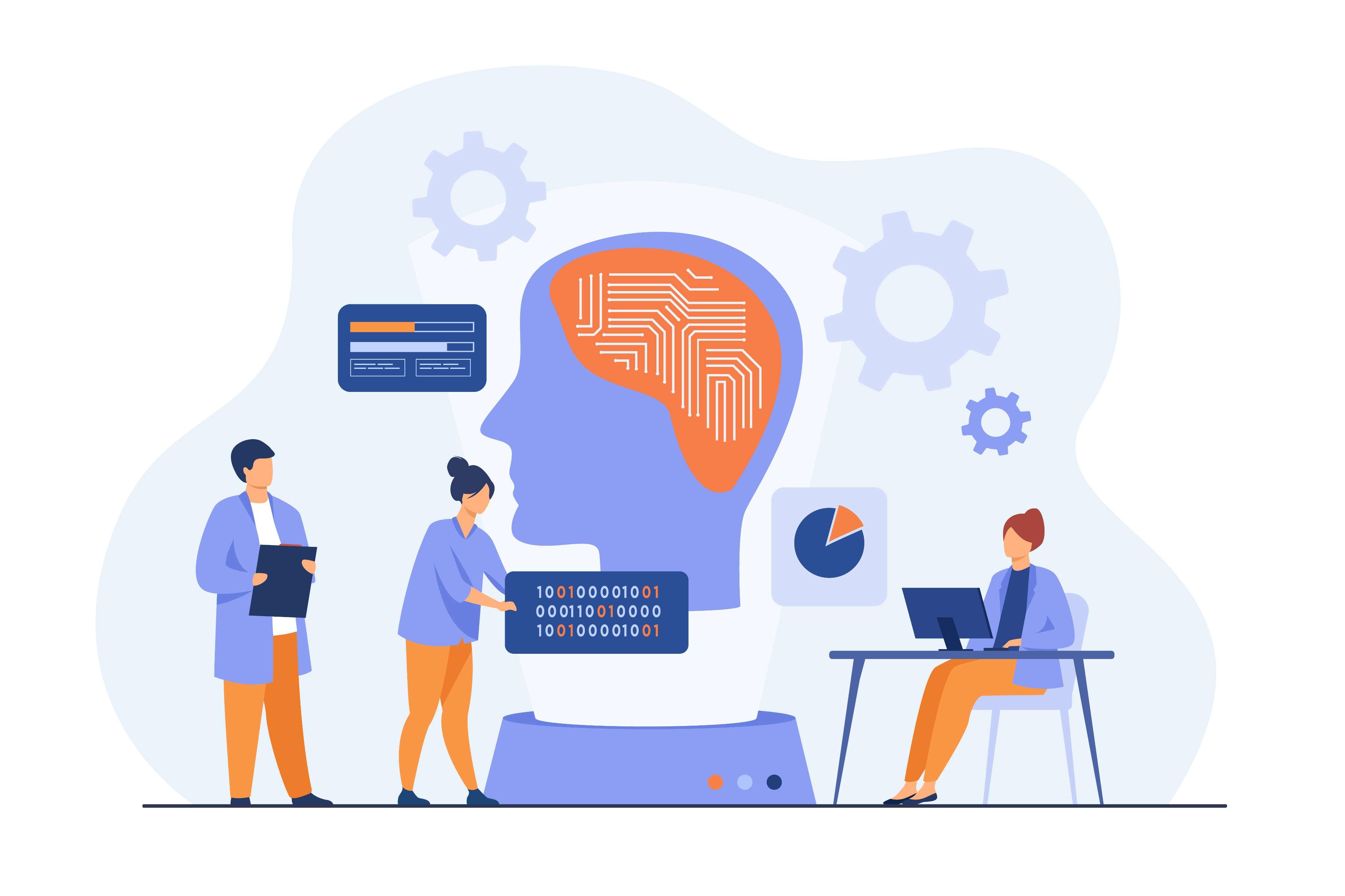
As enterprises navigate increasingly complex digital ecosystems, the ability to extract value from unstructured language data has become a strategic imperative. Natural Language Processing technology offers transformative potential for organizations seeking to automate processes, enhance decision-making, and create competitive advantages through intelligent data analysis. Enterprise NLP consulting and development services provide the expertise, methodologies, and technical capabilities necessary to harness this potential at scale, addressing the unique challenges that large organizations face in deploying AI-powered language solutions.
The Enterprise NLP Landscape
Large organizations generate and accumulate vast repositories of textual information—customer interactions, internal communications, contractual documents, research outputs, market intelligence, and operational logs. This unstructured data contains invaluable insights about customer preferences, operational inefficiencies, market trends, compliance risks, and innovation opportunities. However, the sheer volume and complexity of enterprise data create challenges that require sophisticated approaches beyond what generic NLP tools can provide.
Enterprise environments present unique technical requirements including integration with legacy systems, compliance with industry regulations, scalability to handle massive data volumes, multilingual capabilities for global operations, and governance frameworks that ensure responsible AI deployment. These requirements demand specialized consulting expertise that understands both cutting-edge NLP technology and enterprise realities.
The stakes for enterprise NLP initiatives are substantially higher than smaller-scale projects. Failed deployments waste significant resources, impact customer relationships, and potentially expose organizations to compliance risks. Successful implementations, conversely, can transform entire business functions, create sustainable competitive advantages, and generate returns that justify substantial investments. This risk-reward dynamic makes the selection of experienced consulting and development partners critically important.
Strategic Consulting for NLP Initiatives
Enterprise NLP consulting begins with strategic assessment and opportunity identification. Experienced consultants work with business leaders to understand organizational goals, evaluate existing capabilities, identify high-impact use cases, and develop comprehensive roadmaps that sequence initiatives appropriately. This strategic work ensures that NLP investments align with broader digital transformation objectives and deliver measurable business value.
Maturity assessments examine an organization's readiness for NLP adoption across multiple dimensions—data infrastructure, technical capabilities, organizational culture, governance frameworks, and change management capacity. These assessments identify gaps that must be addressed for successful implementation, whether through technology investments, skills development, process redesign, or organizational restructuring.
Use case prioritization frameworks help enterprises navigate the overwhelming array of potential NLP applications. Consultants evaluate opportunities based on business impact, technical feasibility, data availability, resource requirements, and strategic alignment. This structured approach prevents organizations from pursuing overly ambitious first projects or investing in low-value applications while missing transformative opportunities.
Architecture consulting addresses the technical foundation required for enterprise-scale NLP deployment. This includes designing data pipelines that collect, clean, and prepare textual data for analysis; selecting appropriate cloud or on-premises infrastructure; establishing model development and deployment workflows; implementing monitoring and governance frameworks; and planning for scalability as usage grows. These architectural decisions have long-term implications for flexibility, cost, and capability.
Comprehensive Development Services
Enterprise NLP development services encompass the full lifecycle of bringing language-powered solutions from concept to production. Requirements engineering captures both functional needs and non-functional requirements like performance, security, compliance, and user experience. For complex enterprise applications, requirements often span multiple departments, involve diverse stakeholder groups, and must accommodate existing business processes and technical constraints.
Data strategy and preparation represent critical phases where consulting expertise proves invaluable. Enterprises must navigate data privacy regulations, establish data quality standards, create annotation guidelines that ensure consistency across large teams, manage annotation workflows, and implement quality assurance processes. The scale of enterprise data creates both opportunities (more training examples) and challenges (ensuring quality and consistency across massive datasets).
Model development for enterprise applications requires balancing multiple objectives—accuracy, interpretability, fairness, robustness, and computational efficiency. Development teams build custom models tailored to specific domains, fine-tune pre-trained language models on proprietary data, implement ensemble approaches that combine multiple models, and create fallback mechanisms that gracefully handle edge cases. Rigorous testing against diverse scenarios ensures models perform reliably across the full range of enterprise use cases.
Integration development connects NLP capabilities with existing enterprise systems—CRM platforms, content management systems, databases, business intelligence tools, and custom applications. This integration work often proves more complex than model development itself, requiring expertise in enterprise architecture, API design, message queuing, transaction management, and error handling. Successful integration ensures NLP capabilities enhance existing workflows rather than creating parallel systems that employees resist adopting.
Domain-Specific Enterprise Solutions
Customer experience transformation represents one of the most impactful applications of enterprise NLP. Comprehensive solutions span multiple touchpoints—intelligent virtual assistants that handle routine inquiries, sentiment analysis that monitors customer satisfaction in real-time, voice-of-customer analytics that extract insights from feedback across channels, and predictive models that anticipate customer needs. These interconnected capabilities create seamless, personalized experiences that differentiate brands in competitive markets.
Enterprise knowledge management leverages NLP to unlock value trapped in document repositories, wikis, email archives, and collaboration platforms. Semantic search enables employees to find relevant information regardless of terminology variations. Automated classification and tagging organize content for easier discovery. Question-answering systems provide instant access to institutional knowledge. Document summarization helps employees quickly grasp key points from lengthy materials. These capabilities dramatically reduce time spent searching for information, accelerating decision-making and innovation.
Compliance and risk management applications use NLP to monitor communications, analyze contracts, detect fraud, and ensure regulatory adherence. In financial services, these systems scan emails and chat messages for potential market abuse, analyze trading communications for compliance violations, and monitor news for risks to portfolios. In healthcare, they ensure clinical documentation meets regulatory standards. In manufacturing, they analyze incident reports to identify safety trends. The high-stakes nature of compliance applications demands exceptional accuracy and comprehensive audit trails.
Business intelligence and market research applications process news feeds, social media, analyst reports, competitor communications, and industry publications to extract actionable insights. Sentiment tracking monitors brand perception and competitive positioning. Event detection identifies market-moving developments. Trend analysis reveals emerging opportunities and threats. These capabilities supplement traditional business intelligence with unstructured data analysis that provides earlier signals and richer context.
Governance, Ethics, and Responsible AI
Enterprise NLP deployments require robust governance frameworks that ensure responsible, ethical, and compliant use of AI technologies. Consulting services help organizations establish policies covering data usage, model development, deployment approval, ongoing monitoring, and incident response. These frameworks balance innovation velocity with appropriate oversight, preventing both regulatory violations and reputation damage.
Bias detection and mitigation receive special attention in enterprise contexts where NLP systems make consequential decisions affecting employees, customers, and other stakeholders. Development teams implement fairness metrics, test models across demographic groups, analyze training data for representation gaps, and create remediation strategies when bias is detected. Technoyuga and other leading providers maintain ethical AI practices that go beyond regulatory compliance to reflect organizational values and stakeholder expectations.
Explainability and interpretability capabilities enable enterprises to understand and justify NLP system decisions. This transparency proves essential for regulated industries, builds user trust, facilitates debugging and improvement, and supports compliance with emerging AI regulations. Modern enterprise NLP solutions incorporate explanation mechanisms that clarify why systems made particular predictions or recommendations.
Data privacy and security frameworks protect sensitive information throughout the NLP lifecycle. Techniques like data minimization, anonymization, encryption, and access controls prevent unauthorized exposure. Privacy-preserving machine learning approaches enable valuable analysis while protecting individual privacy. Comprehensive security testing identifies vulnerabilities before deployment, and ongoing monitoring detects potential breaches.
Change Management and Adoption
Technical excellence alone does not guarantee successful enterprise NLP deployment. Change management consulting helps organizations prepare employees for new ways of working, communicate benefits effectively, address concerns and resistance, and cultivate champions who drive adoption. Understanding the human dimensions of AI deployment—job impact fears, skill gaps, workflow disruptions—enables proactive mitigation strategies.
Training programs equip employees with skills needed to work effectively alongside NLP systems. Business users learn to interpret system outputs, provide feedback that improves accuracy, and identify appropriate applications. Technical teams develop capabilities in model development, deployment, monitoring, and maintenance. Executives gain literacy in AI capabilities, limitations, and governance requirements. This multi-level education creates organizational capacity for sustained NLP innovation.
User experience design ensures NLP capabilities integrate seamlessly into existing workflows rather than requiring disruptive process changes. Intuitive interfaces lower barriers to adoption. Transparent system behavior builds trust. Feedback mechanisms create channels for continuous improvement. User-centered design approaches involve stakeholders throughout development, ensuring solutions address real needs and constraints.
Continuous Improvement and Evolution
Enterprise NLP systems require ongoing attention to maintain and improve performance over time. Monitoring frameworks track accuracy metrics, user satisfaction, business impact, and system health. Alerting mechanisms flag degradation before it impacts users. Regular retraining incorporates new data and addresses concept drift as language usage evolves.
Feedback loops capture corrections from users, subject matter experts, and quality assurance teams. This input guides model refinement, training data enhancement, and feature development. Active learning techniques identify the most valuable examples for labeling, maximizing improvement while minimizing annotation costs. A/B testing enables empirical evaluation of improvements before full deployment.
Technology evolution requires periodic reassessment of architecture and implementation choices. Emerging models, frameworks, and techniques may offer better performance, lower costs, or new capabilities. Platform migration planning ensures organizations can adopt innovations without disrupting operations. Modernization roadmaps balance the benefits of new approaches against the costs and risks of change.
Measuring Enterprise NLP Success
Comprehensive measurement frameworks track NLP initiative success across multiple dimensions. Technical metrics capture model accuracy, latency, throughput, and reliability. User experience metrics assess satisfaction, adoption rates, and task completion. Business impact metrics quantify cost savings, revenue influence, risk reduction, and productivity gains. This multi-dimensional view provides complete understanding of value creation.
Return on investment analysis justifies NLP investments and guides resource allocation across initiatives. Sophisticated ROI models account for both direct benefits (cost savings from automation) and indirect benefits (faster decision-making, improved customer satisfaction, risk reduction). Realistic cost accounting includes development, infrastructure, maintenance, and organizational change expenses.
Benchmarking against industry standards and competitive capabilities provides external context for performance assessment. Understanding how organizational NLP capabilities compare to peers and leaders identifies gaps and opportunities. Participation in industry consortia and research collaborations accelerates learning and keeps enterprises at the forefront of NLP innovation.
Selecting Enterprise NLP Partners
Choosing consulting and development partners for enterprise NLP initiatives requires careful evaluation across multiple criteria. Technical expertise in modern NLP architectures, frameworks, and techniques forms the foundation. However, enterprise experience—understanding of large organization dynamics, integration challenges, governance requirements, and change management—proves equally important.
Industry specialization enables partners to bring relevant domain knowledge, regulatory understanding, and proven solutions to engagements. Healthcare-focused partners understand HIPAA, clinical workflows, and medical terminology. Financial services specialists know regulatory requirements, risk management frameworks, and market dynamics. This domain expertise accelerates implementation and reduces risk.
Cultural fit and collaborative approach determine partnership quality beyond technical deliverables. The best engagements involve knowledge transfer that builds internal capabilities, transparent communication that addresses challenges proactively, and alignment of incentives around long-term success rather than short-term deliverables. References from similar organizations provide valuable insights into partnership experiences.
Conclusion
Enterprise NLP consulting and development services enable large organizations to harness the transformative potential of language AI while navigating the complexities of enterprise environments. From strategic planning through implementation and ongoing optimization, experienced partners provide the expertise, methodologies, and support necessary for success. As NLP technology continues advancing and enterprise data volumes grow, the strategic importance of these capabilities will only increase, making the selection of the right consulting and development partners a critical decision with long-lasting implications for competitive position and business performance.

 English
 Arabic
 French
 Spanish
 Portuguese
 Deutsch
 Turkish
 Italiano
 Russian
 Romaian
 Portuguese (Brazil)
 Greek
Greek