


Cavan-Images/Shutterstock
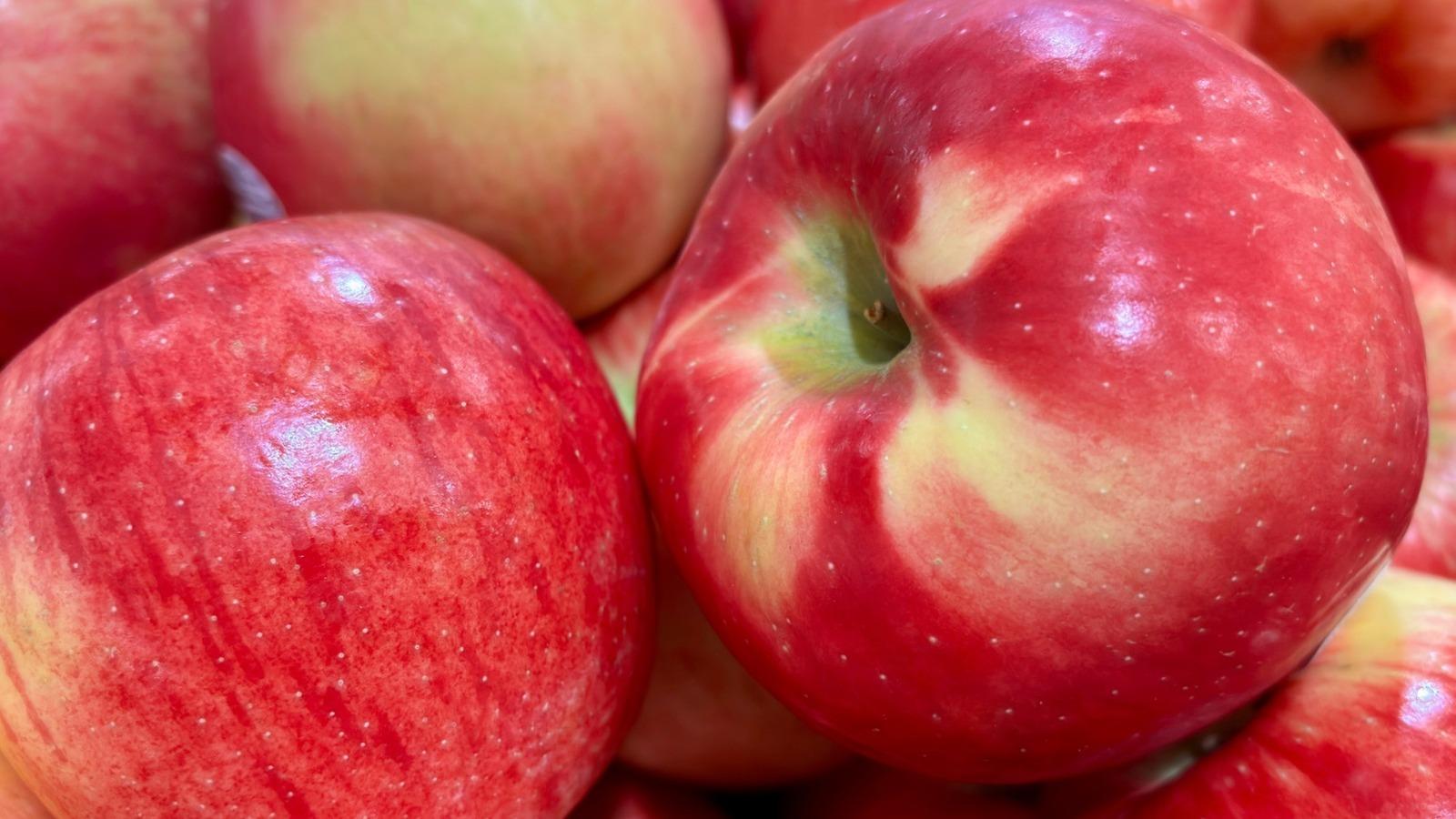
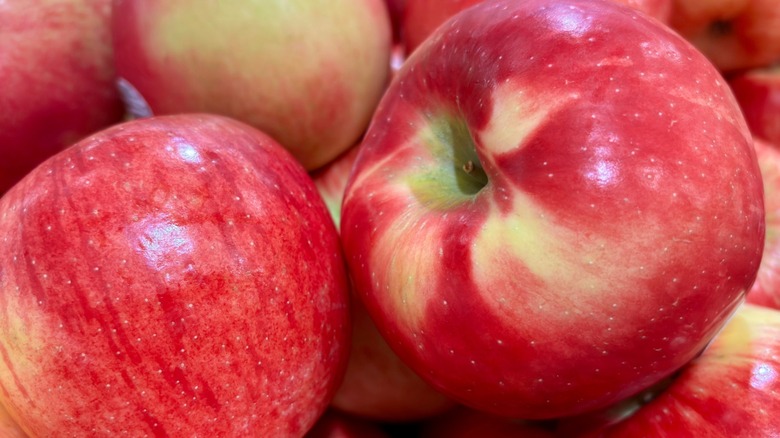
Honeycrisps are among the most popular apple varieties in the United States, and it's no surprise why. They're beloved for their bright sweet-and-sour flavor, juicy interior, and crisp texture. But lately, fans swear that they taste blander and look smaller than they previously did. It turns out these folks aren't imagining it: Honeycrisp apples weren't designed to be mass produced.
This variety was perfected by the University of Minnesota Horticultural Research Center after it was created in a breeding program in 1982. By 1988 it was patented, and by 1991 it was circulated to other growers. As it became more common, the apple had to adjust to New York and Washington climates, which proved to be a challenge. The apple's thin skin makes it more vulnerable to sunlight. It's also prone to bitter pit and soft scald, disorders that cause bruising and browning. Bitter pit is especially insidious, since it often isn't visible until the apple is already harvested.
Citing common opinions expressed by farmers, Growing Produce characterizes this apple variety as objectively a pain to produce but also a "necessary evil" due to its lucrative popularity. The trees need to be routinely pruned to grow well. That takes a lot of time and effort but doesn't guarantee profit because disease could strike anyway.
How to choose and store Honeycrisp apples
sav_an_dreas/Shutterstock
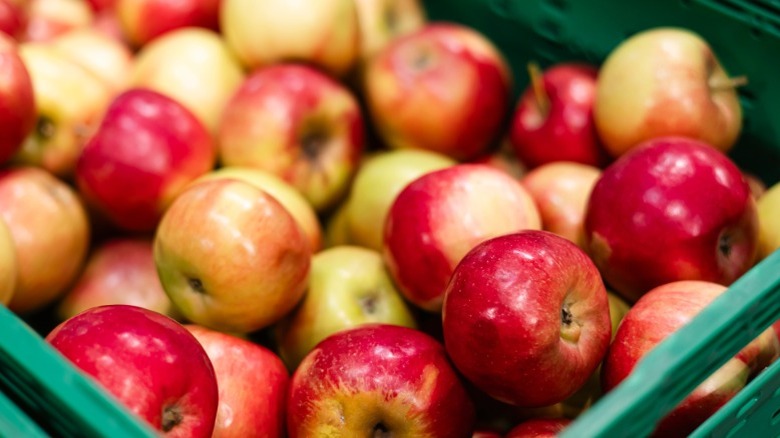
Honeycrisp apples are technically good to store in the sense that they'll look aesthetically pleasing for seven to 10 months in the proper environment. But long-term storage can also reduce the quality of their taste and increase the likelihood of a disorder that makes it unsalable.
So yes, Honeycrisp apples in particular have the odds stacked against them, because they require special care at every stage of life. But even though you can't know what one tastes like before eating it—and despite reports that apples don't taste as good anymore — there are a few tricks for choosing quality apples. If you pick correctly, you'll see what all the hype is about. (Seriously: Honeycrisps were even part of a Twitter feud, thanks to their fervent fandom.)
A ripe apple should be firm, smooth, and free of bruises and wrinkles. Younger Honeycrisps will have some yellow and orange coloring as well as streaks on their exterior. You'll know they're fully ripe when the skin is mostly red. Once you bring them home, put them in the refrigerator. When stored at roughly 40 degrees Fahrenheit they might last 14 weeks. However, keeping them slightly colder at around 32 degrees can nearly double their shelf life, says Orchard People. (By contrast, warmer or changing temperatures will cause these super-sensitive apples to break down.) Wash and dry them first, and then keep them in the crisper drawer away from other produce that could shorten their shelf-life.

 Arabic
 French
 Spanish
 Portuguese
 Deutsch
 Turkish
 Dutch
Dutch
 Italiano
 Russian
 Romaian
 Portuguese (Brazil)
 Greek
Greek