


7. Leadership in World War II

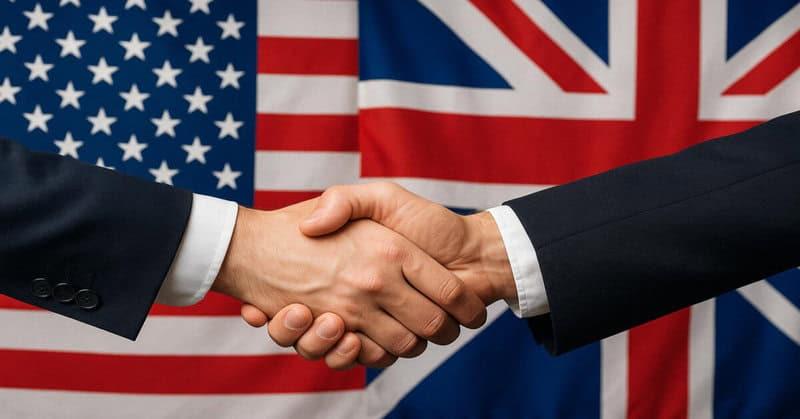
During World War II, the United States and the United Kingdom emerged as principal Allied powers, collaborating closely on military strategy, intelligence, and economic support. Their partnership was pivotal in several key areas:
Military Strategy: The U.S. and UK coordinated operations across multiple theaters, leading to significant victories in Europe and the Pacific. This collaboration was formalized through the Combined Chiefs of Staff, which harmonized military planning and resource allocation.
Intelligence Sharing: A landmark visit by American personnel to Bletchley Park in February 1941 marked the beginning of a robust intelligence-sharing relationship. This cooperation was formalized in the 1943 BRUSA Agreement, laying the foundation for the UKUSA Agreement in 1946, which continues to underpin the Five Eyes intelligence alliance. (nsa.gov)
Economic Support: The U.S. provided substantial aid to the UK through the Lend-Lease program, supplying military equipment, food, and raw materials essential for the British war effort. This support was crucial in sustaining the UK’s capacity to fight until the U.S. entered the war.
This multifaceted collaboration not only contributed to the Allied victory but also solidified the enduring “special relationship” between the United States and the United Kingdom.



 Arabic
 French
 Spanish
 Portuguese
 Deutsch
 Turkish
 Dutch
Dutch
 Italiano
 Russian
 Romaian
 Portuguese (Brazil)
 Greek
Greek