


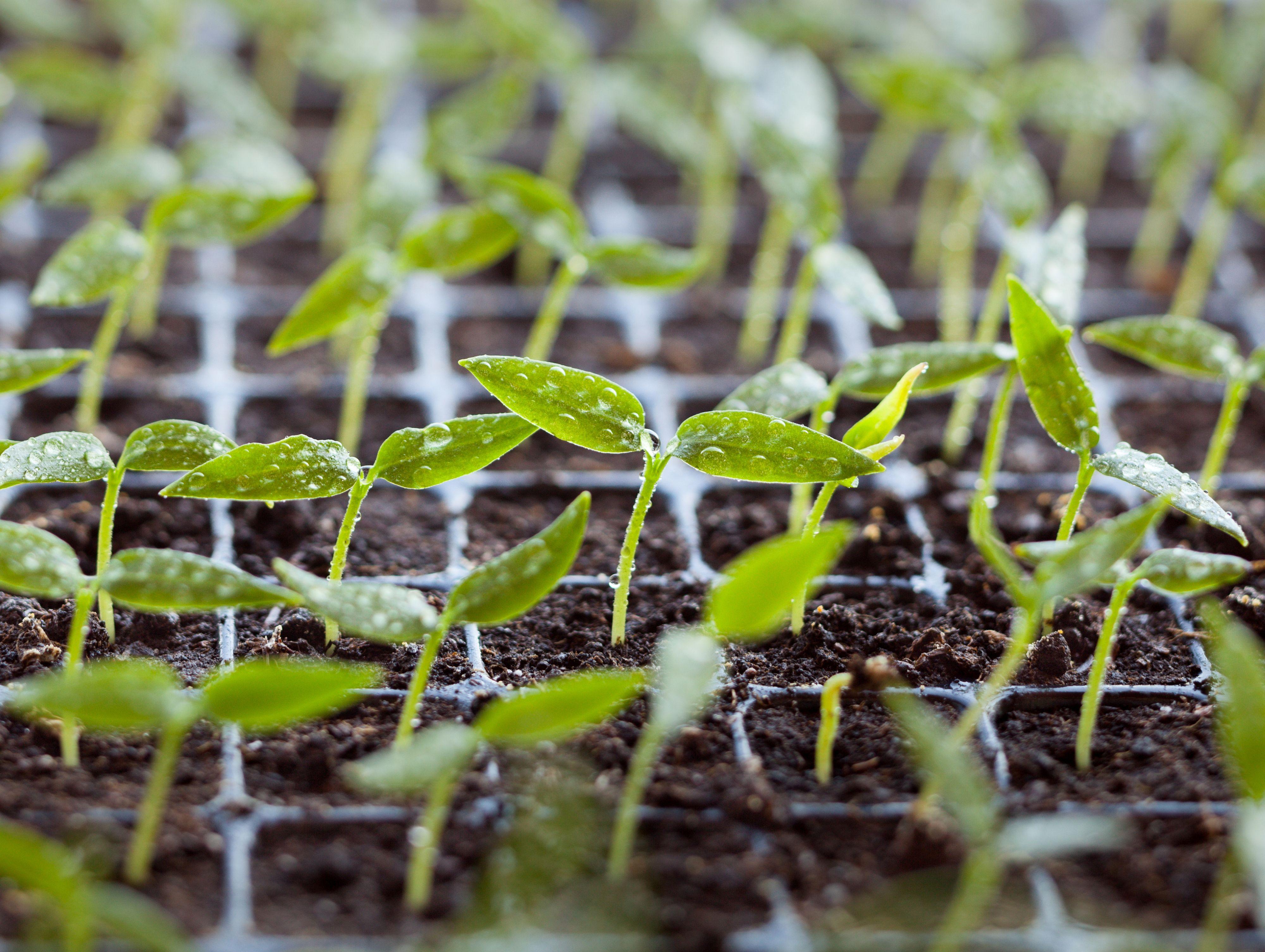
Warming potting mix with a heat mat helps these seeds sprout faster and grow better.
Published on February 11, 2026
Anest / Getty Images
If you’re starting seeds indoors this spring, a few degrees in the room temperature can make a big difference. While cool-weather crops sprout just fine at relatively low temperatures, heat-loving plants may languish in their seedling pots, develop weak stems, succumb to fungal problems, or even fail to sprout at all.
Find out which seeds germinate better and faster with a heat mat, as well as a few types of seeds that do better without extra heat.
If you don’t have a heating mat, you can place seedling trays on top of your fridge or near a radiator to warm the soil, as long as you check the soil often to ensure it doesn’t dry out.
Tomatoes
Kritsada Panichgul
Tomatoes are native to South America, so it makes sense that they sprout best in warm soil. Keeping tomato seeds on a heat mat that’s set at around 75°F to 80°F is ideal to help tomatoes sprout faster and grow better. Just keep in mind that tomatoes are highly sensitive to cold weather. Tomato seedlings should not be transplanted outdoors until nighttime temperatures are consistently above 50°F.
Peppers
Blaine Moats
Like tomatoes, peppers also prefer to grow in warm soil that’s slightly warmer than average indoor room temperatures. For best results, set heating mats at 75°F to 80°F and switch the heating mats off as soon as your pepper seeds sprout.
Eggplants
Eggplants, another member of the nightshade family, also benefit from heating mats. They have the same basic care requirements as tomatoes and peppers, and germinate at a soil temperature between 75°F and 80°F.
Many heating mats warm the soil slightly above ambient room temperature, but heating mats with an adjustable thermostat make it even easier to monitor the temperature of eggplant and other seedling pots and alter it if needed.
Tomatillos and Ground Cherries
Kindra Clineff
Other nightshades, like tomatillos and ground cherries, also grow better with a heating mat. These plants prefer even higher soil temperatures between 75°F and 85°F. In ideal temperatures, nightshade plants grow quickly and can overwhelm a small grow room, so be sure to pay attention to recommended planting times and don’t start your seeds too early.
Adding a small fan to your setup improves airflow and prevents nightshades of all sorts from developing fungal problems or plant edema.
Basil
Kate Carter Frederick
Basil plants grow slowly and may not sprout at all in cold weather. But a heating mat that’s kept at around 75°F will help these heat-loving herbs emerge from the soil much faster.
As with nightshades, heating mats should be switched off once basil seedlings sprout, and the young transplants shouldn’t be moved outdoors until they’re thoroughly hardened off and the risk of frost has passed.
Okra
Jay Wilde
Okra is native to Africa and tolerates hotter temperatures than nightshade plants. Starting these veggies off on heating mats set a few degrees above room temperature will help them grow faster, but okra will be even happier if the heating mat is set at between 85°F to 90°F.
Cucumbers
Cucumbers of any type are tricky to transplant outside due to their delicate vining stems. But if you live in a cold climate with a short growing season, or you want to harvest cucumbers a little earlier, you can start these plants indoors. Cucumber seeds won’t germinate until soil temperatures are around 60°F, and they’ll sprout much faster if their soil is warmed to a cozy 70°F to 85°F.
Melons and Squash
Although cucumbers, melons, and squash plants are usually directly sown outdoors, there are two exceptions. If your growing season is short or you want to get a head start on the growing season, it is best to start the seeds indoors.
The other exceptions are special cucurbits that require a long growing season, such as loofah for sponges, which take 120 and 180 days to reach maturity. These members of the gourd family are often started inside with a heating mat. You may want to try this planting trick with other slow-growing cucurbits such as watermelons, too.
Zinnias
Balaramisha Gillingham
Some growers direct sow zinnia seeds outside in spring, but starting these annual flowers indoors with a heating mat set at 70°F to 75°F allows you to enjoy zinnia blooms earlier in the season.
If you start more than one zinnia seed in each seedling cell or pot, remember to thin out the extra seedlings once they’ve developed true leaves, as overcrowded zinnias won’t grow well.
Coleus
Carson Downing
Coleus plants are often purchased as pre-started plants in spring, but they’re relatively easy to grow from seed, too. If you want to start these tender plants indoors, sow coleus seeds in seedling pots filled with damp seed starting mix and warm the soil with a heating mat set at around 70°F to 80°F.
5 Veggies That Don’t Need Heat Mats
Some slow-growing plants need to be started indoors in spring to give them enough time to reach maturity. However, many fast-growing and cold-hardy plants can be directly planted outside and don’t require heat mats when sown indoors. These include:
- Peas. Cold-hardy peas can be planted outside as soon as the soil is workable. They are not suitable for indoor sowing.
- Spinach. Spinach grows quickly outside, even in chilly weather, and doesn’t require a heat mat.
- Kale. Like spinach, kale is a cold-hardy crop that doesn’t need supplemental heat.
- Lettuce. Head lettuces are sometimes started indoors to extend the growing season, but they don't germinate well when soil temperatures are above 70°F.
- Root veggies. Beets, carrots, and other root crops are tricky to start indoors due to their long tap root. If you do start them inside, use biodegradable pots and skip the heat mat.

 Arabic
 French
 Spanish
 Portuguese
 Deutsch
 Turkish
 Dutch
Dutch
 Italiano
 Russian
 Romaian
 Portuguese (Brazil)
 Greek
Greek