


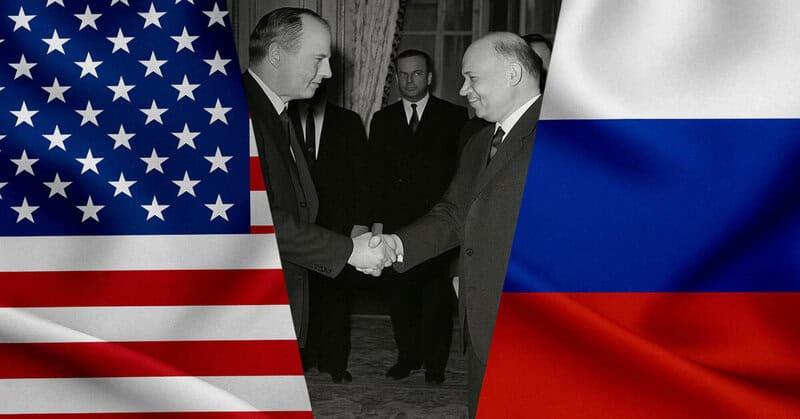
Hidden Relationship: 15 Ways The U.S. And Russia Are Historically Connected

0
2K

Hidden Relationship: 15 Ways The U.S. And Russia Are Historically Connected

2. The Sale of Alaska

Hidden Relationship: 15 Ways The U.S. And Russia Are Historically Connected
Depiction of the 1867 Alaska Purchase, a landmark U.S.-Russia agreement reshaping North American history.

In 1867, the Russian Empire sold Alaska to the United States for $7.2 million, a transaction that dramatically altered North American geopolitics. Often called ‘Seward’s Folly’ at the time, the Alaska Purchase later proved highly valuable due to its vast natural resources. The sale symbolized a notable period of amicable negotiation. Smithsonian Magazine provides deeper insight.

3. Russian Immigrants Shaping American Society

Hidden Relationship: 15 Ways The U.S. And Russia Are Historically Connected
Russian immigrants arriving in early 1900s America, shaping vibrant communities and enriching urban culture.

Between 1880 and 1910, over two million Russians immigrated to the United States, seeking refuge from religious persecution and economic hardship (ancestry.com). Many settled in urban centers like New York City, Boston, and Chicago, contributing to the nation’s cultural diversity. They established vibrant communities, introduced unique customs, and enriched American society with their traditions.

4. Alliance in World War II

Hidden Relationship: 15 Ways The U.S. And Russia Are Historically Connected
U.S. and Soviet leaders collaborate during WWII, forging an alliance that shaped the postwar world.

Despite their ideological differences, the U.S. and Soviet Union formed a crucial alliance against Nazi Germany during World War II. American military aid, delivered through the Lend-Lease Act, helped the Soviets withstand the Nazi advance. Their collaboration at conferences like Yalta shaped the postwar world order. History.com details this significant partnership.

5. Space Race Rivalry and Cooperation

Hidden Relationship: 15 Ways The U.S. And Russia Are Historically Connected
From fierce space race rivals to ISS partners, U.S. and Russia exemplify enduring scientific collaboration.

The intense rivalry of the Cold War space race eventually gave way to cooperation, with joint U.S.-Soviet missions like Apollo-Soyuz in 1975. Today, the two countries continue to work together on the International Space Station, underscoring lasting technological and scientific bonds. NASA’s overview highlights these collaborative milestones.

6. Charles Lindbergh and American Aviation Aid

Hidden Relationship: 15 Ways The U.S. And Russia Are Historically Connected
Charles Lindbergh’s technical legacy fostered U.S.-Soviet aviation innovation through interwar collaboration.

Aviation pioneer Charles Lindbergh contributed technically to both American and Soviet aviation programs. Interwar aviation exchanges advanced aircraft design on both sides, with mutual study and knowledge transfer influencing combat and civil aviation. Explore these connections at Smithsonian Air and Space.

7. Russian Literature’s Influence on American Writers

Hidden Relationship: 15 Ways The U.S. And Russia Are Historically Connected
Russian literary giants inspired American authors, fostering enduring cross-cultural influence in U.S. storytelling.

Russian literature, from Tolstoy to Dostoevsky, deeply influenced American authors like Hemingway and Faulkner. These cross-cultural literary connections continue to shape critical thinking and storytelling in the U.S. The Library of Congress offers a rich overview of this influence (guides.loc.gov).

8. Khrushchev’s 1959 U.S. Tour

Hidden Relationship: 15 Ways The U.S. And Russia Are Historically Connected
Khrushchev tours the United States in 1959, signaling a brief thaw in Cold War tensions.

Soviet Premier Nikita Khrushchev’s 1959 visit to the United States was a watershed in Cold War diplomacy. Meeting President Eisenhower and visiting U.S. cities, Khrushchev’s tour reflected a brief thaw in superpower relations. History.com recounts this historic journey.

9. Shared Antarctic Exploration

Hidden Relationship: 15 Ways The U.S. And Russia Are Historically Connected
American and Russian scientists collaborate in Antarctica, advancing climate research from IGY to today.

American and Russian explorers have collaborated on Antarctic research for decades, from the International Geophysical Year (1957-58) to contemporary scientific stations. Their shared commitment advances global climate and environmental science. Learn more at the National Science Foundation‘s overview.

10. Adoption Bridges

Hidden Relationship: 15 Ways The U.S. And Russia Are Historically Connected
Russian-American adoptions flourished until 2012, when new laws sharply curtailed international placements.

Since the 1990s, tens of thousands of Russian children have been adopted into American families, creating unique familial bonds between the two nations. Between 1992 and 2012, over 60,000 Russian children were adopted by American families. However, in 2012, Russia enacted the Dima Yakovlev Law, banning U.S. citizens from adopting Russian children. This policy shift has significantly impacted international adoptions, with the number of Russian children adopted by Americans declining sharply in subsequent years (theguardian.com). These personal stories testify to ongoing connections and the evolving nature of international adoption policies.

11. Jazz as a Cold War Bridge

Hidden Relationship: 15 Ways The U.S. And Russia Are Historically Connected
Jazz musicians bridge Cold War divides, fostering understanding through cultural exchange documented by Georgetown Unive…

During the Cold War, jazz musicians traveled between the U.S. and the Soviet Union, with American artists like Duke Ellington inspiring Soviet audiences. Cultural exchange programs used music to foster understanding. Georgetown University Library chronicles such tours.

12. Emergency Nuclear Hotline

Hidden Relationship: 15 Ways The U.S. And Russia Are Historically Connected
The U.S.-Soviet “hotline” enabled direct crisis communication to prevent nuclear conflict since 1963.

After the Cuban Missile Crisis, the U.S. and Soviet Union established a direct communication line—the “hotline”—to prevent nuclear misunderstandings. This system, operational since August 30, 1963, allowed leaders to communicate swiftly during crises, reducing the risk of accidental war. The hotline remains in use today, underscoring a commitment to crisis management (history.com).

13. Arms Control Agreements

Hidden Relationship: 15 Ways The U.S. And Russia Are Historically Connected
Key arms control treaties have curbed nuclear arsenals, fostering U.S.-Russia cooperation and global security.

Arms control agreements like SALT, START, and the INF Treaty have played pivotal roles in limiting nuclear arsenals and easing tensions between the U.S. and Russia. These efforts highlight mutual interests in global stability and security, even during periods of rivalry. For a comprehensive overview of these agreements, refer to the Arms Control Association’s detailed analysis (armscontrol.org).

14. Educational and Scientific Exchanges

Hidden Relationship: 15 Ways The U.S. And Russia Are Historically Connected
Academic exchanges like the Fulbright Program strengthen U.S.-Russia collaboration, innovation, and enduring scholarly t…

Student and academic exchange programs, such as the Fulbright Program and various science collaborations, have fostered mutual understanding and driven innovation between the U.S. and Russia. The Fulbright Program, established in 1973, has facilitated numerous exchanges, allowing scholars to engage in teaching and research across disciplines. Alumni networks testify to enduring ties in knowledge and research. For more information, visit the Fulbright Program’s official website (fulbrightscholars.org).

15. Shared Environmental Concerns

Hidden Relationship: 15 Ways The U.S. And Russia Are Historically Connected
Bilateral collaboration drives climate policy and resource management in the Arctic, guided by the Arctic Council.

Both nations face Arctic environmental challenges, including climate change and resource management. Bilateral cooperation has been critical in Arctic policy and scientific study, as highlighted by the Arctic Council.

Pesquisar
Categorias
Leia Mais
Technology
Sports Flooring Market Growth Outlook: Segmentation Analysis and Opportunities to 2034
Sports flooring has evolved into a vital element of modern sports infrastructure, providing...
Por Shital Wagh 2026-03-11 18:03:50 0 4K
Outro
Global Specialty Chemicals Market Growth Outlook 2033
According to the Business Market Insights The Global Specialty Chemicals Market is witnessing...
Por Juned Shaikh 2026-05-13 07:26:32 0 810
Technology
This Texas startup believes AI can identify and stop mass shooters
The Texas startup trying to stop mass shootings with AI...
Por Test Blogger7 2026-03-16 22:00:11 0 2K
Technology
The best drone deals to shop in Amazons Big Spring Sale — loads of DJI drones at all-time lows
Best Amazon Big Spring Sale drone deals 2026: DJI drones are hitting best-ever prices...
Por Test Blogger7 2026-03-26 19:00:12 0 2K
Technology
The Roborock Qrevo S5V robot vacuum is on sale for $450 off at Amazon
Best robot vacuum deal: Save $350 on roborock Qrevo S5V...
Por Test Blogger7 2026-02-06 12:00:31 0 3K