


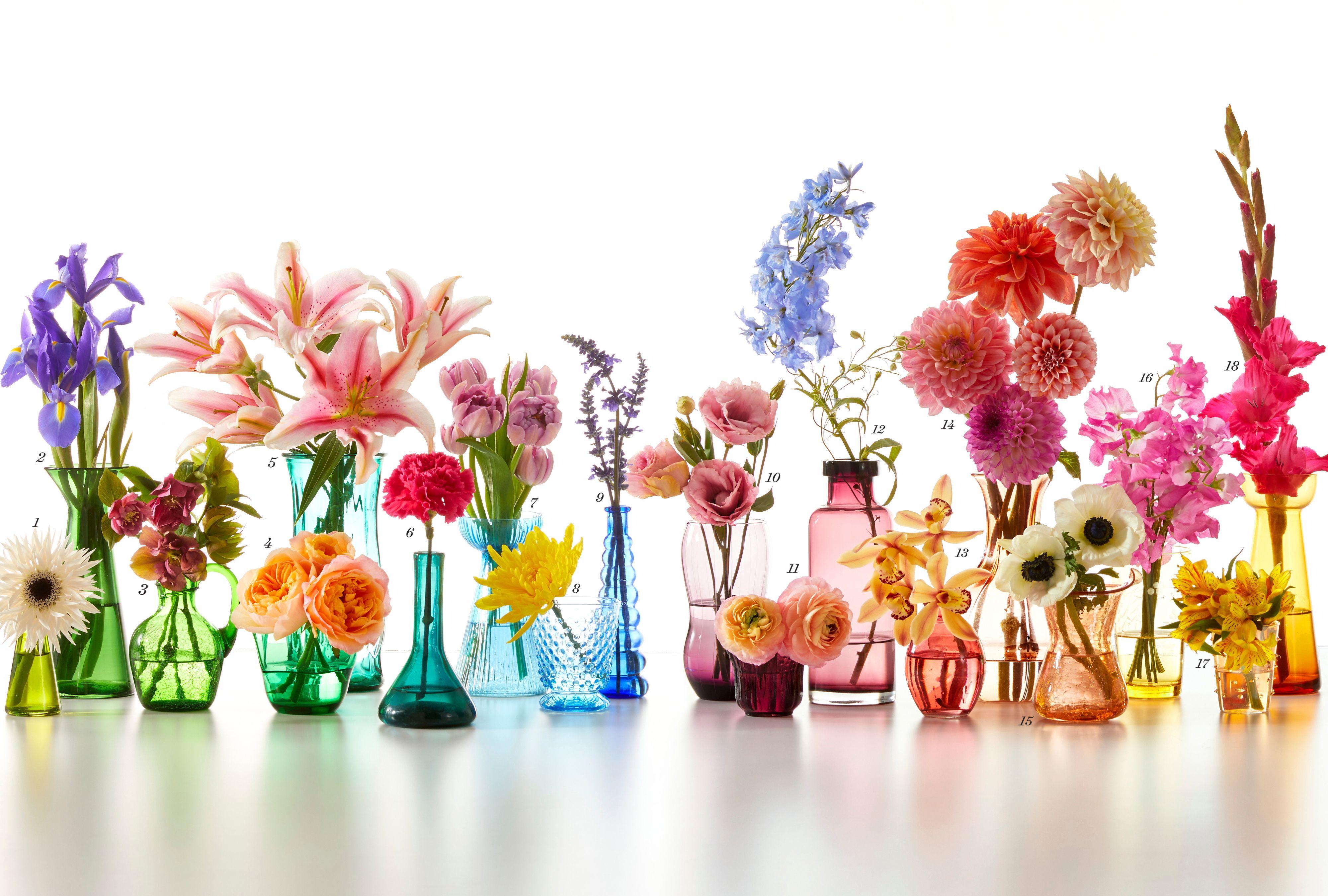
Blooms carry quiet meaning—some joyful, some cautious, some dripping with love, some signaling emotional withdrawal. A single stem can express longing, friendship, or luck without saying a word. Valentine’s Day is painted in bold red roses, but the language of flowers has always been more nuanced.
Learn what your flowers might be saying before you place your Valentine's Day delivery order. After all, if you want your flowers to speak for you, then it's good to know what they're really saying.
Floriography, the language of flowers, invites a deeper look at how flowers convey what hearts sometimes hesitate to express. Whether you’re celebrating love or redefining it, the right bloom can say exactly what you mean.
Carson Downing
Our Floriography Dictionary
Sources vary on what different flowers symbolize—this is art, not science—but these are some of our favorite interpretations.
- Daisy: Cheerful and lighthearted, daisies symbolize playfulness and happiness. It's a feel-good message without overthinking it.
- Blue Iris: Long symbolizing faith, hope, and wisdom, gifting a blue iris is like saying, “I believe in you.”
- Hellebore: Hellebores are associated with protection and easing anxious feelings. Traditionally, they can also hint at scandal—so they’re perfect if you enjoy a little intrigue.
- Rose: A fully opened rose represents beauty in full bloom, while peach roses lean more toward friendship and warmth. Together, they soften the message beyond classic romance.
- Lily: White lilies symbolize purity and innocence, making them an elegant choice. Pink lilies add a note of prosperity and good fortune.
- Carnation: Linked to affection and admiration, carnations are friendly, but a deeper pink shade signals stronger feelings.
- Tulip: Tulips symbolize happy years and a sense of shared joy. Purple, in particular, is associated with royalty: “You are my queen,” anyone?
- Chrysanthemum: Cheer, longevity, and happiness, chrysanthemums are especially meaningful during challenging times, offering a hopeful, steady message.
- Blue Salvia: This flower stands for healing and thoughtful intention. Its meaning carries wisdom and quiet care.
- Lisianthus: This is often seen as a bold, public expression of affection. Because it’s sometimes used in proposals, gift lisianthus wisely.
- Ranunculus: Victorians would send these flowers to their crushes, but they’re also right for a charming friend.
- Delphinium: Symbolizing lightness, brightness, and everything delightful, delphinium brings a sense of joy wherever it appears.
- Orchid: Meaning romantic love and desire, the orchid's dramatic look has also given it a racy connotation.
- Dahlia: A bouquet of dahlias stands for dignity, confidence, and strength; it's s a beautiful way to say thank you.
- Anemone: Anticipation and optimism for what's ahead. In white, anemone is associated with sincerity and honest feelings.
- Sweet Pea: They're often interpreted as a gentle thank-you for shared moments. Sweet peas symbolize pleasure and gratitude.
- Alstroemeria: Closely linked to friendship and devotion, the long-lasting blooms of alstroemeria make it a fitting symbol of enduring bonds.
- Gladiolus: Named for their swordlike leaves, gladiolus represent strength and character. They’re often given to honor integrity and resilience.
Related
Jacob Fox
What Classic Valentine's Day Bouquets Say
Different colors symbolize different things. White roses represent purity and loyalty, pink speaks to sweetness and friendship, and red sends love. Thorns say that love can come with pain (as any gardener can tell you).
Even greenery can send a message. Rosemary, which imparts a bright fragrance to a bouquet, symbolizes fidelity. Geranium leaves, with their fuzzy-crinkly texture, are symbolic of comfort.
A mixed arrangement of flowers expresses an entire paragraph of emotions. Hot pink carnations say you are unforgettable, red roses symbolize love and passion, and ranunculus mean charm. Pink and white tulips convey that someone has beautiful eyes. If you're making your own, bundle flowers tightly and trim stems so the outer flowers sit on the vase edge for a contemporary, dome-shaped arrangement.
Make a Posy That Speaks Volumes
To make a small bouquet—aka a posy—use four or five kinds of flowers at most. Select a relatively large central flower as the focal point. Holding it in one hand, use your other hand to build the arrangement around it. Secure the stems with ribbon or twine to make it extra special for gifting. Here's what these posey examples have to say.
When gifting a bouquet, include a tag that identifies the symbolism behind each flower.
Jacob Fox
Get Well Soon
Sunflowers say "be strong," mint is associated with protection from illness, delicate chamomile daisies convey a sense of calm, and eucalyptus (used in medicinal rubs and bath salts) signifies healing.
Jacob Fox
You're the Best
Dahlias are the center of this posy for a person who’s always there for you. Zinnias—yellow and magenta—reveal you’re missing closeness; the sage stands for gratitude; snowberries send good thoughts.
Jacob Fox
Good Luck
A pink puff of hydrangea speaks to success, hellebore relieves anxiety, Queen Anne’s lace signifies protection and warmth, and bells of Ireland say that luck will always be with you.
Jacob Fox
Forever Friends
Pink-blush alstroemeria represents enduring fondness. The trio of yellow emphasizes your bond: freesia for trust, roses for care, and gerbera daisies for friendship.

 English
 Arabic
 French
 Spanish
 Portuguese
 Deutsch
 Turkish
 Dutch
Dutch
 Italiano
 Russian
 Portuguese (Brazil)
 Greek
Greek