


Ilia Nesolenyi/Getty
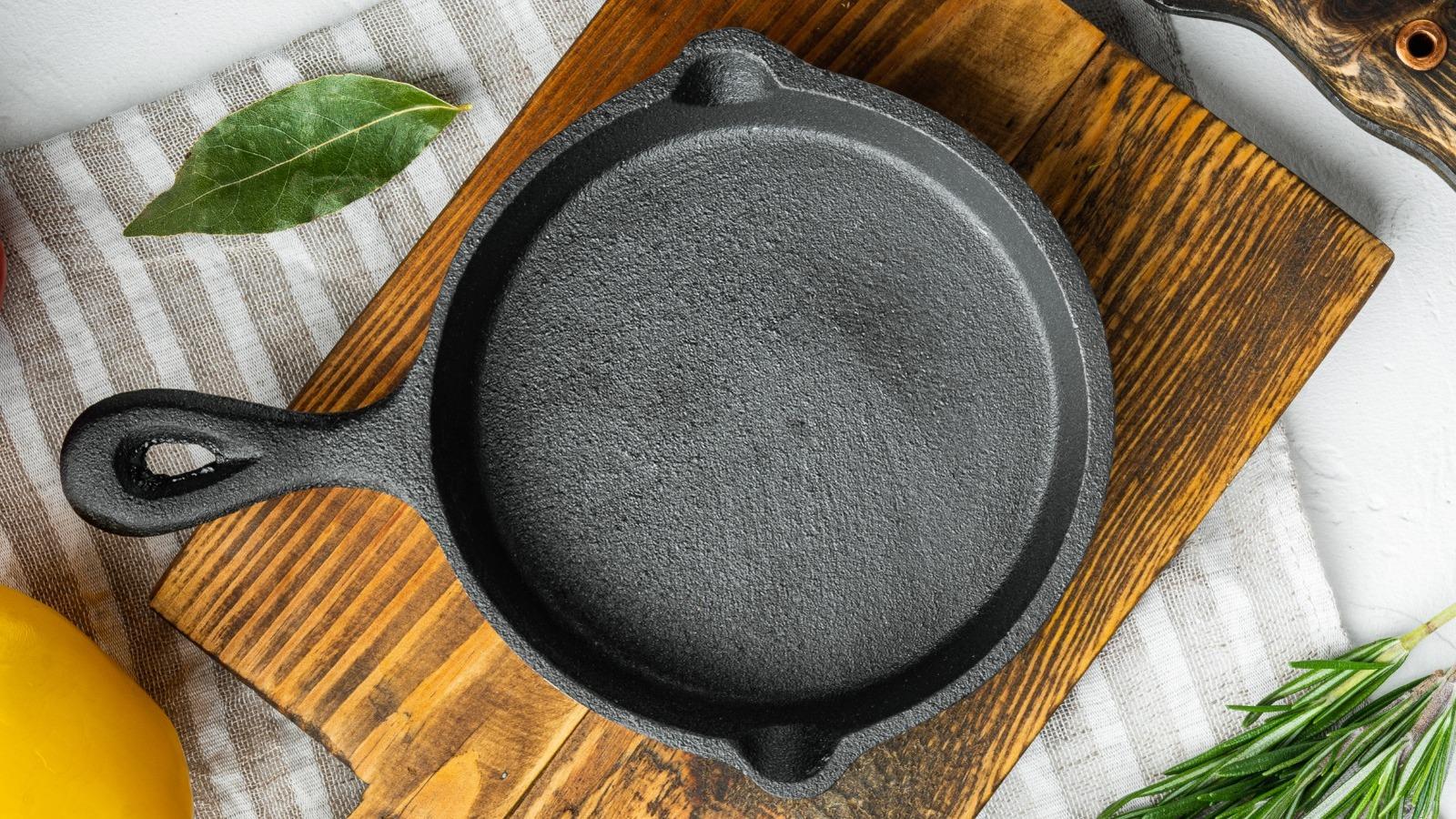
For the cast-iron fanatics out there, it's a well-known fact that the material needs seasoning, just like your favorite bowl of pasta or a perfectly cooked chicken breast. What's even more important than the simple fact that seasoning is necessary is that there are certain things you should never use on cast iron, one of which is a very common fat.
Let's start with what 'seasoning' is: essentially, it's the baked-on substances (typically oils or fats) that give your cast iron skillet that non-stick property and protect it from rusting. While some use bacon or other fats to season their cast iron, this is one of the myths about cast iron skillets you need to stop believing. It turns out that unsaturated fats are the best option.
The seasoning process occurs through polymerization, in which the oil or fat is heated enough to form a solid layer on the pan. All fatty acids are made of chains of carbons with hydrogens attached. When the bonds between carbons are single, the fat is considered saturated. When the bonds are double, the fat is considered unsaturated. Unsaturated fats actually have a more favorable chemical makeup for polymerization because they have more chances to bond with the carbon and iron in your skillet (i.e., the polymerization process occurs more easily). Some examples of unsaturated fats include cooking oils such as grape seed, sunflower, flaxseed, canola, avocado, coconut, and vegetable oils.
There are other important factors to consider
Bruce Peter Morin/Getty
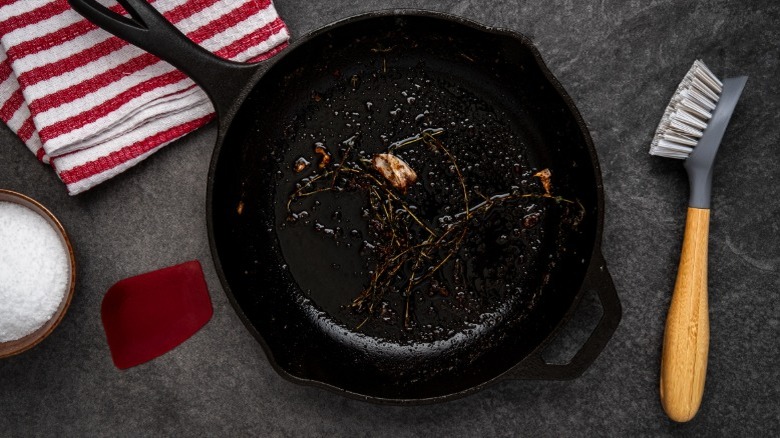
Beyond whether the fat is saturated or unsaturated, there are other considerations to keep in mind when deciding how to properly season a cast-iron skillet. A big one is flavor. If strong flavor intrusion is a concern, opt for a neutral oil like avocado, canola, or grape seed (the secret baking ingredient for purer tasting cookies).
Alongside flavor, another chemical quality is smoke point. An oil's smoke point is the temperature at which it starts to decompose (and quite literally, smoke). When choosing a seasoning oil, opt for one with a high smoke point that can withstand the temperatures required for polymerization. Some options include canola oil or grape seed oil, with smoke points around 400 and 420 degrees Fahrenheit, respectively.
Cast-iron pots and pans require reseasoning as well, so cost is another important factor to consider. Best practice is to re-season or heat a thin layer of oil in your skillet after each use. Keeping this in mind, you'll want an oil that's easy to get and low-cost. While flaxseed oil is a great choice, it can be on the expensive end (only 16 ounces will cost you almost $12 at Walmart). In comparison, canola and grape seed oils are fairly cheap and easy to find in grocery stores — you can get a whole gallon of canola oil for only $9.47 at Walmart.

 English
 Arabic
 French
 Spanish
 Portuguese
 Deutsch
 Turkish
 Italiano
 Russian
 Romaian
 Portuguese (Brazil)
 Greek
Greek