


Anna_Pustynnikova/Shutterstock
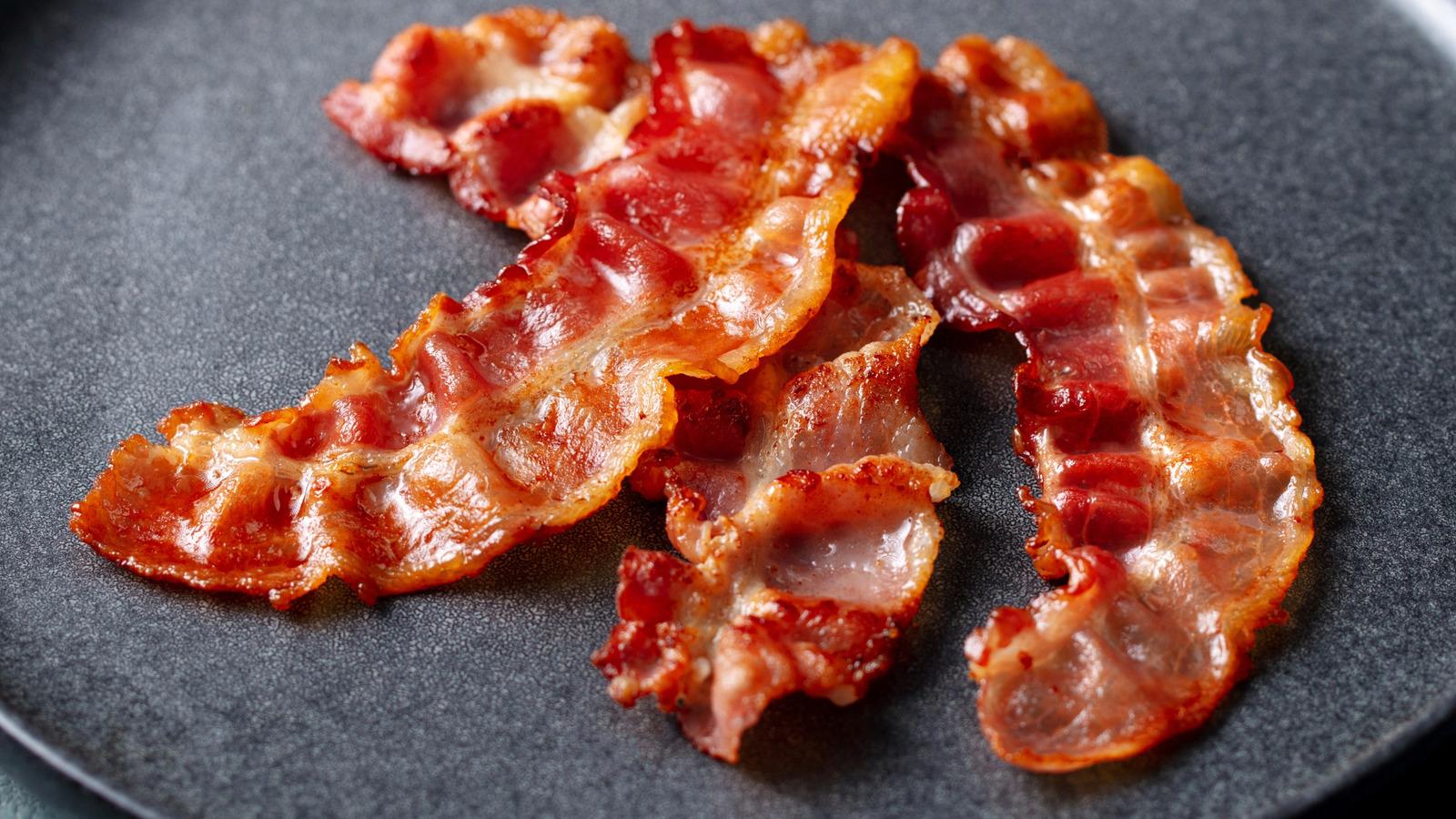
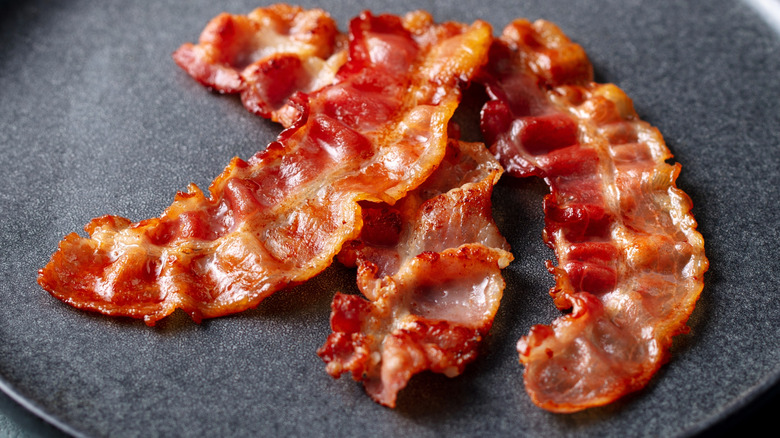
What's the secret to perfectly cooked bacon? It might be your oven. When it comes to bacon, slow and steady wins the race. This breakfast favorite cooks best for longer periods at lower temperatures. However, even the most vocal advocates of oven-cooked bacon often miss one game-changing recipe that ensures crackling, well-browned bacon with zero curling every time: start with a cold oven; no preheating required.
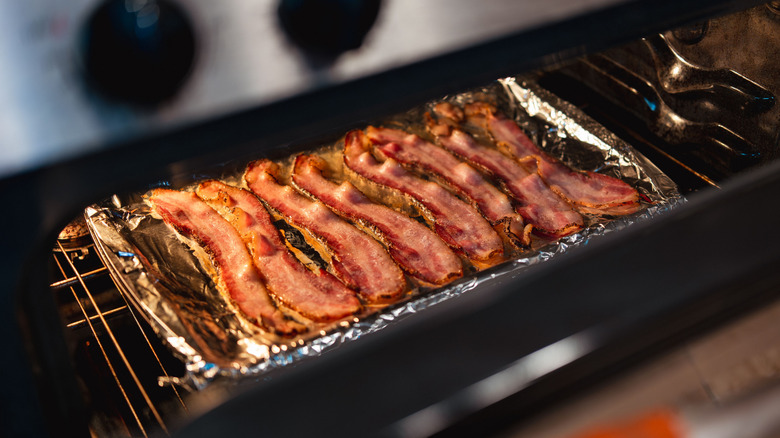
This cooking method is pretty simple. Fully line a large baking sheet with aluminum foil, pressing the foil into the sides of the pan to trap wayward bacon grease. Lay your bacon slices flat on the pan and set it directly in your cold oven. Only then will you preheat your oven to 400 degrees Fahrenheit. Cook your bacon for roughly 17 minutes (or longer for thick-cut) and let it cool for five minutes on a plate lined with paper towels. Then, you can sit back and enjoy some perfectly crisp, uncurled bacon.
Why does this method work? It comes down to the fascinating untold truth of bacon and its anatomy. Bacon is made of incongruous cooking partners: protein and fat. Fat cooks quicker than red meat, often leading to uneven results when making bacon. Allowing your oven to heat steadily over the course of 17 minutes creates a best of both worlds scenario. Fat renders slowly, preventing your meat from becoming tough and dry, while the red meat has ample time to cook.
There's more than one benefit to cooking bacon in a cold oven
Wirestock/Getty Images
Starting bacon in a cold oven can save you time during your busy morning routine. Although you will cook your bacon a little longer, taking out the unnecessary pre-heating step saves time overall. And cooking bacon in the oven means you don't have to constantly keep an eye on it.
In addition to simply turning out better, the oven method has other benefits over cooking in a skillet. You can fit more slices of bacon on a cookie sheet than you can a pan, for one. Plus, when cooking bacon in the oven, it's okay if slices overlap a bit as they reduce in size considerably when baking. Bacon cooked in an oven won't splatter all over your countertop, or worse, all over your clothes. Also, there's cleanup to consider. When bacon grease pools in aluminum foil, you can simply capture the grease in a ball of foil and toss it in the garbage.
However, you do not have to toss that bacon grease. Why? It comes down to two words: bacon butter. If you have properly lined your pan prior to cooking your bacon, all that delicious bacon grease should be easy to pour out into any heat-resistant cookware. Place the grease into your fridge and let it harden slightly. Use this in place of regular butter for all your cooking needs to add a little extra smoky flavor.

 Arabic
 French
 Spanish
 Portuguese
 Deutsch
 Turkish
 Dutch
Dutch
 Italiano
 Russian
 Romaian
 Portuguese (Brazil)
 Greek
Greek