


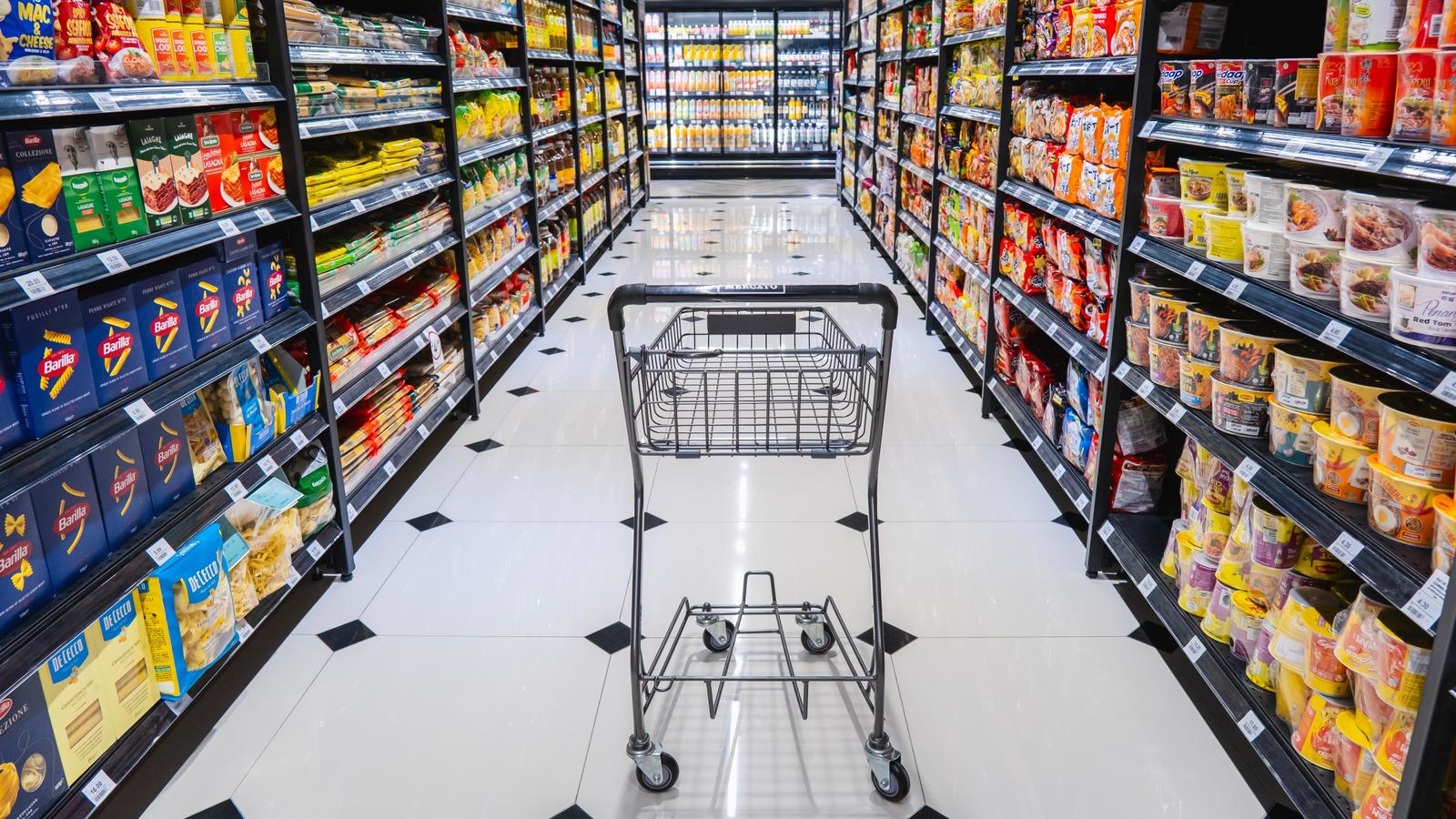
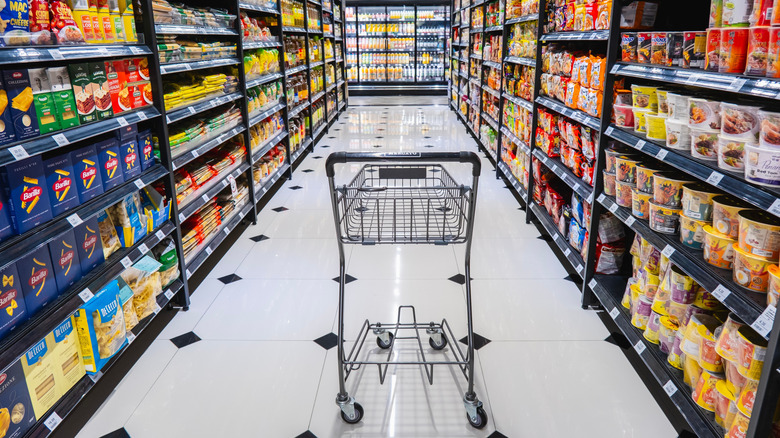
Abdul Razak Latif/Shutterstock
When shoppers walk into a Grocery Outlet today, hunting for deals on brand-name groceries, few realize they're standing in a store with roots that trace back to World War II military surplus. The discount grocery chain that now operates over 400 locations across the United States began its journey in 1946 with a very different inventory than the fresh produce and frozen foods it stocks today.
Founder Jim Read opened his first store in San Francisco, selling military surplus items at heavily discounted prices during the post-war boom. It's one of the untold truths of Grocery Outlet, and one of the ways he got his foot into the proverbial retail door. Read first opened his store as Cannery Sales, capitalizing on the abundance of government-issued supplies flooding the market after WWII ended – often called the "golden age of Army surplus stores."
As the military returned home from the war and the country emerged from years of wartime rationing, Americans began to buy houses and start families, and were eager to access affordable goods. Read's opportunistic approach to purchasing surplus inventory at bargain prices would become the foundation of what Grocery Outlet is known for today. The company transitioned from military surplus to selling closeout, factory seconds, and food items on discount in 1970, and was eventually renamed Grocery Outlet in 1987.
Grocery Outlet was built on an opportunistic buying model
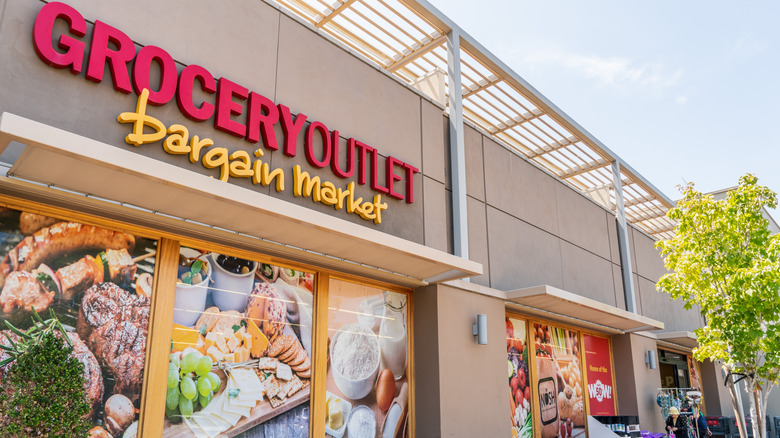
Sundry Photography/Getty Images
While Grocery Outlet no longer sells military canteens and surplus uniforms, the core principle established by Jim Read remains unchanged: acquire products at steep discounts and pass those savings to customers. It's a hidden gem among the many grocery store outlets, which gives customers amazing deals because the chain buys things like excess stock, allowing it to offer products at up to 70% lower than other stores.
The company's buyers travel extensively to source deals on brand-name products, whether from packaging changes, manufacturer overruns, or discontinued items. Today's shoppers might find anything from premium organic items to everyday staples at bargain prices. Although with items changing daily, a flexible shopper will find the best deals. And the best items to buy at salvage grocery stores like Grocery Outlet are often canned goods, frozen foods, and bottled water. From its modest 1946 beginning selling WWII surplus to becoming one of the nation's largest extreme value retailers, Grocery Outlet has transformed the post-war abundance of military goods into a modern business model built on unbeatable savings.

 English
 Arabic
 French
 Spanish
 Deutsch
 Turkish
 Dutch
Dutch
 Italiano
 Russian
 Romaian
 Portuguese (Brazil)
 Greek
Greek