




ORION PRODUCTION/Shutterstock
So, what's the truth about superfoods? The term is thrown around a lot, especially in wellness circles, but the definition is often murky. In the most basic sense, a superfood refers to any food with an unusually high content of health-promoting nutrients. Superfoods, for instance, often contain large amounts of fatty acids or antioxidants. Blueberries, avocado, and kale are oft-cited superfoods, but a lesser-known vegetable actually reigns supreme.
According to a study by the Centers for Disease Control and Prevention, when it comes to ranking salad greens, watercress earned the top spot for nutrient density. The study looked at fruits and vegetables that delivered at least 10% of the recommended daily value of specific nutrients for every 100 calories. Researchers focused on nutrients associated with a reduced risk of chronic diseases, including folate, zinc, calcium, protein, fiber, and several vitamins. Based on these benchmarks, researchers assigned foods a score of 0 to 100, with watercress landing a perfect score.
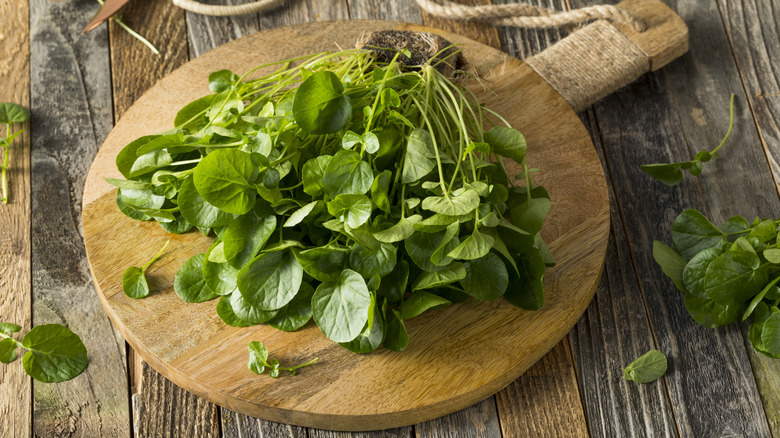
A cruciferous vegetable that often shows up in soups and salads, watercress sports some seriously impressive health benefits. First, it's packed with disease-fighting compounds like antioxidants, magnesium, calcium, and vitamins A, C, and K. Foods high in antioxidants may lower your risk of cardiovascular disease, diabetes, and certain cancers. Watercress also contains nutrients that may help reduce the risk of ailments like osteoporosis and high blood pressure while improving immune function.
How can I add more watercress into my diet?
Bhofack2/Getty Images
Now you know watercress is great — but how do you actually use it? Luckily, watercress is a versatile veggie that is easy to incorporate into a variety of dishes. One of the easiest ways to use it is to swap it in for other types of lettuce in salads. That said, it's worth noting that watercress has a slightly sharp, somewhat bitter flavor, so be prepared for a more boldly flavored meal. If you're averse to strong flavors, you can always mix watercress with your go-to leafy green to tone down the taste.
If you're not much of a salad person, there are plenty of other ways to eat watercress. For example, if you enjoy smoothies, you can use watercress as a way to get your daily serving of greens, pairing it with sweeter fruits to balance out some of the earthy flavor. Alternatively, watercress can be blended into puréed soups, like squash or potato soup, to add a little extra flavor without overwhelming the dish. Finally, if you're a fan of a good old-fashioned sandwich for lunch, opt for watercress as your vegetable of choice to add freshness and a subtle bite.

 English
 Arabic
 French
 Spanish
 Portuguese
 Deutsch
 Turkish
 Dutch
Dutch
 Russian
 Romaian
 Portuguese (Brazil)
 Greek
Greek