


This Simple Step Is What Separates Good Pico De Gallo From Great
Angelika Heine/Shutterstock
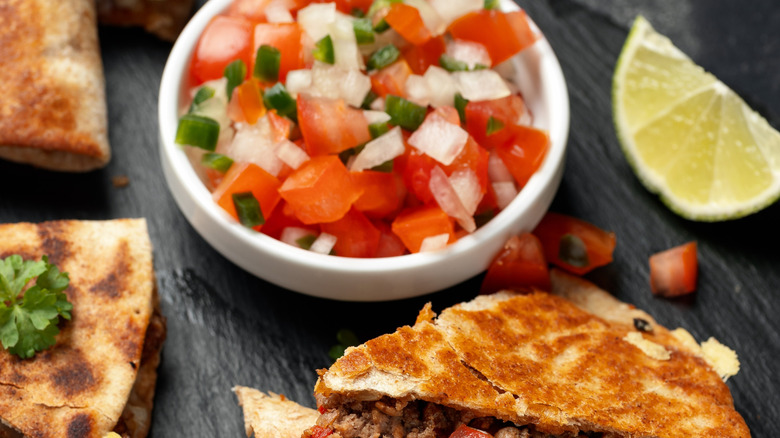
Pico de gallo is practically a must-have for Mexican and Tex-Mex dishes like tacos, quesadillas, and of course tortilla chips. Named after a rooster's beak, the fresh and tangy condiment often contains tomatoes, onions, cilantro, and jalapeños with lime juice and salt. A classic pico de gallo recipe is easy to make at home, no rooster required. You don't even have to use tomatoes — there are any number of fresh fruits and vegetables you can incorporate instead.
Although you can put the ingredients together quickly, there's a very important step to take if you want the best pico de gallo: Let it sit before serving. When thoroughly marinated, the condiment will have more intense, better-blended flavors than one you just prepared. That'll make for an even more delicious pico that packs a bigger punch when added to a dish.
Don't feel like making it from scratch? Good news: There are plenty of choices for pre-made pico de gallo in a supermarket, like this fan-favorite mango one from Aldi. And since commercial versions sit packaged in the store, they have likely had time to get more flavorful.
The salt and lime juice need some time to work
DronG/Shutterstock
In principle, this is similar to marinating other vegetable dishes. The pico de gallo ingredients will absorb the acidic lime juice, infusing the whole mixture with a rich tanginess. Additionally, salt will pull juices out of the ingredients, especially the tomatoes (which have a high water content). This results in more flavor. Even though the condiment hasn't been cooked, the salt will also cause it to taste less raw by breaking down fibers in the vegetables. To give the acid and salt enough time to work, let the condiment marinate for at least 20 minutes or up to a couple hours in the refrigerator.
Although the pico will soften as it sits, the main goal here is a bit different from why you marinate meat. In the latter case, acids denature the animal proteins, tenderizing the food and priming it to take in flavors. For pico de gallo — or most fresh vegetable salads that are marinated, for that matter — the focus is primarily on the flavor, not texture.
The texture of pico de gallo is important, though, and a key part of what makes this condiment different from salsa. Typically, salsa is blended smooth (sometimes with chunks in it), and some versions are cooked. However, pico de gallo is served chunky and raw.

 English
 French
 Spanish
 Portuguese
 Deutsch
 Turkish
 Dutch
Dutch
 Italiano
 Russian
 Romaian
 Portuguese (Brazil)
 Greek
Greek