


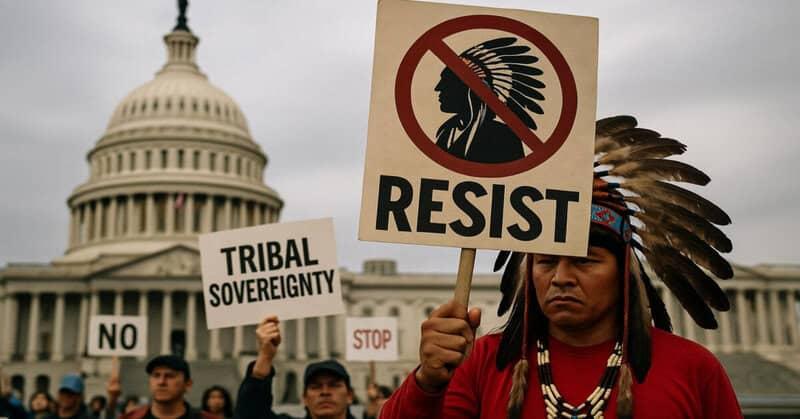
15 Reasons Why Native Americans Still Resist Federal Law

0
29

15 Reasons Why Native Americans Still Resist Federal Law

2. Broken Treaties

15 Reasons Why Native Americans Still Resist Federal Law
Image Source: Pexels.

Hundreds of treaties between Native American tribes and the U.S. government were signed and then broken, eroding trust. For example, the Treaty of Fort Laramie (1851) promised land to the Arapaho and Cheyenne, but was violated as settlers encroached during the gold rush. Similarly, the Treaty of Big Tree (1797) saw the Seneca Nation cede vast lands in New York, leading to displacement. These broken promises over land, resources, and rights linger in collective memory, reinforcing skepticism of government initiatives. (history.com)

3. Religious Freedom Restrictions

15 Reasons Why Native Americans Still Resist Federal Law
Image Source: Pexels.

Federal laws have historically restricted Indigenous spiritual practices, including access to sacred sites and the use of ceremonial substances, impacting religious freedom. The American Indian Religious Freedom Act (AIRFA) of 1978 aimed to protect these rights but lacked enforceable provisions. In 1983, the Lakota and Tsistsistas sued in federal court, claiming that development of Bear Butte State Park diminished the spiritual value of the site. The lawsuit failed, as did an appeal. (pbs.org) Additionally, the Religious Freedom Restoration Act (RFRA) of 1993 sought to prevent laws that substantially burden a person’s free exercise of religion. However, in 1997, the Supreme Court ruled in City of Boerne v. Flores that RFRA was unconstitutional as applied to the states, limiting its applicability. (en.wikipedia.org) These legal challenges highlight the ongoing struggle to protect Indigenous religious practices from federal restrictions.

4. Land Rights and Dispossession

15 Reasons Why Native Americans Still Resist Federal Law
The Dawes Act of 1887 fragmented Native lands, eroding sovereignty and fueling ongoing land disputes.

Federal policies, notably the Dawes Act of 1887, led to the loss of millions of acres from Native nations. The act divided communal lands into individual allotments, with surplus lands sold to non-Native settlers, resulting in a significant reduction of tribal territories. This dispossession disrupted traditional lifestyles and eroded sovereignty. Ongoing disputes over reservation boundaries and land use continue to arise when federal law prioritizes non-Native interests, such as mining or pipeline projects, over tribal lands. Learn more

5. Jurisdictional Conflicts

15 Reasons Why Native Americans Still Resist Federal Law
Image Source: Pexels.

Overlapping authorities—federal, state, and tribal—often lead to legal confusion on reservations. Federal intervention in criminal and civil matters can undermine tribal justice systems, prompting resistance as tribes seek authority over their own legal affairs. For instance, in 2023, a dispute in Oklahoma between Muscogee Nation tribal police and county jail officials highlighted tensions over jurisdictional boundaries. (apnews.com) Such conflicts underscore the complexities of governance within Native communities.

6. History of Forced Assimilation

15 Reasons Why Native Americans Still Resist Federal Law
Native children in boarding school uniforms, stripped of cultural identity under federal assimilation policies.

Federal policies, such as the establishment of boarding schools, aimed to erase Native identities and cultures. Children were forcibly removed from their families and communities, stripped of their traditional clothing, and forbidden to speak their native languages. These institutions subjected students to harsh discipline, manual labor, and cultural indoctrination. The Carlisle Indian Industrial School, founded in 1879, exemplified this approach, with its founder, Richard Henry Pratt, advocating for the complete assimilation of Native children. (calendar.eji.org) The legacy of these policies has left deep scars, leading to ongoing resistance as Native communities strive to protect and revitalize their cultural heritage. (britannica.com)

7. Environmental Stewardship

15 Reasons Why Native Americans Still Resist Federal Law
Native American tribes assert sovereignty to protect ancestral lands from federal hydropower and resource projects.

Tribal communities often oppose federal land policies that threaten their livelihoods and ecosystems, such as resource extraction projects. Their resistance is rooted in traditional stewardship values and a desire to protect ancestral lands. For instance, in 2024, the Federal Energy Regulatory Commission granted Native American tribes expanded authority to block hydropower projects on their lands, acknowledging their environmental concerns and sovereignty. (apnews.com)

8. Discrimination and Inequality in Law

15 Reasons Why Native Americans Still Resist Federal Law
Federal policies and laws have historically undermined tribal sovereignty, fueling ongoing legal and social resistance.

Federal laws have historically criminalized Native practices and discriminated against tribal peoples. For instance, the Major Crimes Act of 1885 expanded federal jurisdiction over certain crimes committed by Native Americans in Native territories, undermining tribal sovereignty. (en.wikipedia.org) Modern disparities in justice and resources, such as higher rates of discrimination in housing and employment, reinforce a sense of injustice, fueling legal and social resistance. (indigenousrightscenter.org)

9. Resource Access and Exploitation

15 Reasons Why Native Americans Still Resist Federal Law
Native communities advocate for resource sovereignty amid federal laws enabling external exploitation of tribal lands.

Federal laws have historically enabled non-Native exploitation of resources on tribal lands, such as water, minerals, and timber. The Indian Mineral Leasing Act of 1938 allowed for the leasing of unallotted lands within Indian reservations for mining purposes, often without sufficient tribal oversight. (en.wikipedia.org) This has led to environmental degradation and economic disparities. Native communities resist these practices to protect their resources for future generations and promote sustainable development. (en.wikipedia.org)

10. Continuation of Traditional Governance

15 Reasons Why Native Americans Still Resist Federal Law
Native American tribes uphold traditional governance structures that sometimes conflict with U.S. legal systems.

Many Native American tribes uphold traditional political systems that often conflict with U.S. law. For example, the Pueblo peoples in New Mexico maintain governance centered around religious societies and clan leadership, with governors typically appointed by religious leaders to handle external political affairs. (fiveable.me) Similarly, the Chickasaw Nation operates under a constitution that establishes a tripartite government, including a Tribal Council, a Council of Elders, and a Tribal Court, each with distinct responsibilities. (en.wikipedia.org) Federal efforts to impose new governance models have been met with resistance as tribes strive to preserve their authority and cultural practices. (acs.ncai.org)

11. Policing and Law Enforcement Issues

15 Reasons Why Native Americans Still Resist Federal Law
Tribal law enforcement struggles with limited resources and jurisdictional challenges, impacting community safety.

Jurisdictional confusion and inadequate federal resources for tribal policing create significant challenges in law enforcement. Tribal law enforcement agencies often face staffing shortages and limited funding, hindering their ability to effectively address crime within their communities. For example, a 2021 report highlighted that tribal law enforcement agencies have limited resources to investigate cases of missing or murdered Indigenous women, leading to inadequate responses to such critical issues. (gao.gov) Many communities resist federal intervention, advocating for direct support and greater control to enhance safety and justice. The Government Accountability Office has identified systemic barriers that prevent tribes from accessing federal programs and funding, exacerbating these challenges. (gao.gov)

12. Education Autonomy

15 Reasons Why Native Americans Still Resist Federal Law
Tribal leaders advocate for culturally rooted curricula, challenging federal mandates to preserve Indigenous education a…

Federal education policies often conflict with Indigenous knowledge systems. The Bureau of Indian Education (BIE) oversees 183 schools serving approximately 40,000 students across 23 states, aiming to provide quality education opportunities that align with tribal needs. (bia.gov) However, tribes resist mandated curricula and seek authority to design education rooted in their language, culture, and values. This pursuit of educational autonomy is essential for preserving cultural heritage and promoting self-determination. (bie.edu)

13. Economic Barriers from Federal Policies

15 Reasons Why Native Americans Still Resist Federal Law
Native American tribes face economic barriers from federal policies, complex land trusts, and limited funding access.

Federal policies have created significant economic obstacles for Native American tribes, including bureaucratic red tape, restricted access to capital, and complex land trust systems. These challenges hinder economic development and self-determination. For instance, a 2024 report by the Government Accountability Office highlighted systemic barriers that limit tribes’ access to federal programs and funding, such as complex application processes and financial constraints. (gao.gov) Additionally, the fractionation of land ownership, resulting from historical policies like the Dawes Act, has led to parcels with numerous owners, complicating development efforts. (nativeamericantribes.info) Tribes often resist these federal interventions, advocating for greater self-determination over economic development to promote sustainable growth and preserve cultural heritage. (americanbar.org)

14. Health Imbalances Driven by Federal Healthcare Policy

15 Reasons Why Native Americans Still Resist Federal Law
Chronic underfunding of Indian Health Service perpetuates health disparities and limited care for Native Americans.

Decades of underfunding for the Indian Health Service (IHS) have led to ongoing health disparities among Native American communities. In 2022, the IHS budget was approximately $4,000 per patient, compared to the national average of $12,530 per person for healthcare expenditures. (congress.gov) This chronic underfunding has resulted in inadequate facilities, staffing shortages, and limited access to essential services. Consequently, Native communities experience higher rates of chronic diseases and lower life expectancy compared to the general population. In response, tribes resist federal inaction and advocate for fully honoring treaty health obligations to ensure equitable healthcare access and improve health outcomes. (nihb.org)

15. Preservation of Language and Culture

15 Reasons Why Native Americans Still Resist Federal Law
Native communities advocate for language revitalization amid ongoing challenges to cultural and linguistic rights.

Language suppression policies and failures to recognize the official status of Native tongues have threatened cultural survival. The Native American Languages Act of 1990 declared it the policy of the United States to preserve, protect, and promote the rights and freedom of Native Americans to use, practice, and develop Native American languages. (en.wikipedia.org) Despite this, many Native communities continue to resist federal policies that hinder language revitalization and cultural celebration. Initiatives like the “Connecting the Rainbow” project aim to bridge the gap between Native youth and elders to preserve Indigenous languages and cultures through modern storytelling techniques. (axios.com) Additionally, the Durbin Feeling Native American Languages Act of 2020 seeks to enhance federal support for language revitalization efforts. (indian.senate.gov) These efforts exemplify the ongoing resistance to federal policies that impede the preservation and revitalization of Native languages and cultures.

Conclusion

15 Reasons Why Native Americans Still Resist Federal Law
A group of Native American activists, draped in traditional regalia, peacefully protest with a large Native flag. | Photo by Alex on Pexels

The enduring resistance of Native American communities to federal laws is deeply rooted in a complex history of broken treaties, cultural suppression, and sovereignty challenges. (history.com) This resistance underscores the imperative to honor treaties, respect tribal authority, and support Native paths to social, economic, and legal justice. (ncai.org) Such commitments are essential for fostering equitable relationships and ensuring the preservation and flourishing of Native cultures and rights. (connections.hca.wa.gov)

Cerca
Categorie
Leggi tutto
Giochi
After joking about buying Amazon MMO New World, Rust boss says to "keep hope" as he signs NDA with an "unnamed company"
After joking about buying Amazon MMO New World, Rust boss says to "keep hope" as he signs NDA...
By Test Blogger6 2026-01-31 16:00:17 0 349
Technology
There are only a few hours left to save on this all-in-one AI tool
There are only a few hours left to save on this all-in-one AI tool...
By Test Blogger7 2026-01-31 11:00:35 0 237
Home & Garden
I Tried Ina Garten’s Favorite Valentine’s Day Dessert, and It Was Love at First Bite
I Tried Ina Garten’s Favorite Valentine’s Day Dessert, and It Was Love at First Bite Credit:...
By Test Blogger9 2026-02-07 18:00:30 0 1
Technology
10 cool examples of Project Genie, the AI world model that sent video game stocks diving
10 cool examples from Google's Project Genie...
By Test Blogger7 2026-02-02 23:00:23 0 177
Food
This Easy Pantry Add‑in Gives Mac And Cheese A French Flair
This Easy Pantry Add‑in Gives Mac And Cheese A French Flair...
By Test Blogger1 2026-02-01 03:00:13 0 203