


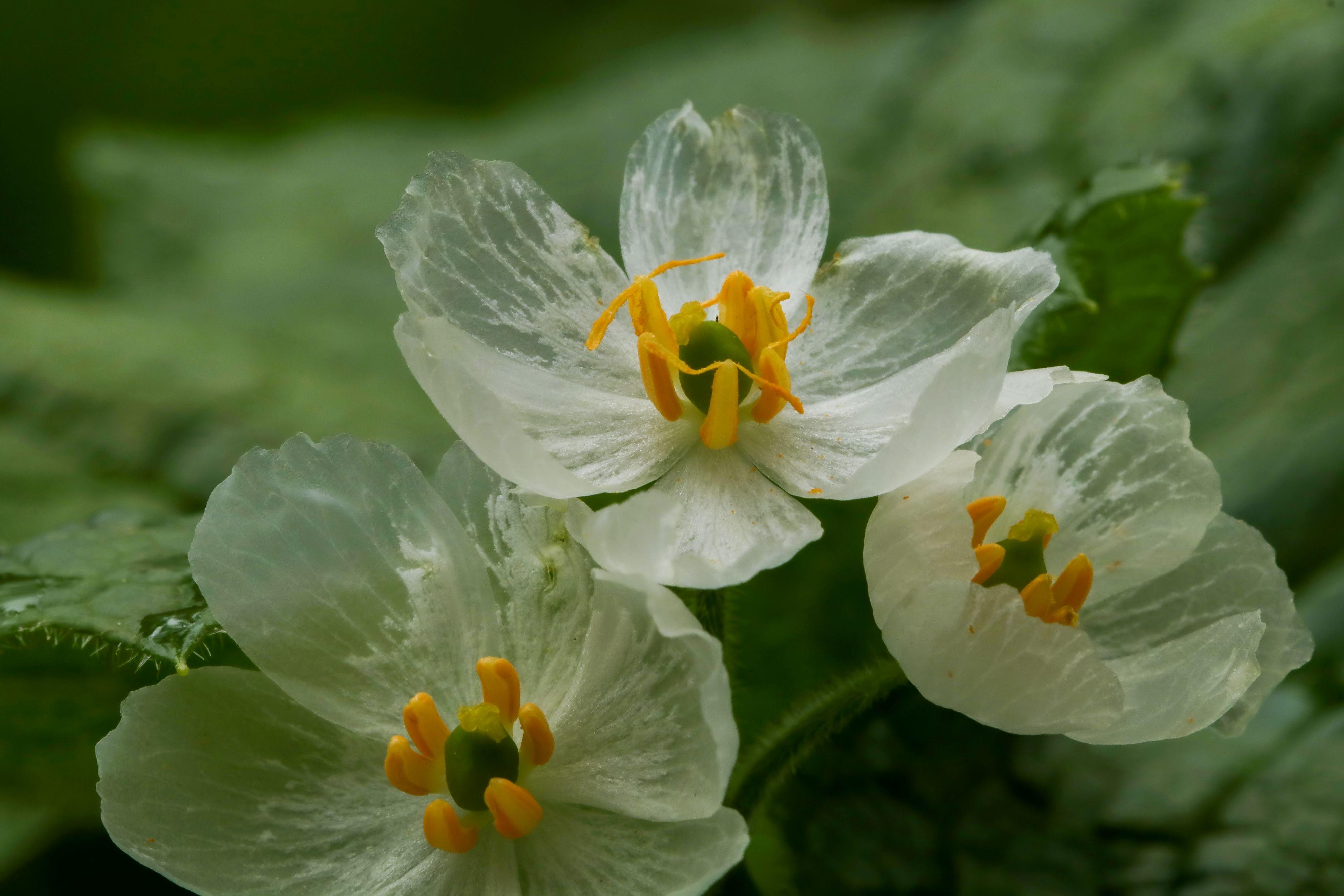
Once you see skeleton flower (Diphylleia grayi) in the garden, it's clear how it got its name: Its white petals turn clear when wet with rain or dew, revealing the veins and support structures inside. A deciduous perennial used as a groundcover in shady locations, skeleton flower spreads underground by rhizomes, with plants reaching about 12–18 inches tall and spreading 2 to 3 feet wide. Skeleton flowers have a reputation for being finicky, but that's only true if they are forced to grow in locations that don't meet their needs. Here's exactly where to plant and how to care for skeleton flowers to experience their strange beauty.
Skeleton Flower Overview
| Genus Name | Diphylleia grayi |
| Common Name | Skeleton Flower |
| Additional Common Names | Umbrella leaf, Asian umbrella leaf |
| Light | Part Sun, Shade |
| Height | 12 to 18 inches |
| Width | 24 to 36 inches |
| Flower Color | White |
| Foliage Color | Blue/Green |
| Zones | 4, 5, 6, 7, 8, 9 |
| Propagation | Division, Seed |
| Problem Solvers | Groundcover |
Where to Plant Skeleton Flower
Skeleton flower plants naturally thrive in the cool, forested mountains of Japan and China. The more closely you mimic this environment, the less effort your skeleton flowers will require in order to thrive. Make sure to choose shady, wind-protected sites for planting these flowers. Dappled light is ideal, but it's essential to avoid full sun, particularly in the afternoon, as it can be harsh on these plants. To create the best visual effect in your garden, you should plant skeleton flowers in clusters, spacing them roughly 2 feet apart so they can naturally fill out the space.
Check the botanical name, Diphylleia grayi, when ordering or purchasing. Several other plants have "skeleton" in their common name, and some, such as skeleton weed (Chondrilla juncea), are invasive.
How and When to Plant Skeleton Flower
If you would like to plant skeleton flowers, you can purchase them as nursery container stock or bare-root plants. Plant them in the spring season, about two to three weeks after the last frost in your area. Before you begin planting, make sure to enrich the soil with compost. Dig a hole twice the size of the root ball and gently spread the roots inside. Press the soil firmly to eliminate any air pockets and ensure good root-to-soil contact.
yamatsu / Wikimedia Commons
Skeleton Flower Care Tips
When grown in the right conditions, skeleton flowers will gradually spread through the area and create a durable groundcover that requires minimal maintenance throughout their lifetime.
Light
Skeleton flowers naturally grow in the understory of forests, where they thrive in dappled light and shade. Woodland-shaded areas provide the perfect setting for these specific plants.
Soil and Water
When choosing a place in your yard for skeleton flower plants, select loamy, well-drained, yet moist soil that is rich in organic matter—think forest floor, not a sunny vegetable garden. Enrich the soil with leaf mold and compost to supply nutrients and retain moisture without becoming soggy. Remember, skeleton flowers perform best in acidic to neutral soil with a pH between 4.5 and 7.0.
These flowers prefer the consistent moisture found under a forest leaf layer but should never sit in water. During dry spells, especially in the first year of planting, it's important to water them once or twice a week to keep the soil adequately moist.
Temperature and Humidity
Skeleton flowers can adapt to many different climates but thrive when they are planted in regions with cool to cold winters and mild summers. These plants are hardy in USDA Zones 4-9, making them suitable for many different areas.
Fertilizer
Skeleton flowers grow slowly, so they don't require much supplemental fertilizer in order to thrive. An annual application of compost serves as an excellent mulch to meet their nutritional needs. If your soil is nutrient-poor, you can apply a general-purpose, slow-release 10-10-10 fertilizer every spring season in order to support healthy growth.
Pruning
Skeleton flowers don't require pruning. During autumn, their foliage naturally dies back, and you can leave the dead leaves and stems in place for protection during the harsh winter months.
Pests and Problems
When given proper care, skeleton flowers are generally resistant to pests and diseases. Providing ample shade and maintaining healthy soil can help prevent issues, including occasional damage from slugs and snails, root rot, and powdery mildew.
How to Propagate Skeleton Flower
By division: Propagating skeleton flowers is straightforward through the division of existing plants. Here’s a guide to show you how:
- In the spring season, after the frost has passed in your area, gently dig up the skeleton flower.
- Use a spade or soil knife to divide the root crown and vegetation into multiple sections. Make sure each piece includes a part of the root crown and some leaves.
- Replant every section, ensuring they are well-watered and mulched.
From Seed: If you want to start skeleton flowers from seeds, cold-stratification is necessary. The simplest method is to sow seeds outdoors in the fall and let natural winter conditions break the seed dormancy. For starting seeds indoors, follow these simple steps:
- Cold-stratify the seeds by placing them inside of a refrigerator for two to three months.
- Plant the seeds ¼ inch deep in a potting mix approximately six weeks before the last frost date in your area.
- Keep the soil mix moist but not soggy. Since germination rates are typically low, sow significantly more seeds than you plan to grow.
Skeleton Flower Companion Plants
Skeleton flowers pair beautifully with taller, shade-loving plants. Consider these excellent companions for your garden.
Ferns
Ferns, particularly those native to your specific region, offer shade-tolerant greenery and beautiful foliage. For a more natural appearance, mix ferns with other species in your garden. Their lush fronds provide color and texture when paired with shade-loving flowering plants.
Jack-in-the-Pulpit
Jack-in-the-pulpit (Arisaema triphyllum) is a delightful woodland wildflower featuring hooded flowers in the spring season and bright red berries in autumn. Hardy in Zones 3-9, this stunning plant tolerates both partial sun and shade. Its ability to thrive in poorly drained soil makes it ideal for the garden's more boggy areas.
Japanese Primrose
Late in the spring season, Japanese primrose (Primula japonica) brings vibrant color to partly shady, damp areas of your garden. The flowers, which are available in beautiful shades of pink, red, purple, or white, are held aloft on 18-inch stems. This plant thrives in Zones 4-8.
Hostas
Grant Webster
Hostas, which are a perennial favorite in shade gardens, feature striking leaves with diverse patterns and textures. Larger hosta varieties provide a dramatic contrast to the smaller skeleton flowers. Like skeleton flowers, they thrive in areas with loamy, well-drained soil.
Frequently Asked Questions
-
Skeleton flowers are not commonly found in nurseries and greenhouses. You may have to order them from specialty online vendors or purchase and start seed. Once you've established a patch, you can divide some and give them to gardening friends.
-
Skeleton flowers are deciduous perennials that die back in winter and sprout from the root crown again in spring. When grown in the proper conditions, they can live for many years.
-
Skeleton flowers can grow successfully in containers with adequate nutrients, light, moisture, and drainage. However, unlike other houseplants, these flowers need to be exposed to a period of cold every year and allowed to go dormant. If you grow them in the house, place the pot outside in a shaded and protected area in autumn. When the plant goes dormant, move it to a safe but unheated location for the winter. Set it back outside in spring and bring it into the house after it wakes from its winter nap.

 English
 Arabic
 French
 Spanish
 Portuguese
 Deutsch
 Dutch
Dutch
 Italiano
 Russian
 Romaian
 Portuguese (Brazil)
 Greek
Greek