


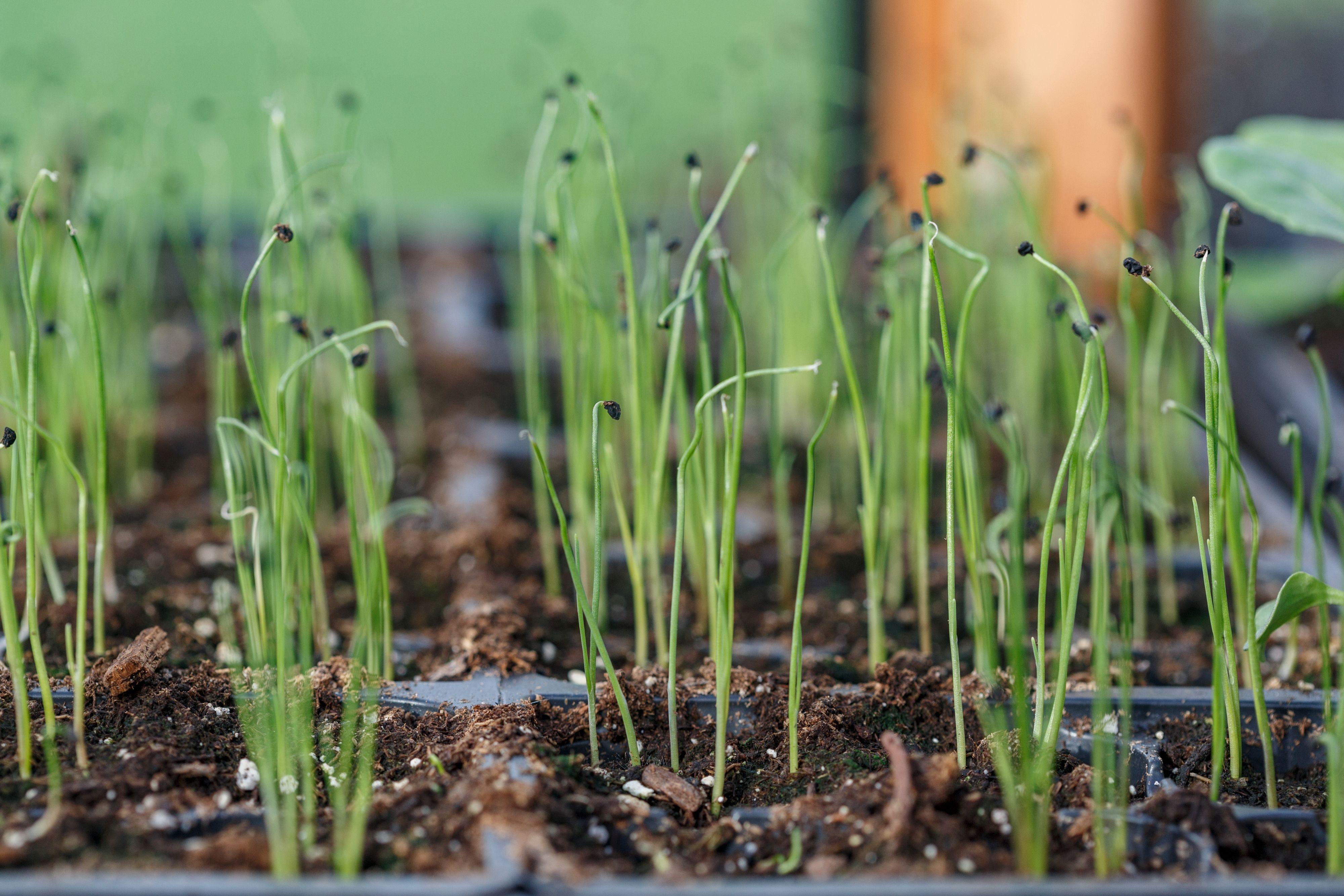
Growing onions from seed takes a bit more planning than planting onion sets, but it has a lot of perks. Not only are onion seeds more affordable than onion sets, but you can also grow a wider variety of onions from seed since some types are never sold in set form. No matter where you live or the varieties you choose, these simple tips will help you plant and grow a successful harvest of onion bulbs from a handful of tiny seeds.
1. Choose the Right Type of Onion
When most people think about onion varieties, they think about onions with different colors and flavors, like red onions, white onions, yellow onions, and sweet onions. However, when planting onions in the garden, it’s also essential to select an onion variety appropriate for your growing location. Typically, onions are divided into three main categories based on their care needs, and selecting the right onion type for your region will help you grow bigger bulbs.
- Long-day onions are the best choice for cool climates. They are usually planted in early spring and start forming bulbs when they receive at least 14 hours of daylight. Many storage onions are categorized as long-day onions.
- Short-day onions are best for gardeners in USDA Hardiness Zones 7 or warmer. They start forming bulbs when the plants receive about 10 to 12 hours of light daily. These onions are usually planted in the fall for a spring harvest.
- Day-neutral onions are best for Zones 5 and 6. Many sweet onions are technically day-neutral onions. They begin bulbing when days are about 12 to 14 hours long. Day-neutral onions can be planted in late fall or early winter in warm areas or early spring in chillier climates.
2. Use Fresh Seeds
Most vegetable seeds give you a bit of wiggle room when it comes to their “best by” or “expiration date,” but onion seeds are more fragile. Onion seeds only stay viable for one to two years, and then their germination rates rapidly decline. It’s usually best to buy fresh onion seeds every year. However, if you want to use up older seeds, plant two to three times more seeds than you think you need to ensure at least some of them sprout.
3. Plant at the Right Time
Gardeners in mild climates often have success by direct sowing onion seeds outdoors in fall or early winter. In areas with long, cold winters, it’s usually better to start seeds indoors in late winter to early spring, about eight to twelve weeks before the last frost date. The ideal planting time for onion seeds varies depending on where you live and the types of onions you grow, but in general, onion seeds are usually started indoors in February or early March.
4. Use Roomy Containers
Repotting onions can be tricky, and young seedlings are easy to damage. Instead, avoid repotting by starting onion seeds in larger-than-usual planting containers filled nearly to the top with a soil-free seed-starting mix.
Seedling trays with humidity domes are a popular choice for starting onion seeds, but you can also start seeds in upcycled clamshell takeaway containers with a few drainage holes poked in the base.
5. Follow Sowing Instructions
To plant onion seeds, evenly scatter the seeds across the surface of pre-moistened seed-starting mix and then cover the seeds with a light sprinkling of the seed-starting mix. Gently press the seeds into the substrate and cover the planting container with a clear plastic bag or humidity dome to lock in humidity. Onion seeds don’t need light to germinate, but they should be moved under a grow light after they sprout.
Related
6. Keep Seeds Warm
Like most other vegetable seeds, onions germinate faster in warm soil. To speed up germination, place onion planting containers on top of your fridge or on a seedling heat mat that keeps the soil around 68° F to 77° F. When the seeds sprout, remove the humidity dome or plastic bag covering and turn off the heating mat to keep the soil from drying out.
7. Water Often
Onion seeds and indoor seedlings should be watered regularly to keep the soil evenly moist but not soggy. To avoid dislodging lightweight seeds, water seeds and young seedlings with a spray bottle and then transition to a watering can as the seedlings grow. When the plants are about 3 inches tall, mix diluted liquid fertilizer into your watering can and apply this nutrient-rich mixture every other time you water for sturdier onion plants.
8. Trim Leaves as Needed
Trimming drooping onion leaves from time to time keeps young seedlings tidy and makes transplanting easier. When seedlings are about 6 inches tall, cut back the leaves by 2 inches using clean, sterilized scissors or shears and continue trimming the leaves as needed. Depending on how close you plant the onion seeds, you might want to thin out the weakest seedlings to give the remaining onions more room to grow.
9. Harden Off Tender Seedlings
Indoor seedlings are ready to transplant outside when they have at least three leaves and outdoor temperatures are consistently around 50° F. In northern climates, this usually occurs in April or May. Remember to harden off the seedlings for a week or two before transplanting to avoid transplant shock.
10. Transplant Indoor Seedlings Outside
When it’s time to transplant, choose a sunny location with rich soil and minimal weeds. Prepare the soil by digging a shallow trench and sprinkling compost along the trench base. Plant the onion seedlings approximately ½ inch deep so that the forming bulbs and roots are barely covered with soil, and lightly tamp down the soil to keep the onion seedlings upright. Space onions about 4 to 6 inches apart in rows approximately 12 to 18 inches from each other. Continue to water and fertilize your onion plants until the leaves begin to droop, signaling harvest season has begun.
Frequently Asked Questions
-
Onion seeds don’t need to be soaked before planting, although soaking seeds in water for 12 to 24 hours can speed up germination.
-
Most onions take about 90 to 100 days to reach a harvestable size when grown from seed. However, onions are biennial plants, so you need to leave plants in the ground for two years if you want to harvest and save the seeds.

 English
 Arabic
 French
 Spanish
 Portuguese
 Deutsch
 Turkish
 Dutch
Dutch
 Italiano
 Romaian
 Portuguese (Brazil)
 Greek
Greek