


Dmytro/Getty
Many people like a good spicy kick in their meal, usually in the form of some kind of chile pepper. One of the most common varieties is the jalapeño, which is also a crucial ingredient in many deliciously spicy recipes. But jalapenos famously come in varying degrees of heat, depending on a variety of factors. Luckily, there's a trick you can try if you want to have more control over the heat of a jalapeño.
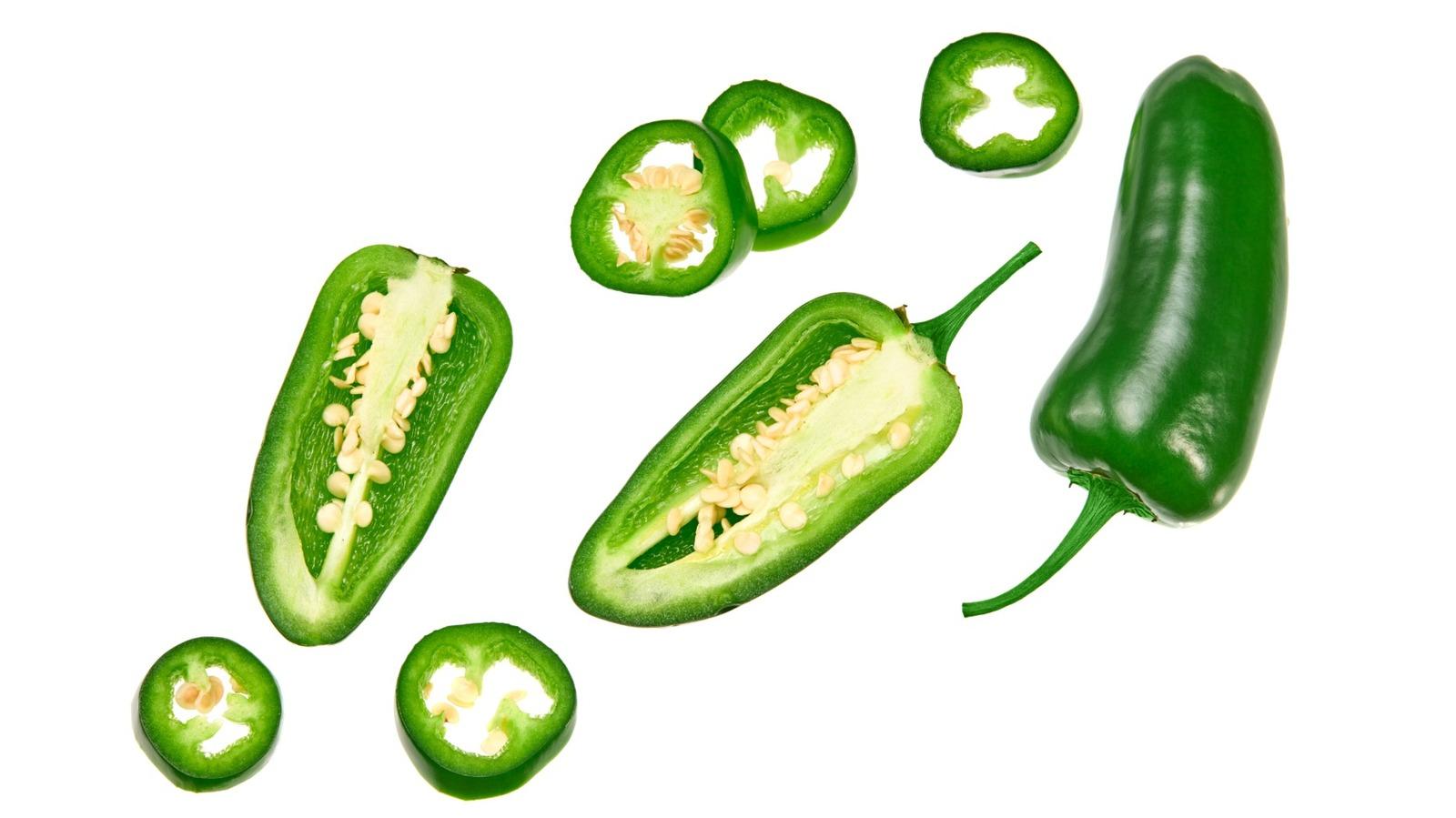
You may have heard of the spicy-food myth that removing the seeds from a chile pepper is the best way to remove its heat. The heat of a chile pepper comes from the capsaicin compound, which is found mostly in the placenta of the pepper, that white-ish membrane inside the fruit that you will sometimes hear referred to as the "ribs" or the "veins" of the pepper. Therefore, the easiest way to tame their spice is to remove these membranes before processing the jalapeños further.
Because of the shape and structure of chile seeds, they do not produce or absorb these compounds, but because the seeds sit along the membranes of the chile pepper, they inevitably get blamed for the heat, and they usually get removed as well. This is probably how the old wives' tale of "removing the seeds to cut the spice" gained credence.
If you can't take the heat, trim it away
Jo Bolio/Shutterstock
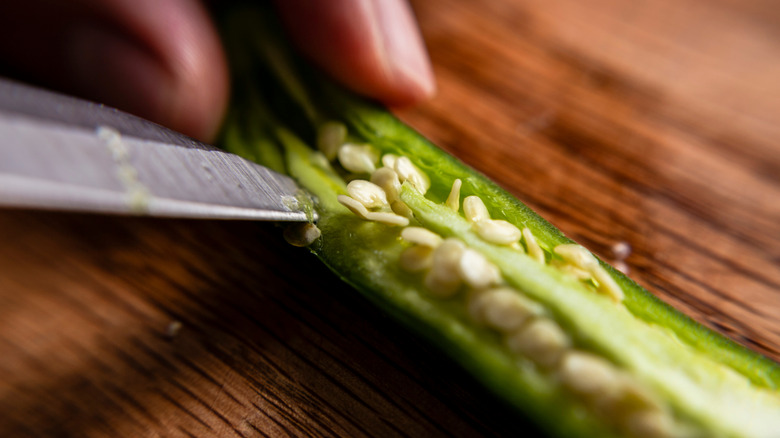
So how does one remove these capsaicin-laden membranes from jalapeños? The most straightforward way is to lay the chile pepper flat on a cutting board, then use a knife to slice lengthwise down its middle from top to bottom. Once you have two separate halves of chiles, you have a choice of using a spoon or a knife to remove the membranes. With a knife, simply guide the tip of the blade between the membrane and the flesh of the chile pepper and carefully trim the white pith away.
If you would like to switch to a spoon instead, you can use a small spoon to scoop and scrape the membranes out. Using a spoon helps prevent you from taking away too much flesh and may potentially be easier if you are dealing with a lot of jalapeños. Make sure that you are wearing gloves during this process, or remember to wash your hands with soap after processing the chiles before the capsaicin settles into your skin.
While many people add chile peppers to their dishes to increase the level of spice, all varieties of peppers have their own distinct flavors underneath all that heat. By removing the main source of heat, you can increase the flavor profile of the pepper without significantly increasing its spice.

 English
 Arabic
 French
 Spanish
 Portuguese
 Deutsch
 Turkish
 Dutch
Dutch
 Italiano
 Russian
 Portuguese (Brazil)
 Greek
Greek