


New Africa/Shutterstock
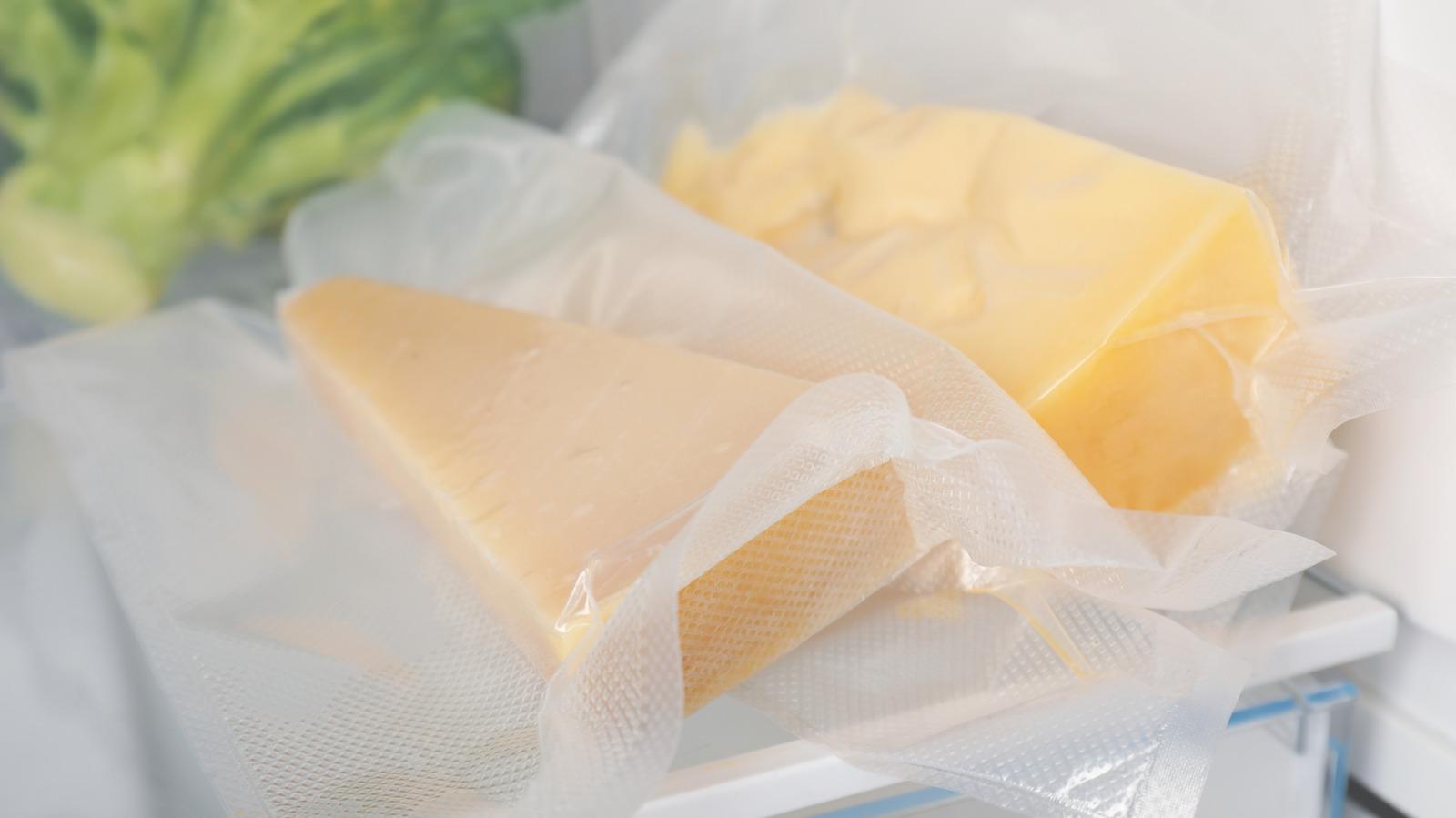
Brie, sharp cheddar, Manchego, and the list of varieties of cheese that might currently be stored in your fridge goes on. Whether you want to snack on the cheese or use it in your next batch of macaroni and cheese, the dairy ingredient needs to be fresh. In an interview with Mashed, Jill Allen, director of product excellence at Tillamook and an American Cheese Society-certified cheese professional, said the key to storing your cheese is to keep it in the coldest part of your refrigerator, where the temperature is between 35 to 45 degrees Fahrenheit — but away from the freezer, where the extreme cold air can affect taste and texture.
The cheese and produce drawers of your fridge are the ideal place to store your parmesan, Swiss, or other cheese types, since they feature a regulated temperature and provide a humid environment that keeps the cheese fresh. Depending on your fridge, you might be able to control the temperature and humidity levels of those drawers, so keep that in mind when you toss your cheese in there. An ideal humidity level is around 80% for most cheeses, so if you can control the drawers in your fridge, turn it up a notch. Meanwhile, aged cheeses will still thrive in lower humidity levels.
How to keep your cheese fresh in the fridge
Mighele/Shutterstock
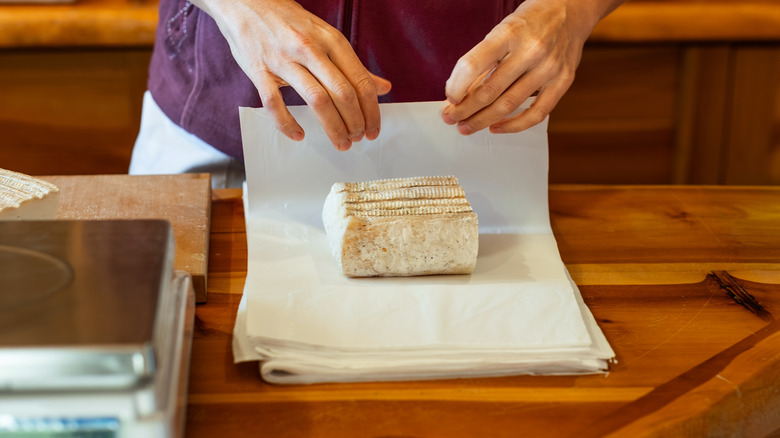
It's not just about how cold the area of your fridge is when it comes to keeping cheese fresh. Another key factor is how the cheese is wrapped. Your hunk of cheese might be wrapped tightly in plastic at the store, but that's not necessarily the best way to keep it once it's at home. Once opened, rewrap it in cheese, parchment, or wax paper instead of plastic wrap. This allows the cheese to breathe so that moisture doesn't build up and cause mold or mildew growth. You can safely store it in a plastic or reusable bag once it's wrapped. The caveat to this rule is soft cheeses like cream cheese or ricotta, which can be stored in the original containers.
Some cheeses can last months in the fridge when stored properly, but it's important to look for obvious signs that cheese is past its prime. A key indication that cheese should be thrown out is if it has a foul odor. Of course, some cheeses like Gruyère have a distinct scent, but if the cheese just smells bad, then it's likely not safe to eat. Other visible signs of spoiled cheese include blue, black, or fuzzy white spots on the exterior.

 English
 Arabic
 French
 Spanish
 Portuguese
 Deutsch
 Turkish
 Dutch
Dutch
 Italiano
 Russian
 Portuguese (Brazil)
 Greek
Greek