


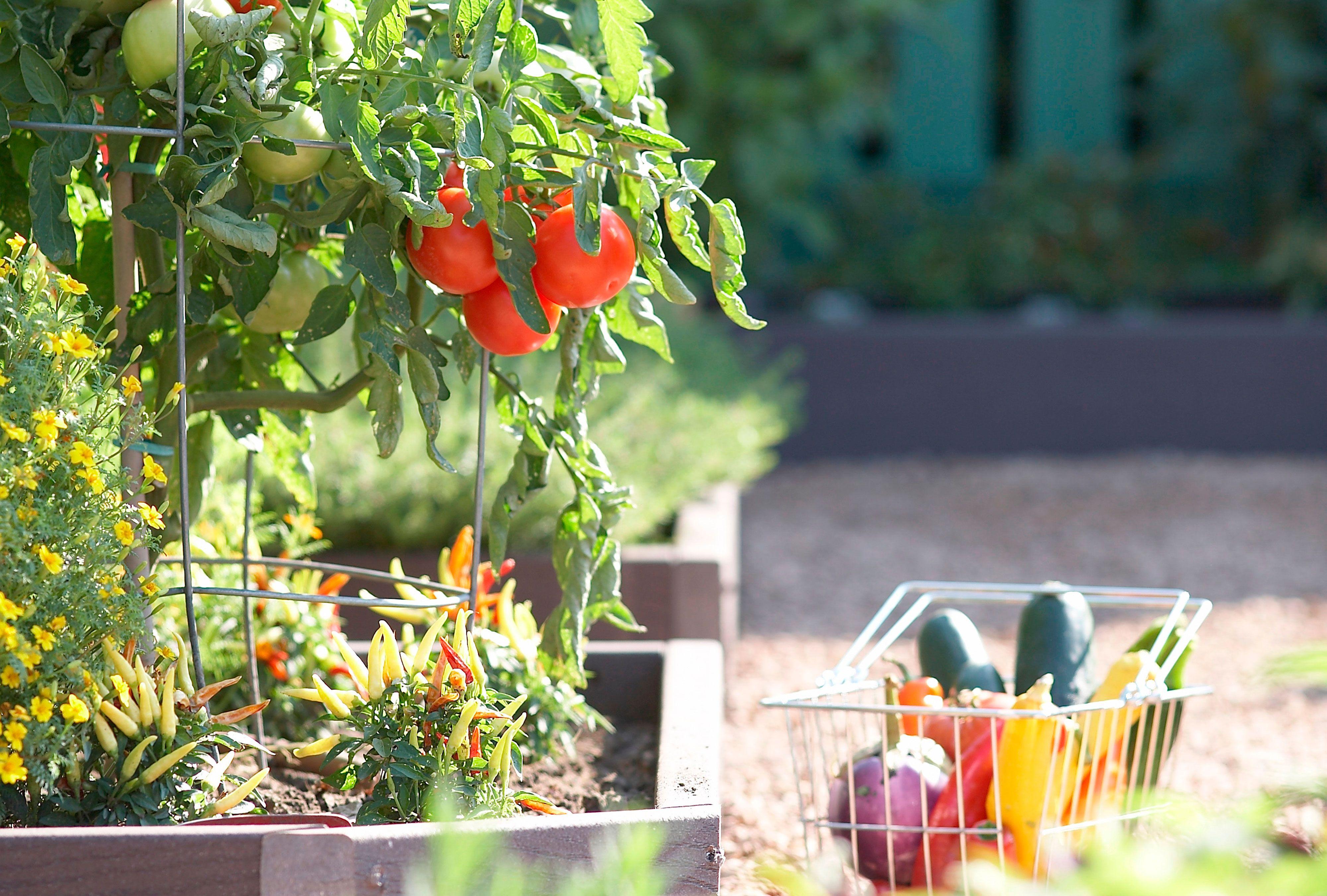
There are some vegetables whose seeds are best started indoors on a windowsill or in a greenhouse, long before transplants are planted out in the garden. This gives you a head start on the growing season.
The crops benefitting from seed starting indoors fall into two groups. A start in early spring is essential for warm-season crops like tomatoes and peppers, so you can harvest sun-ripened tomatoes starting in August, before weather conditions change in the fall. Starting some cool-season crops, such as broccoli and cauliflower, is also a good practice because they need a long stretch of cool weather to grow and produce their edible immature flower heads.
Find out which 7 veggies to start indoors for an early harvest this year.
Kindra Clineff
1. Tomatoes
To ensure your tomato crop is ready as early as possible, it is important to start your seeds indoors at the right time, not too early and not too late. Resist the urge to start seeds earlier than recommended, as seedlings that overstay their welcome indoors become lanky, weak, and are more susceptible to disease.
When to start: Start tomato seeds indoors 6 to 8 weeks before the average last frost date in your area. Transplant seedlings into the garden after the last frost when days are consistently above 65°F and nights above 55°F.
Growing tip: It’s essential to acclimate seedlings to the outdoor growing conditions before planting them, a process called hardening off. Once daytime temperatures are above 65°F, for about a week, place the seedlings outside in a protected location with a few hours of sunlight. Move the seedlings indoors at night. Keep them well watered as the soil dries out faster outdoors than indoors.
Recommended varieties: Early-season tomatoes such as ‘Bush Beefsteak’, ‘Celebrity’, and ‘Early Girl’ are ready for harvest 70 to 75 days from transplanting, and ‘Stupice’ even earlier, in 60 to 65 days.
Blaine Moats
2. Peppers
An early start indoors is a must for peppers to begin ripening by mid-summer. Whether you are growing hot peppers or sweet peppers, an early start will yield more peppers over the course of the season because in most areas, peppers fruit until frost.
When to start: Sow seeds indoors 8 weeks before the average last frost date in your area. Transplant seedlings into the garden after the last frost date when days are consistently above 65°F and nights above 55°F.
Growing tip: After sowing, keep the soil warm and damp until seeds germinate. Once the seeds have germinated, provide good air circulation and water the seeds as soon as the soil is dry to the touch.
Recommended varieties: Small, sweet peppers such as ‘Gypsy’, ‘Sweetie Pie’, and ‘Sweet Sunset’ are the earliest pepper varieties to ripen.
3. Eggplant
Just like tomatoes and peppers, this member of the nightshade family also needs a long growing season, around 100 days from starting the seeds to harvest, though there are some early varieties, too. Give these easy-to-grow plants an early start, and you’ll enjoy tender fruit in midsummer.
When to start: Sow seeds indoors 6 to 8 weeks before the average last frost date. Eggplants are highly cold-sensitive, so make sure nighttime temperatures consistently remain above 50°F before transplanting them. Harden off the transplants just like tomatoes.
Growing tip: If the eggplants have started to flower while indoors, pinch off the flowers until you have planted them in the garden.
Recommended varieties: Fast-maturing eggplants include 'Bambino’ with 1-inch-long, oval, purple-black fruit; ‘Ichiban’ with narrow, 12-inch-long, dark purple fruit; and 'Dusky', a glossy, dark purple, oval-shaped variety maturing in 60 to 65 days after transplanting.
Peter Krumhardt
4. Cabbage
Cabbage can be started indoors twice a year: in late winter or early spring for a spring crop, and again in mid-summer for a fall crop that you can harvest even after temperatures dip below freezing.
When to start: Start cabbage seeds 4 to 5 weeks before planting outside. Cabbage is very cold-tolerant; you can plant seedlings outside about 4 weeks before the average last frost date. For a fall cabbage crop, plant seeds indoors in late July or early August and transplant into the garden in September as the summer heat subsides.
Growing tip: Although cabbage seedlings tolerate a light frost between 28 and 32°F, they should be covered with row covers if a hard freeze occurs.
Recommended varieties: There are early-season and late-season cabbage cultivars that take more than 100 days to mature. Early-maturing cabbages include ‘Early Thunder’ (70 to 74 days from transplanting), ‘Stonehead’ (60 to 70 days from transplanting), and ‘Red Acre', an early red cabbage (75 days from transplanting).
Marty Baldwin
5. Cauliflower
Like cabbage, you can start cauliflower seeds indoors twice a year, for a spring or fall crop. The tastiest cauliflower forms during cool days and nights, so an early start is essential. Cauliflower thrives in temperatures between 60°F and 70°F, and it tolerates light frost.
When to start: Start seeds indoors 4 to 5 weeks before planting outdoors. Cauliflower can be planted outdoors 4 weeks or so before the average last frost date in your area, or in mid- to late summer for a fall harvest.
Growing tip: Harvest cauliflower when the heads are smooth, firm, and compact. Keep an eye on developing heads; they ripen quickly.
Recommended varieties: Early-season cauliflower cultivars are ‘Snow Crown’ (50 to 60 days from transplanting) and ‘Early Snowball’ (60 to 85 days from transplanting).
Bob Stefko
6. Broccoli
A cool-season crop that grows best in temperatures between 60°F and 70°F, broccoli thrives in the garden in spring. For a fall harvest, sow it indoors in summer before transplanting outside in fall.
When to start: Plant indoors 4 to 6 weeks before planting outside. Plan to plant broccoli transplants outside about 2 to 4 weeks before the average last frost date in your area.
Growing tip: Select the variety depending on when you plant your broccoli. For spring broccoli, heat-tolerant varieties with a short growth cycle (50 to 60 days from transplanting) are best. For fall or winter broccoli, select the opposite—varieties with a longer growth cycle of 60 to 85 days from transplanting to ensure that the heads are forming in cooler fall temperatures.
Recommended varieties: ‘Packman’ is an early producer of medium-sized heads (50 days from transplanting). ‘Imperial’ tolerates heat well and is a good choice for warm regions (66 days from transplanting).
Kindra Clineff
7. Brussels Sprouts
Because Brussels sprouts take a long time to mature, they need an early start to produce flavor-rich sprouts in late fall.
When to start: Start seeds indoors in May or June, and plant them outdoors 13 to 16 weeks before your expected first fall frost date.
Growing tip: Brussels sprouts develop the best flavor in cool temperatures. Hot weather, on the other hand, tends to make them taste bitter. Aim to plant them when the worst of the summer heat is over. Don't worry about fall frosts, as Brussels Sprouts happily survive them without any damage; they even taste better when harvested after the first frosts.
Recommended varieties: ‘Gustus’ has striking dark green sprouts. ‘Franklin’ is one of the earliest maturing Brussels sprouts (80 to 100 days from transplanting). 'Jade Cross’ is known for its large sprouts.
Crops Not Suitable for Starting Indoors
Not all vegetables benefit from an early start indoors. Beans, for example, tend to balk at indoor sowing and subsequent transplanting; direct sow them in the garden after the last chance of frost has passed. Other edibles that should be planted right in the garden include beets, carrots, cucumbers, sweet corn, lettuce, peas, and radishes.

 English
 Arabic
 French
 Portuguese
 Deutsch
 Turkish
 Dutch
Dutch
 Italiano
 Russian
 Romaian
 Portuguese (Brazil)
 Greek
Greek