


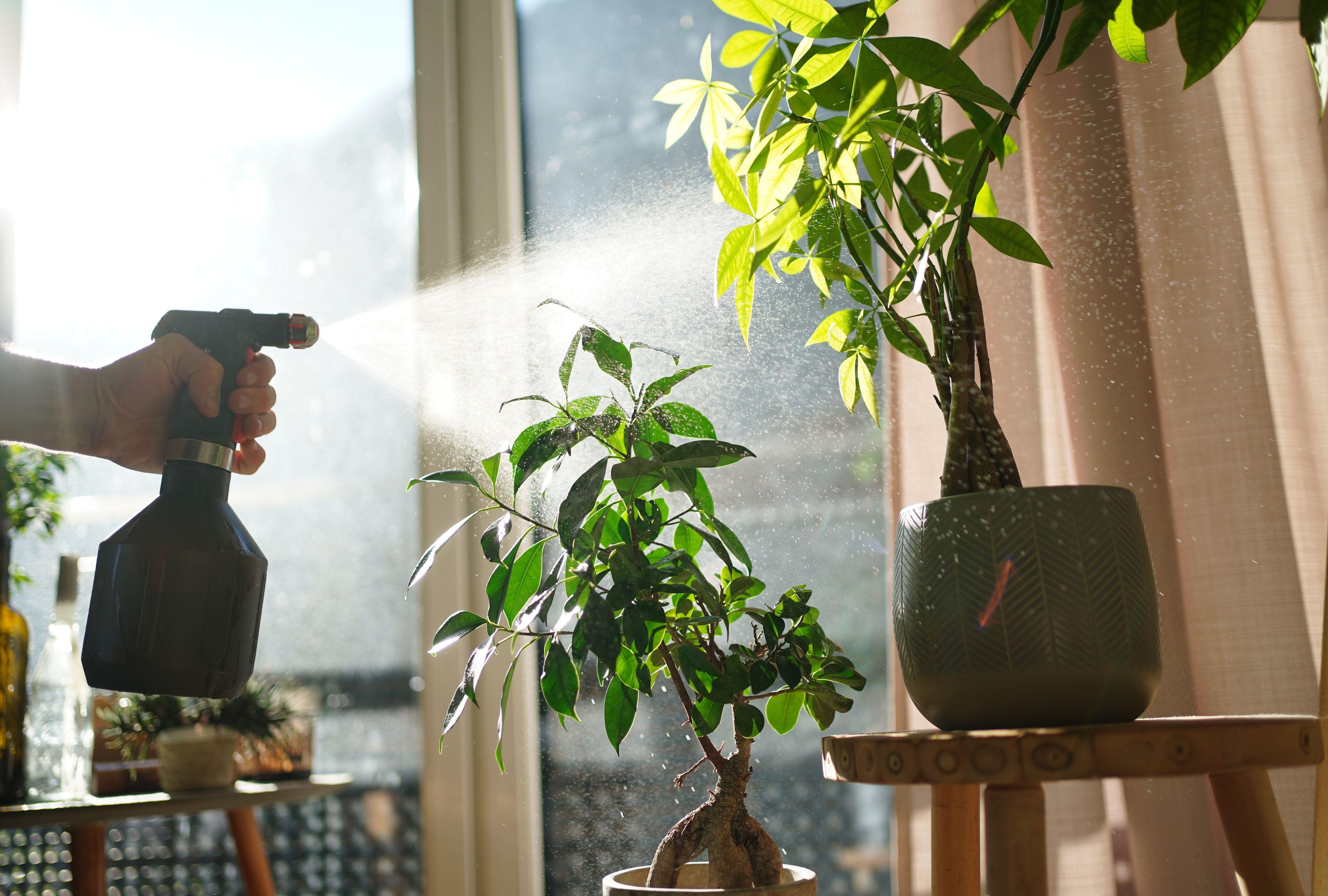
Native to Central and South America, money trees are popular houseplants with glossy green leaves and slender trunks, which are often braided for aesthetics. Knowing how to water a money tree is key to keeping it looking good. Despite the plant's tropical look, it doesn't need as much water as many other houseplants and can quickly develop root rot in soggy soil. These watering tips will help you judge how much and how often to water your money tree, and help you correct issues like drooping leaves.
When to Water a Money Tree
Many houseplants need to be watered every week, but money trees should only be watered when 50% to 75% of their soil feels dry. In hot, dry weather, money trees may require weekly watering, but in winter, money trees may only need to be watered once every 2-3 weeks. Indoor light, pot size, and humidity levels can also influence how much water money trees will need, and watering schedules should be adjusted accordingly.
Because there is so much variability with watering money trees, it’s important to always feel the soil before watering and to only water when the top 2-4 inches of soil feels dry. If in doubt, it’s usually best to withhold water for a few days, as overwatering is more likely to damage money trees than a brief spell of dry soil.
If you're prone to “over-loving"—aka overwatering—your houseplants, you may want to invest in a moisture meter to help you judge if your money tree needs more or less water.
How to Water a Money Tree
Money trees can be watered in several different ways, but two watering methods are the most popular: overhead watering and bottom watering. Both of these watering techniques are easy; the method you choose to use is totally up to you.
Overhead Watering
Money trees can be watered from the top down using a small watering can. The best way to do this is to place your money tree in your sink or in a large bowl and to water deeply until water trickles out of the pot’s drainage holes. Allow all of the excess water to drain out of your plant’s pot before placing your money tree back on its saucer and returning it to its growing spot.
This deep watering method allows water to saturate the soil around your plant’s roots and reduces the number of times you’ll need to water your money tree. It also ensures that your plant won’t be sitting in a water-filled saucer, which can lead to root rot.
Bottom Watering
Bottom watering is a less common watering technique, but it works on many houseplants, including money trees. To start, fill up your sink or a large bowl with several inches of tap water and then place your money tree pot in the water so that the bottom inches of the pot are submerged, and the pot rim is well above the water line. Allow your plant to absorb the water it needs for about 30 minutes, then remove the pot from the water and let the excess moisture drain away before returning your plant to its growing spot.
Related
Common Watering Issues
Watering stress is the most common cause of plant issues and it can produce browning or yellowing leaves and wilted plant stems. Unfortunately, the symptoms of overwatering and underwatering look quite similar. Low humidity levels can produce similar symptoms too. If your money tree is looking bedraggled and you’re not sure if it needs more or less water, these tips will help.
- Overwatering can cause plants to droop and wilt and it often produces dark splotches on money tree leaves and squishy plant stems. If you suspect that your plants are overwatered, feel the soil and inspect the plant’s roots for signs of rot. Overwatering can usually be fixed by adjusting your watering schedule and repotting your money tree (if needed) into a well-draining pot.
- Underwatering also causes plants to droop and wilt, but it can produce crispy leaf edges and curling leaves too. If your money tree is displaying these signs and the soil feels dry, it’s time to water.
- Low humidity can produce browning leaves and leaves with crispy margins, and this issue is especially pronounced in winter when indoor humidity is low. Remember, money trees are tropical plants and they grow best when humidity levels are between 40% and 60%. If your home is on the dry side, you may want to move your money tree near a humidifier or place it on top of a pebble tray to add extra moisture to the air.

 English
 Arabic
 French
 Spanish
 Portuguese
 Deutsch
 Turkish
 Dutch
Dutch
 Italiano
 Russian
 Portuguese (Brazil)
 Greek
Greek