


Key Takeaways
- Repotting in spring or summer is best, but if the plant is root-bound, it's OK to repot it any time of the year.
- The new pot should be only one to two sizes larger than the old container. Avoid oversized containers.
- If your money tree shows signs of transplant shock after repotting, make sure it's well watered and fertilize it.
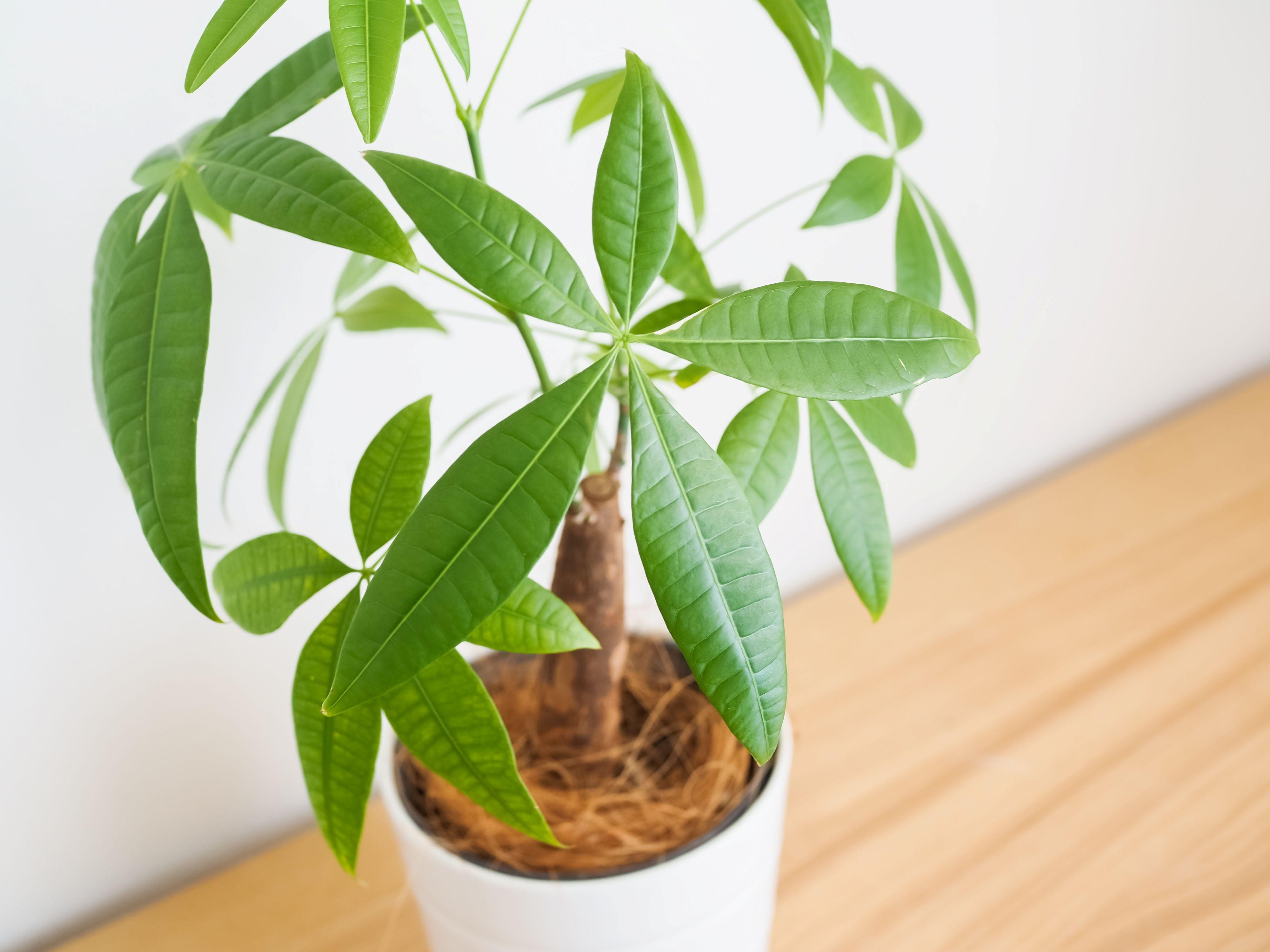
Money trees are considered fast-growing houseplants. Stunted plant stems, poor growth, and roots poking through the drainage holes of the pot are sure signs that it needs to be repotted. Though repotting a money tree is straightforward, it is critical to understand how to repot it without stressing out the plant.
Follow along with this step-by-step guide to learn when and exactly how to repot a money tree.
When to Repot Money Trees
While some fast-growing houseplants should be repotted every 1 to 2 years, money trees generally only need to be repotted once every 2 to 3 years. Spring to early summer is the best time to do that, but if they are displaying signs of stress, the plants can be repotted at other times of the year. If you’re not sure if this beginner-friendly tropical plant needs repotting or not, here are a few signs to watch for.
- Stunted plant growth. Money trees don’t like to be root-bound, and undersized containers cause plants to grow much slower. Root-bound money trees may stop producing new shoots and leaves.
- Drooping stems. Root-bound plants may look sickly, and their stems may start to droop. However, issues like overwatering may also cause drooping stems, so it’s important to consider other potential plant stressors before repotting.
- Broken pot. If your plant’s pot breaks, it’s definitely time for a new one.
- Visible roots. Overgrown roots that are visible through the drainage holes in your plant’s pot are one of the clearest indications that it's time to repot. When you remove a root-bound money tree from its container, you may notice that its roots are tangled into a tight knot.
- Root rot. This is usually the result of overwatering, and in most cases, root rot can be corrected by adjusting your watering schedule. However, if the root rot is severe and your money tree doesn’t bounce back, you may need to repot your plant into fresh soil.
Related
How to Repot Money Trees
It may be tempting to repot your money tree into a massive pot to accommodate its growing roots. However, oversized pots increase the chances of overwatering and cause money trees grow poorly. Instead, choose a container with drainage holes that’s just one or two sizes bigger than your existing planter and follow these simple steps to repot your money tree.
1. Water Your Money Tree
The day before you intend to repot, give your money tree a deep drink of water. Watering plants before repotting makes their pots easier to remove, but it also reduces the chances of transplant shock.
2. Remove the Old Pot
Use one hand to grasp the base of the money tree's stem just above the soil line and firmly hold the plant’s pot with your other hand. Using a gentle, pulling motion, carefully lift your money tree from its pot. If the pot is difficult to remove, flip the plant upside down or run a butter knife around the interior of the pot to loosen the plant’s roots.
3. Tidy up the Roots
Shake away the extra soil and inspect the roots for signs of damage or decay. Cut off any roots that are broken or mushy with root rotway with sterilized scissors. Gently tease apart root-bound roots with your fingers. While you’re at it, prune off damaged or brown leaves. If your money tree is braided, braid unbraided sections of your money tree’s stems together if you prefer that aesthetic.
4. Repot the Plant
Fill the base of the new container with 1 to 2 inches of fresh potting mix. Position your money tree in the pot so that the top of its root ball is 1 to 2 inches below the pot’s rim. Hold the plant’s stem in place while you fill up the pot with more potting mix. Firm the soil around your plant’s stem. When you’re done, the potting mix should sit about 1 inch below the rim of the pot.
5. Add Water
After repotting, return your plant to its original growing location and give it a deep drink of water. If your plant displays any signs of transplant shock after repotting, remove the damaged leaves and feed your plant with a diluted organic liquid fertilizer. Soon enough, your money tree should settle into its new pot and begin producing new leaves.
Frequently Asked Questions
-
Money trees have shallow root systems, so they grow best in pots that are wide and shallow, rather than tall and deep.
-
Yes! Drainage holes are a must. Money trees often develop root rot in poorly draining pots.
-
You can plant money trees in a standard houseplant potting mix or cactus and succulent blend. Or, if you prefer DIY, you can make your own potting mix by blending 1 part compost, 1 part perlite, and 1 part coconut coir.

 English
 Arabic
 French
 Portuguese
 Deutsch
 Turkish
 Dutch
Dutch
 Italiano
 Russian
 Romaian
 Portuguese (Brazil)
 Greek
Greek