


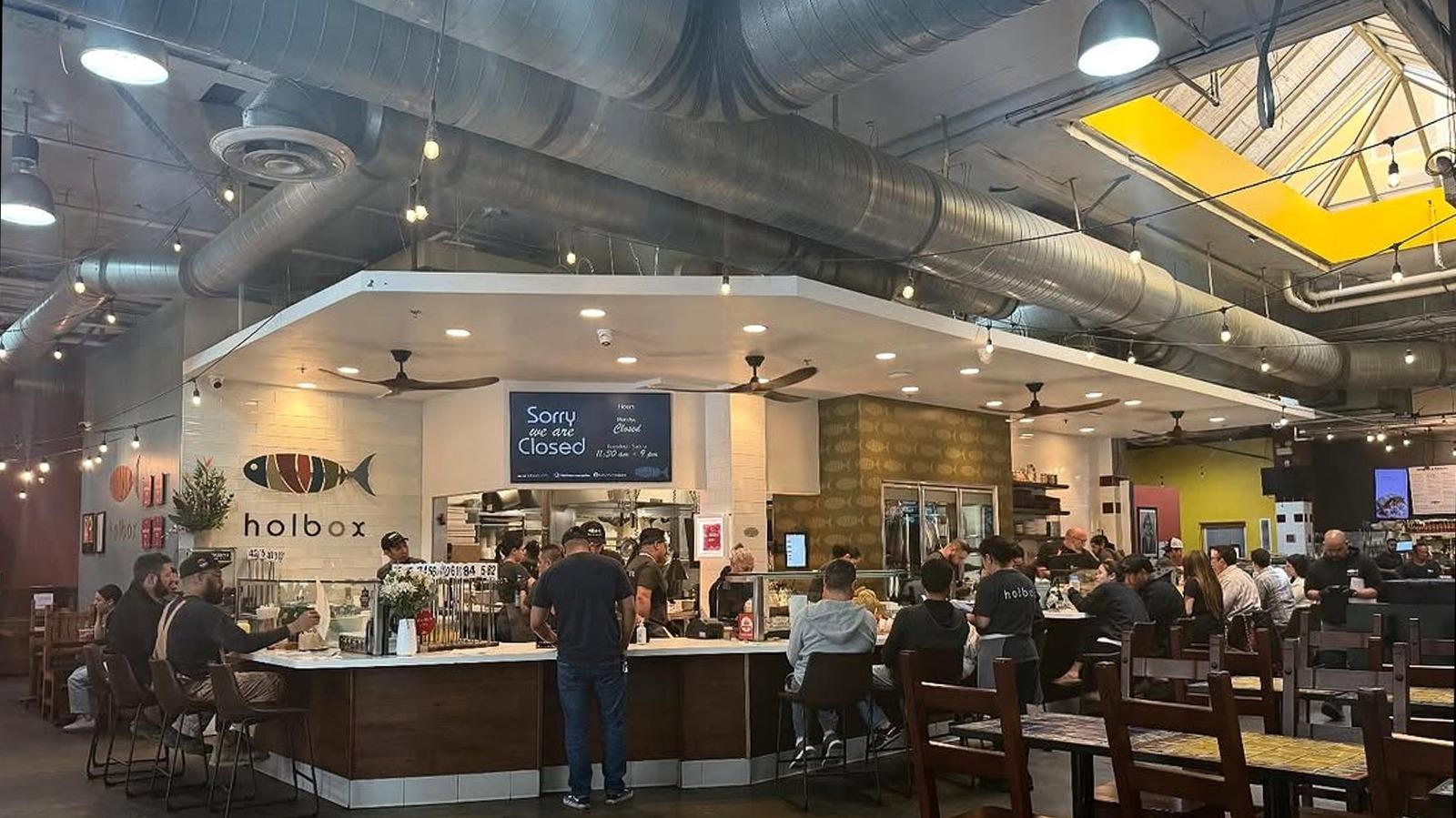
Last time my parents came to town, I took them to in South Central LA's Mercado La Paloma, knowing it would be a hit. As a Michelin-starred restaurant that's actually affordable, one of my favorite spots to take out-of-town guests. One of my parents' favorite cuisines is mariscos, Latin American seafood, and they loved the soup and tostadas at Holbox. The dish they talked about the most afterward was the mole and tortillas from a stall in the market without the long lines of Holbox: Komal.
. Komal sources corn from small farms throughout Mexico. The varieties change depending on availability. The staff nixtamalizes the corn ( onsite for 12 to 14 hours before grinding it. This forms the foundation for the majority of Komal's excellent dishes.
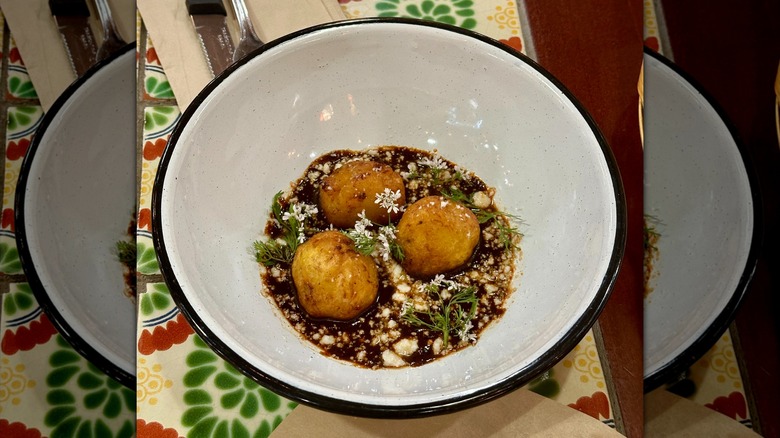
My favorite dish from Komal is the s. Mushroom stew and cheese fill a blue corn tortilla, and a delicious, smoky hot sauce is served on the side. I also loved the tlacoyos — thick, boat-shaped cakes of masa stuffed with pureed ayocote beans, griddled and topped with cactus salad, queso fresco, and salsa. You can order Komal's deep, rich mole in a chicken taco, with a side of tortillas, or with molotes — cheese-stuffed balls of fried plantain. It doesn't matter how you get it, just get it!
The History of Komal is Tied to the Mercado La Paloma
Garrett Palm / Static Media
After moving from Mexico City to LA in 2016, Chef Fátima Juárez initially worked prep and washed dishes at another stall in the market, Chichén Itzá, under Holbox chef Gilberto Cetina. Her husband and Komal co-founder, Conrado Rivera, worked front of house. When Cetina opened his now-famous restaurant, Juárez and Rivera joined him. With Cetina's mentorship, Juárez developed the masa at the base of many of the seafood dishes at Holbox, and she still provides the eatery with its masa. Komal is the . It started by operating out of a In addition to its food menu, Komal sells masa by the pound and fresh tortillas, so make sure you pick some up to use at home.
Chichén Itzá, the stall where Juárez worked with Cetina, supplies Komal with its chorizo. and was founded by Cetina's father. This sense of community is what led the Los Angeles Times to name its Restaurant of the Year in 2025. Originally a , the food hall was opened by affordable housing non-profit Esperanza Community Housing Corp. in It is currently home to and several markets.

 Arabic
 French
 Spanish
 Portuguese
 Deutsch
 Turkish
 Dutch
Dutch
 Italiano
 Russian
 Romaian
 Portuguese (Brazil)
 Greek
Greek