


Key Takeaways
- Water snake plants deeply when the top 2 inches of soil feel dry to the touch.
- If the potting mix is severely dried out, let the pot sit in a sink or tub with water for 30 minutes to rehydrate.
- The watering frequency depends on plant size, potting mix, and the amount of light the plant is getting.
Snake plants are famously tolerant of low light levels and general neglect, including sporadic watering. While they're quite drought-tolerant, it's important to know how often to water your snake plant to keep it healthy and looking its best. How much to water these plants depends on several factors, including the pot size, plant size, the amount of light it is receiving, and the humidity in the room.
It’s easy to get the hang of it with these simple tips.
To check if your snake plant needs to be watered, check the soil by inserting your finger about 2 inches deep. If it feels dry at that depth, it’s time to water. If it’s still damp, wait a few more days and check again. In most cases, a snake plant only needs to be watered once every 14 days, and likely will need water less often in winter. To help you remember to check on your plant at regular intervals, set a repeating task on your phone’s calendar, or do it on paydays, the 1st and 15th, etc.
Related
Snake Plant Watering Techniques
Basic Watering
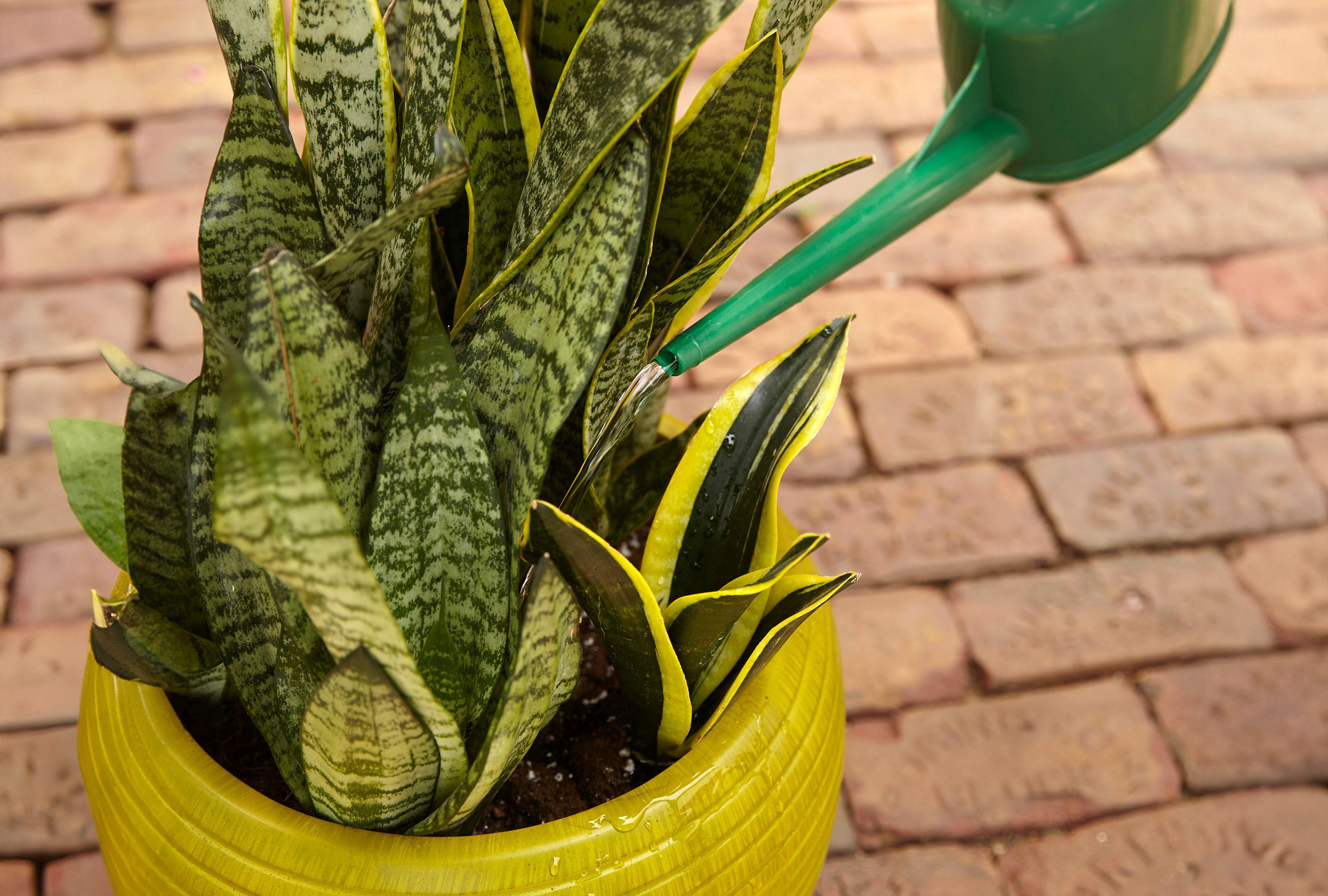
When it’s time to water your snake plant, there is no special trick to follow. Simply pour water onto the soil near the base of the plant and all around the pot, until water comes out the bottom (a pot with drainage holes is a must!). Discard any water that pools in the saucer under the pot to avoid soggy soil.
Watering When the Soil Is Very Dry
If you have ignored your snake plant for long stretches of time, the soil is likely quite dry and even a bit crusty on the surface. At that stage, the potting soil can actually repel water at first, causing it to simply run right out the bottom of the pot rather than absorbing any water for the roots to access. If this happens, your plant does not get enough water.
To water the plant, put the whole pot (without the cachepot or saucer) into a sink or bathtub. Plug the drain and fill it with a couple of inches of water. The soil will wick absorb water through the drainage holes and slowly rehydrate.
Give it about thirty minutes or until the top of the soil feels moist. Then move the pot back to its regular spot on a saucer. This bottom-watering technique ensures your snake plant gets a deep drink that will satisfy it for some time. It’s also less messy than an overflowing pot sitting on your wooden side table, where it can leave water stains.
Anthony Masterson
Factors That Influence How Often to Water
How often your snake plant needs to be watered depends on a few different factors. Keep these in mind and adjust your watering schedule accordingly.
Plant size: Large plants in small containers need more frequent watering for two reasons. First, a large plant generally uses up more water than a small one, all else equal. Second, large snake plants in small pots are usually rootbound. This means that if you remove the pot, you’ll notice that there’s hardly any soil left—it’s all roots. Without much soil to hold moisture, the plant will quickly deplete the available water.
Soil type: Snake plants need well-draining soil that holds less water than a potting mix with a higher peat moss content or other organic matter. If your snake plant is in a standard potting mix, it will need watering less often than if you potted it in a sandier mix designed for cacti and succulents.
Amount of sunlight: As a rule, the more sun your snake plant gets, the more water it will use. A snake plant left on top of a filing cabinet in an office cubicle far from a window won’t need watering as much as the same plant set in front of a sunny, southern-facing window.
Tips for Fixing Watering Issues
Overwatering a snake plant is as easy as underwatering it, but both can cause problems. If your snake plant has been ignored and is starting to show browning at the leaf tips because it's so parched, the remedy is simply a good, long drink. Follow the technique above for rehydrating dry potting soil. Unfortunately, the browned leaf tips won’t return to their normal color.
To fix an overwatered plant, let it dry out and pay close attention to when it needs water again. Or, in drastic cases, you may need to repot the plant in fresh soil. Overwatering is often caused by poor drainage, so check the pot to ensure water still runs out the bottom. Many ornamental pots have only one small drainage hole or none at all. Satisfy the need for drainage, repot the plant, and check soil moisture before watering, and the problem will be solved.

 English
 Arabic
 French
 Spanish
 Portuguese
 Deutsch
 Turkish
 Italiano
 Russian
 Romaian
 Portuguese (Brazil)
 Greek
Greek