


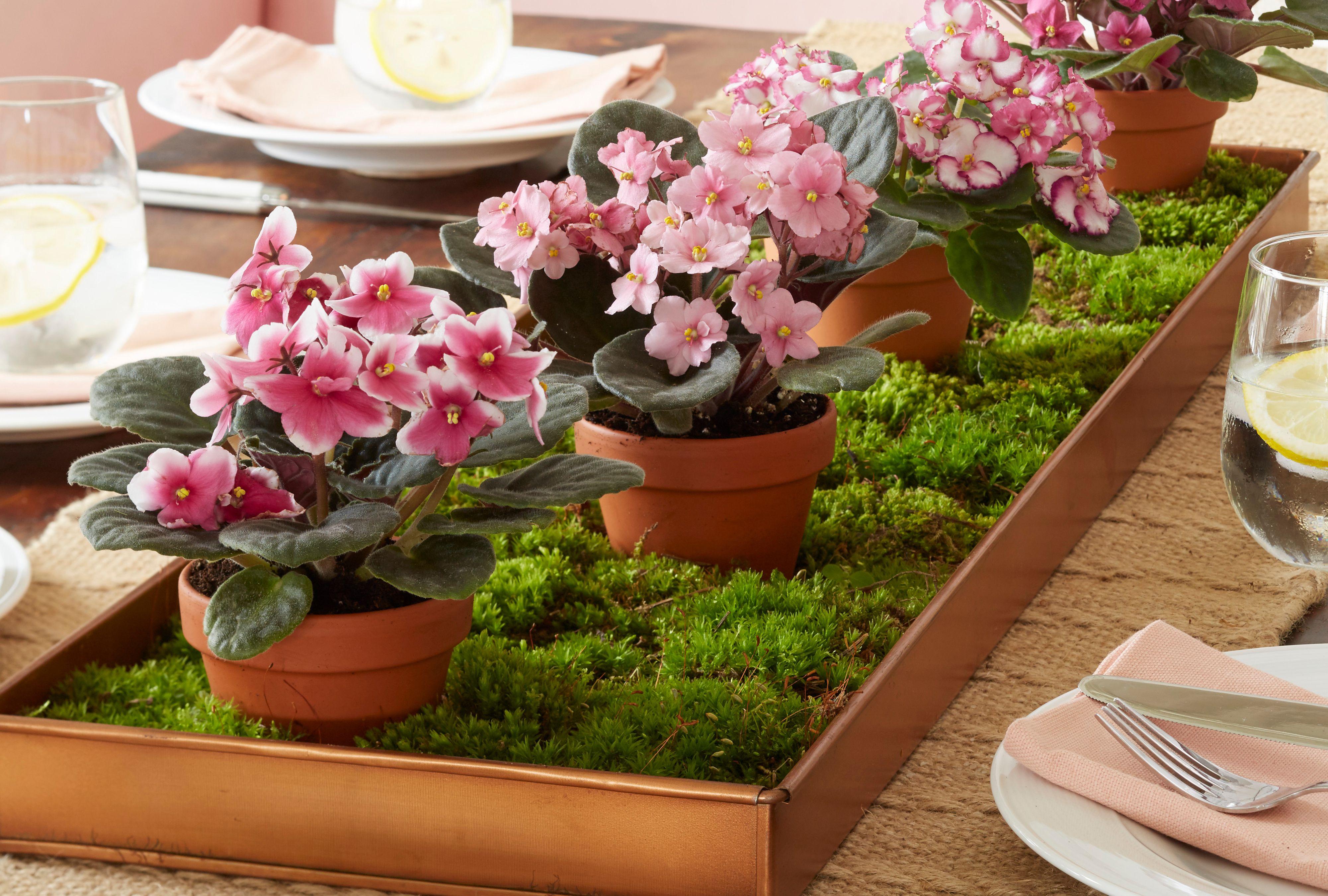
African violets are some of the most rewarding houseplants you can grow, blooming year-round, even in the depths of winter. But if you're not getting many flowers from your plant, you likely need to make a few simple adjustments to its care. Find out what an African violet requires to bloom and stay healthy, then use the tips below to make sure you're providing everything your plant needs.
What African Violets Need to Bloom
Providing the following conditions for your African violets keeps plants healthy and boosts blooms:
- Light: Bright, indirect for about 16 hours a day
- Water: Aim for weekly watering by letting the pot soak in a shallow dish of water for about half an hour
- Fertilizer: Monthly applications of all purpose plant food during active growth
- Temperature: 65–80°F
- Humidity: 40–60%
- Pot size: Small, slightly rootbound conditions encourage more flowers
If one or more of these elements isn't ideal, you may notice other symptoms such as wilting, yellowing leaves, or stretched stems, in addition to few or no flower buds.
Related
Tips for Getting African Violets to Bloom
Keep in mind that African violets bloom in cycles rather than constantly. If you plant appears healthy, it may just be resting before its next bloom. But if your plant is stressed, it may stop blooming because it doesn't have the necessary energy. Here's how to troubleshoot any issues so you can enjoy this plant's stunning flowers again.
1. Check the lighting.
The most common reason African violets stop flowering is inadequate lighting. While these plants can develop sunscald if they’re kept in bright sun, they grow and flower best when provided with about 16 hours of bright, indirect light, followed by 8 hours of darkness. North- or east-facing windows usually work well for these plants, but you may want to add a grow light in winter to supplement low light levels and boost flowering.
Dean Schoeppner
2. Water wisely.
Too much or too little water can cause plant stress and make African violets to stop blooming. In general, African violets should be watered about once a week to keep the soil consistently moist but not soggy, but these plants may need less water in winter. If you often forget to water your houseplants, repotting your African violets in self-watering planters can simplify watering and keep your plants in bloom.
Avoid getting water on African violet leaves, which can cause leaf spotting and encourage mildew.
3. Fertilize as needed.
Like other houseplants, African violets may stop flowering if they don’t have sufficient nutrients. Fertilizing schedules will vary depending on the type of fertilizer you use and the time of year, but a monthly dose of an organic fertilizer intended for African violets should keep your plants in bloom. Avoid using products that contain urea, which can cause root burn, and don’t fertilize in winter when these plants aren’t actively growing.
4. Consider the pot.
While it may seem counterintuitive, African violets flower better when they’re rootbound, and the plants may flower less in oversized pots. For optimal flowering, African violet pots should measure no more than 1/3 wider than the width of the plant’s leaves. Shallow pots are also better for these plants, and pots should have plenty of drainage holes to prevent root rot.
5. Adjust the temperature.
African violets aren’t that picky about temperature, but they should be sheltered from drafty windows, air conditioning units, and heaters. Violets usually grow and flower well at standard room temperatures ranging between 65°F and 80°F, but blooming may be reduced if plants are stressed by extreme heat or cold. During the winter, move violets a few extra inches away from poorly insulated windows to ensure they don’t get chilled.
6. Scout for pests.
Pests, like aphids, scales, and thrips, can also stress African violets and cause them to stop blooming. Yellow stippling on plant leaves and sticky honeydew residue can be signs of pests, but pests can also cause leaf wilting and stunted growth. Spot treating with a cotton swap dipped in rubbing alcohol is an easy way to remove pests from African violets. You may also want to prune away severely infested leaves or experiment with an organic soap spray.
7. Boost humidity.
Some houseplants are finicky about humidity, but African violets are usually content with standard household humidity levels. If you live in a dry area where humidity levels fall below 50 percent, you may want to position your plants near a humidifier or place a pebble tray beneath their pots. The added humidity can sometimes jump-start flowering, but it also helps dry violets grow better.
8. Use the right soil.
If you’ve repotted African violets recently and your plants have stopped flowering, they could be undergoing a brief bout of transplant shock. However, they may also stop flowering if you repot them in soil that doesn’t drain well or that’s too alkaline for their needs. Most garden centers sell potting soils intended for African violets, but you can also make your own DIY soil blend using a mixture of perlite, vermiculite, and coconut coir.
Frequently Asked Questions
-
Many garden centers sell fertilizers specifically formulated for African violets, but you can also fertilize violets with a balanced, organic liquid fertilizer. Avoid products that contain urea, as violets are sensitive to this ingredient.
-
Ideally, yes. Deadhead spent flowers and remove old, damaged, or dead leaves that can draw energy away from African violet plants and reduce flowering.
-
In ideal circumstances, when all their needs are met, African violets can live for at least 20 years, with some known to have been around for 50 years.

 English
 Arabic
 French
 Spanish
 Deutsch
 Turkish
 Dutch
Dutch
 Italiano
 Russian
 Romaian
 Portuguese (Brazil)
 Greek
Greek