


Winter Warfare: 15 Armies That Fought With Great Success in Snow

0
32

Winter Warfare: 15 Armies That Fought With Great Success in Snow - History Collection

6. German Wehrmacht (Operation Barbarossa, Early Campaign)

Winter Warfare: 15 Armies That Fought With Great Success in Snow
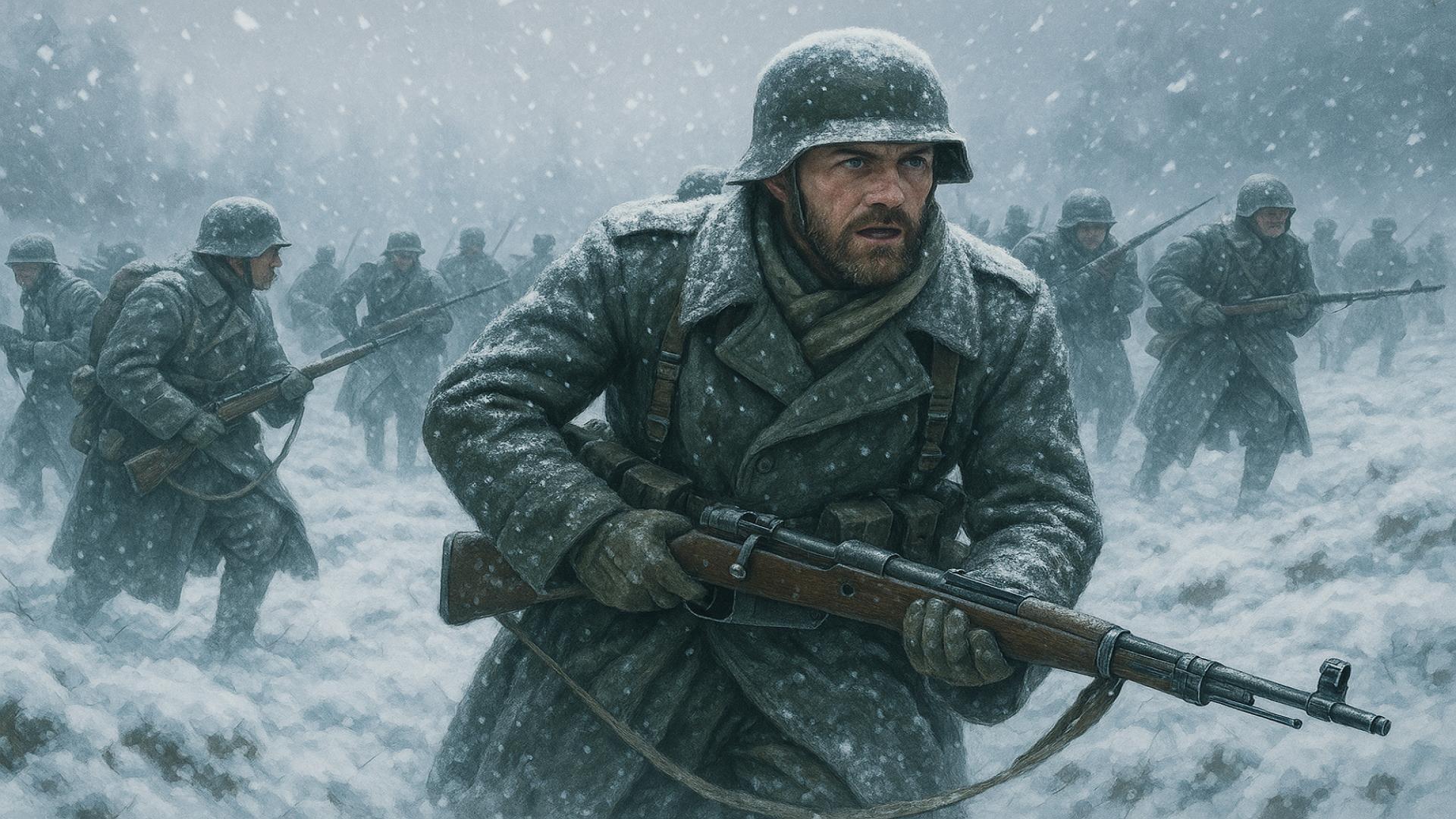
German Wehrmacht advances stall in snow-laden Soviet terrain as blitzkrieg falters against harsh winter.

The German Wehrmacht’s initial phase of Operation Barbarossa in 1941 showcased the effectiveness of blitzkrieg tactics, enabling rapid advances through the Soviet Union’s snow-laden terrain. Utilizing coordinated assaults by infantry, tanks, and air support, German forces achieved significant territorial gains. However, as winter approached, the Wehrmacht faced unforeseen challenges. The onset of severe cold and heavy snowfall transformed roads into impassable quagmires, hindering supply lines and vehicle mobility. Additionally, the lack of winter clothing and equipment left soldiers vulnerable to frostbite and other cold-related injuries. These logistical and environmental difficulties significantly impeded the German advance, culminating in the eventual halt of operations near Moscow (theguardian.com).

7. Russian Empire (Napoleonic Wars, 1812)

Winter Warfare: 15 Armies That Fought With Great Success in Snow
Russian forces leverage winter and scorched-earth tactics, crippling Napoleon’s retreating Grande Armée in 1812.

During Napoleon’s invasion of Russia in 1812, Russian forces effectively utilized the harsh winter conditions as a strategic weapon against the French. As Napoleon’s Grande Armée advanced, the Russians employed a scorched-earth policy, retreating and destroying resources to deny the enemy supplies. This strategy, combined with the onset of the brutal Russian winter, led to significant attrition in the French ranks. The Russians then launched counter-offensives, such as the Battle of Tarutino on October 18, 1812, where they achieved a decisive victory over the French. These actions exemplified the Russian resilience and strategic use of environmental conditions to their advantage (en.wikipedia.org).

8. United States Army (Battle of the Bulge, 1944-45)

Winter Warfare: 15 Armies That Fought With Great Success in Snow
American troops withstand harsh winter conditions, halting Germany’s final Western Front offensive at Bastogne.

The United States Army’s resilience during the Battle of the Bulge (December 16, 1944 – January 25, 1945) was pivotal in halting Nazi Germany’s last major offensive on the Western Front. Despite enduring record-low temperatures and heavy snowfall, American forces mounted a determined defense against the German advance through the Ardennes. The 101st Airborne Division’s defense of Bastogne became emblematic of this tenacity, with General Anthony McAuliffe’s defiant response to a German surrender demand—”NUTS!”—boosting Allied morale. The battle resulted in over 80,000 American casualties, including nearly 20,000 killed, but ultimately led to the repulsion of German forces and a significant turning point in the European theater (americanhistory.si.edu).

9. Polish Army (Battle of Warsaw, 1920)

Winter Warfare: 15 Armies That Fought With Great Success in Snow
Polish troops launch a strategic winter counteroffensive at the Battle of Warsaw, 1920.

During the Polish-Soviet War, the Polish Army’s adept use of winter maneuvering was pivotal in the Battle of Warsaw (August 12-25, 1920). Under General Józef Piłsudski, Polish forces executed a strategic counteroffensive from the Wieprz River, catching the Soviet Red Army off guard. This decisive action led to a significant Polish victory, safeguarding Warsaw from Soviet capture (britannica.com).

10. Swiss Mercenaries (Renaissance Europe)

Winter Warfare: 15 Armies That Fought With Great Success in Snow
Swiss mercenaries in disciplined pike squares repel cavalry, showcasing Renaissance-era military expertise.

Swiss mercenaries were renowned for their formidable pike formations, known as “pike squares,” which were instrumental in their success across Europe. These formations, consisting of disciplined soldiers armed with long steel-tipped pikes, allowed them to effectively counter cavalry charges and break enemy lines. Their expertise in mountainous, snowy terrains further enhanced their reputation, making them highly sought after as mercenaries during the Renaissance period (warhistory.org).

11. Manchu Army (Qing Conquest of China, 17th Century)

Winter Warfare: 15 Armies That Fought With Great Success in Snow
Manchu soldiers traverse snowy terrain, showcasing winter warfare expertise during Qing Dynasty expansion campaigns.

The Manchu Army’s expertise in winter campaigns was instrumental during the Qing Dynasty’s 17th-century expansion. Originating from the icy terrains of Manchuria, they adeptly maneuvered through harsh winter conditions, ensuring efficient movement and supply lines. This proficiency was evident in the 1636 invasion of Joseon Korea, where their rapid advance and logistical acumen led to a decisive victory, solidifying Qing dominance in the region (en.wikipedia.org).

12. Canadian Army (Battle of Kapyong, Korean War, 1951)

Winter Warfare: 15 Armies That Fought With Great Success in Snow
Canadian soldiers defend Kapyong Valley, halting Chinese advance during a pivotal Korean War battle.

During the Korean War’s Battle of Kapyong (April 22-25, 1951), approximately 700 soldiers from the 2nd Battalion, Princess Patricia’s Canadian Light Infantry (2 PPCLI), held strategic positions in the Kapyong Valley against an estimated 5,000 Chinese forces. Despite being heavily outnumbered, the Canadians successfully repelled multiple assaults, inflicting significant casualties on the enemy. This decisive action prevented the Chinese from advancing toward Seoul, marking a pivotal moment in the conflict. The 2 PPCLI’s extraordinary heroism earned them the United States Presidential Unit Citation, a rare honor for a non-American unit (veterans.gc.ca).

13. Ottoman Army (Battle of Sarikamish, 1914-15)

Winter Warfare: 15 Armies That Fought With Great Success in Snow
Ottoman troops struggle in deep snow, highlighting severe winter losses at the Battle of Sarikamish.

The Battle of Sarikamish (December 1914 – January 1915) highlighted critical logistical shortcomings in the Ottoman Army’s winter campaign. The Ottoman forces, numbering approximately 90,000, suffered devastating losses due to inadequate winter clothing and equipment, leading to an estimated 30,000 deaths from frostbite alone. In contrast, the Russian Caucasus Army, commanded by General Nikolai Yudenich, demonstrated remarkable adaptability to the harsh winter conditions of the Caucasus region. Russian troops were well-equipped with winter gear and maintained effective field services, including medical support, enabling them to sustain operations amid severe weather. This preparedness allowed them to exploit the terrain’s defensive features, such as fortified positions and high ground, effectively repelling Ottoman assaults and launching successful counterattacks (cambridge.org). The Russian forces’ ability to adapt to the challenging environment was a decisive factor in their victory at Sarikamish, underscoring the importance of logistical planning and environmental acclimatization in winter warfare.

14. Norwegian Resistance (World War II)

Winter Warfare: 15 Armies That Fought With Great Success in Snow
Norwegian resistance fighters sabotage Arctic railways, disrupting German supply lines during World War II.

During World War II, Norwegian resistance fighters conducted numerous sabotage operations against German forces under harsh Arctic winter conditions. Notable among these was the sabotage of the Thamshavn Line, a railway vital for transporting pyrites to German munitions factories. Norwegian commandos from Company Linge targeted the line to disrupt German supply chains. Additionally, Operation Rype, led by the U.S. Office of Strategic Services (OSS), aimed to sabotage the Nordland Railway to prevent German reinforcements. Despite facing extreme cold and treacherous terrain, these guerrilla tactics significantly hindered German operations in Norway.

15. Roman Legions (Germanic Campaigns, 1st Century CE)

Winter Warfare: 15 Armies That Fought With Great Success in Snow
Roman legions advancing through dense Germanic forests, exemplifying endurance before the Teutoburg disaster.

The Roman legions’ campaigns into Germania during the 1st century CE showcased their resilience and adaptability in challenging environments. Despite facing dense forests, treacherous terrains, and ambushes, Roman soldiers demonstrated remarkable endurance. However, the Battle of the Teutoburg Forest in 9 CE, where three Roman legions were annihilated, highlighted the difficulties of operating in such hostile conditions. This defeat led to a strategic reassessment of Roman expansion into Germania (britannica.com).

Cerca
Categorie
Leggi tutto
Science
Intrepid Jaguar Swims Over 1 Kilometer, Smashing Previous Distance Record By More Than 6 Times
We Thought Jaguars Could Only Swim 200 Meters. We Were Wrong.Intrepid Jaguar Swims Over 1...
By test Blogger3 2025-09-19 15:00:08 0 1K
Music
The Most Metal Songs by 11 Big Grunge Bands
The Most Metal Songs by 11 Big Grunge BandsMick Hutson, Getty Images / Frank Micelotta, Getty...
By Test Blogger4 2025-08-15 15:00:08 0 2K
Giochi
Silent Hill 2 motel safe code puzzle and how to solve
Silent Hill 2 motel safe code puzzle and how to solve What is the Silent Hill 2 motel safe...
By Test Blogger6 2025-10-23 11:00:15 0 924
Religion
Why Gratitude Isn’t Just for Thanksgiving
Why Gratitude Isn’t Just for Thanksgiving We have big family dinners where we prepare our...
By Test Blogger5 2025-10-12 05:00:19 0 1K
Technology
GoPro has a new AI-tracking gimbal that works with smartphones and action cameras
GoPro has a new AI-tracking gimbal that works with smartphones...
By Test Blogger7 2025-09-23 23:00:12 0 1K