


Bit245/Getty Images
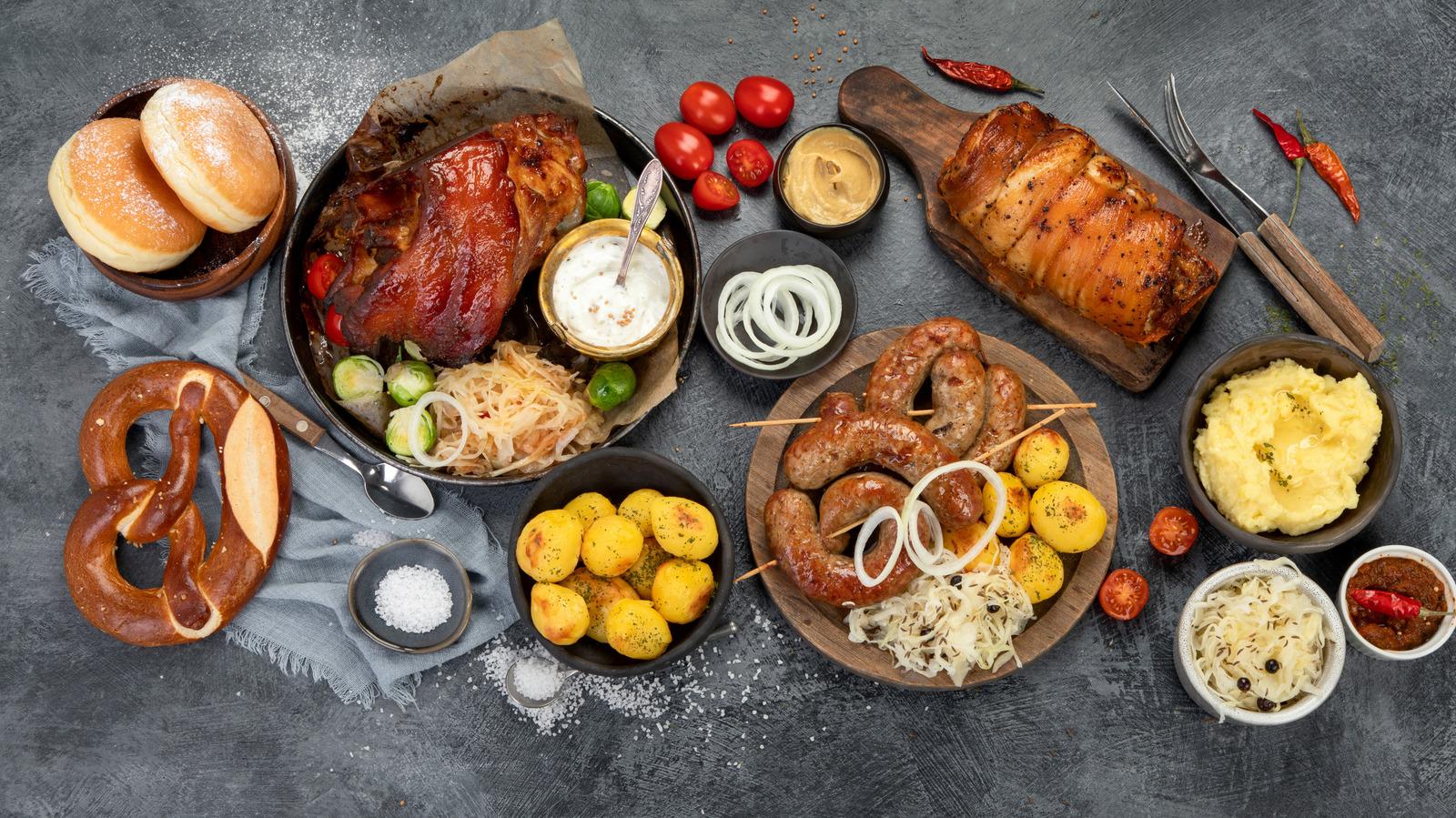
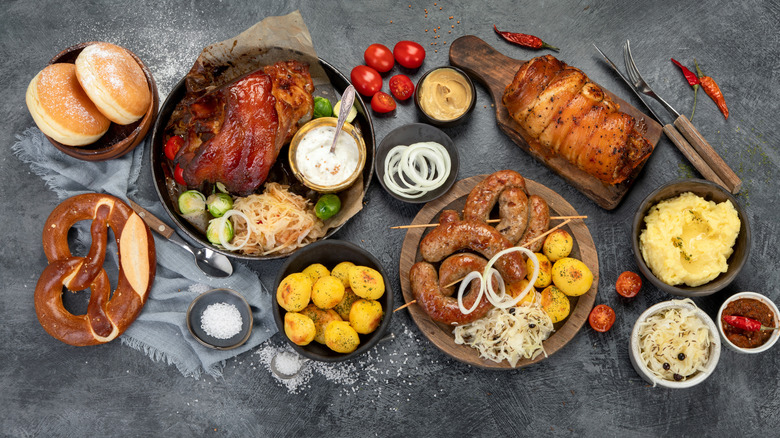
There's no denying that German culture, and its food, is prevalent across the world. In particular, you might think of huge pretzels, bratwurst with sauerkraut, and schnitzel during an Oktoberfest celebration. But while iconic German foods are certainly popular at a party, there are many dishes to be enjoyed year-round. Some of the classic recipes dating back hundreds of years have inspired some favorite dishes that many of us enjoy stateside today. German cuisine has even increased in popularity in the last decade.
I know that I have eaten more German-inspired food in recent years. Since marrying into a family with German roots, I've become more familiar with the cuisine. While you may know some of the most common food staples, some old-school German dishes have stepped out of the spotlight. Whether it's due to limited availability of an ingredient, cultural shifts, or forgotten for unknown reasons, they don't continue to make the same impact that they had back in the day. Let's take a look back into food history to find some tasty, traditional German meals that haven't been as prevalent in recent years.
Sauerbraten
Food Arena/Shutterstock
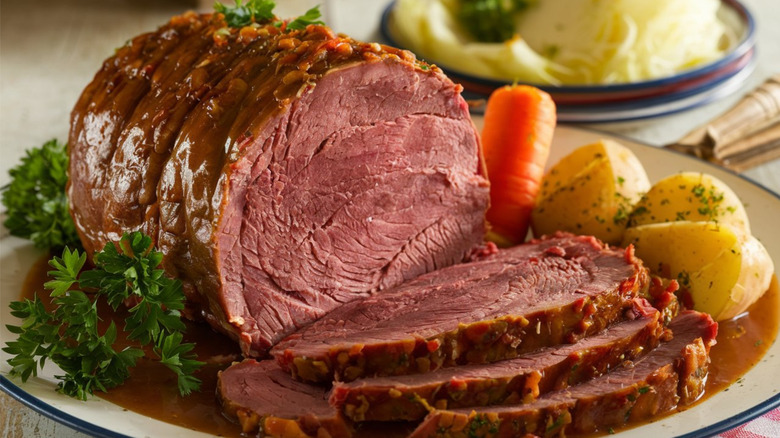
The majority of us stateside have enjoyed a classic American-style pot roast, but traditional German Sauerbraten isn't one that carries the same weight. This meat-and-potatoes dish is a traditional German version with a more tangy flavor. Its roots date back to the Rhineland area of Western Germany as far back as the Roman Empire. However, the protein choice has differed based on regional availability over the years.
Sauerbraten translates to "sour roast meat." The intense flavor profile may be a reason the Sauerbraten is not as popular with some diners, though it appears some versions can be more sour than others, depending on the chef's choice of vinegar or red wine. Unique ingredients like gingersnap cookies add a certain depth of flavor, though many people wouldn't think to add cookies to a roast. Another potential hindrance to the Sauerbraten's popularity is its lengthy preparation time, as it must first sit in its marinade for up to five days, requiring quite a bit of planning that could be difficult for the casual home chef. To compare, a typical slow cooker pot roast recipe calls for 24 hours of marinating or dry-brining, while another classic pot roast recipe might be completed in even less time.
Leberknödel
Marian Weyo/Shutterstock
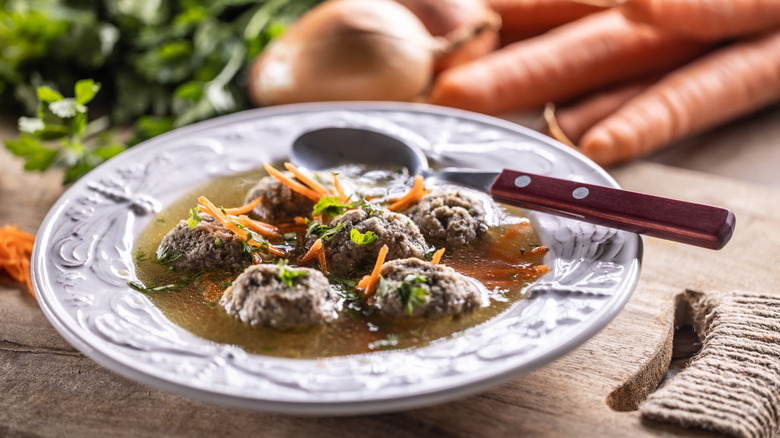
Though organ meat was once popular in the U.S., and present in once-popular dishes like Grandma's liver and onions, liver is not a common choice for many diners these days. That could be a reason why you don't see Leberknödel, or liver dumplings, very often. This traditional dish hails from southern Germany, where it's enjoyed in areas like Bavaria, and Swabia, as well as Austria. It does not enjoy the same popularity elsewhere, but that doesn't mean the dish has never made it overseas. If you are in Pennsylvania's Dutch Country, you are more likely to find Leberknödel, or a dish inspired by it, using all of a butchered animal in the spirit of these dumplings.
Leberknödel dumplings consist of finely ground beef, or pork liver in some regions. They are traditionally served in a soup for a classic comfort meal. However, Leberknödel can also be fried, and served alongside potatoes, and sauerkraut. No matter how you dress it up, the dish can be off-putting for some, as the key ingredient is liver, and some recipes for Leberknödel even call for other offal meat. This may make the dish a no-go for picky eaters, and account for the fact that it's not frequently served nowadays.
Himmel und Erde

Mychkoalezander/Getty Images
As a relative newcomer to traditional German food, I've become a fan of Himmel und Erde. Translating to "Heaven and Earth," this potato dish is one that I try to order any time I see it on a menu stateside or abroad. Himmel und Erde is a traditional Rhineland side dish of mashed potatoes and applesauce that has been enjoyed as far back as the 18th century. The dish gets its name from the old word for potato, erdapfel, which translates to "potato of the earth," and the idea that apple trees are closer to Heaven. And it may sound like a strange combination that you wouldn't think to put together off-hand, but the applesauce and potatoes make a sweet and savory combination that is really delicious.
While there are many variations on this dish nowadays that can be perceived as more palatable, the traditional version is served with blutwurst, or blood sausage (more on that later). It is still widely enjoyed in the Rhineland, as well as the Lower Saxony and Westphalia regions of Germany. Though Himmel und Erde can be found in some traditional German restaurants in the U.S., you likely aren't being served these potatoes with your turkey and gravy as part of a typical American dinner.
Eisbein
Sanghyunpaek/Getty Images
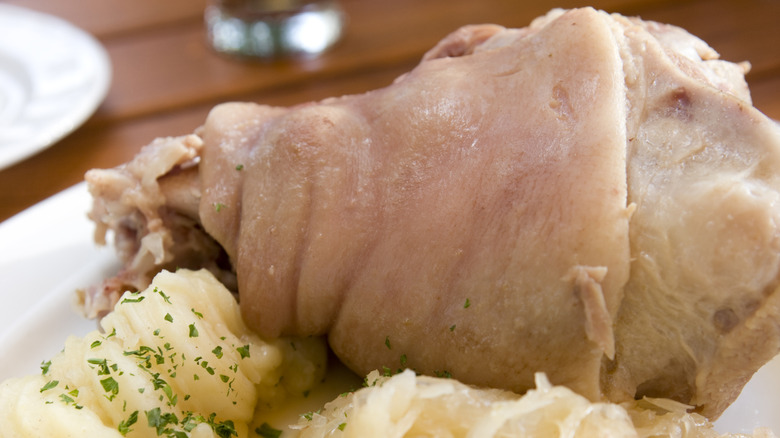
Pork knuckle, or ham hock, isn't an unheard-of dish. In fact, it is a necessary ingredient in many classic barbecue side dishes such as collard greens, and baked beans. That being said, the dish does take some doing to cook properly, and this could be why Eisbein — which translates to "ice leg" in German — hasn't quite taken off.
Eisbein is a traditional German dish starring a pork knuckle, and it's certainly eye-catching. The hock is brined, and boiled, keeping its snow-like color. Eisbein is prevalent in northern Germany, and specifically Berlin, where it is commonly served with peas, and sauerkraut. It's likely been enjoyed this way since the 18th century. Though it may not result in a super colorful plate, the flavor profile has been described as delightful.
Eisbein is not commonly found in restaurants stateside these days. That's not to say that some takes on the dish aren't making their rounds across the U.S. My husband just ordered a pork knuckle dish at a restaurant recently, but it was more akin to the Schweinshaxe preparation than the Eisbein. Schweinshaxe is a pork knuckle roasted to give it a crispy skin. Some would argue that its appearance is more appetizing than the Eisbein's, which may contribute to its greater popularity at large Oktoberfest events, and beyond.
Saumagen
Norman Krauss/Shutterstock
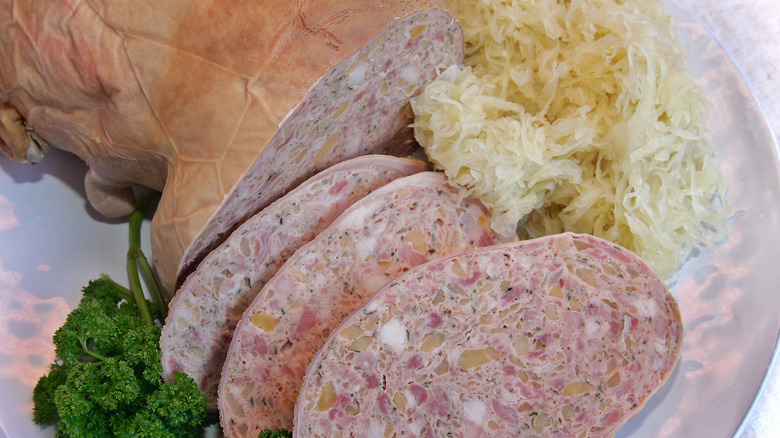
This German dish has deep roots in the Palatinate region, perhaps as far back as the 18th century. Saumagen, which translates to "sow's stomach", is a testament to not wasting food. It was created by farmers as a way to use up extra food, and was originally considered more of a peasant dish. For this dish, ingredients like potatoes, carrots, and pork are combined with spices, and stuffed into the pig's stomach, which is used as a casing, like when you make sausage. Over time, the Saumagen made a resurgence in popularity with a high-quality twist due to German chefs embracing the traditional dish. The dish became even more popular in the 1980s-1990s in Germany when the then-chancellor proclaimed it one of his favorites, and served it to esteemed guests.
Though it is still popular in Germany, odds are, you won't see this offering in butcher shops or restaurants around the U.S. today. The exception to this is in the Pennsylvania Dutch region of the country, where a similar dish called Seimaage or Hogmal is prevalent.
Blutwurst
From_my_point_of_view/Getty Images
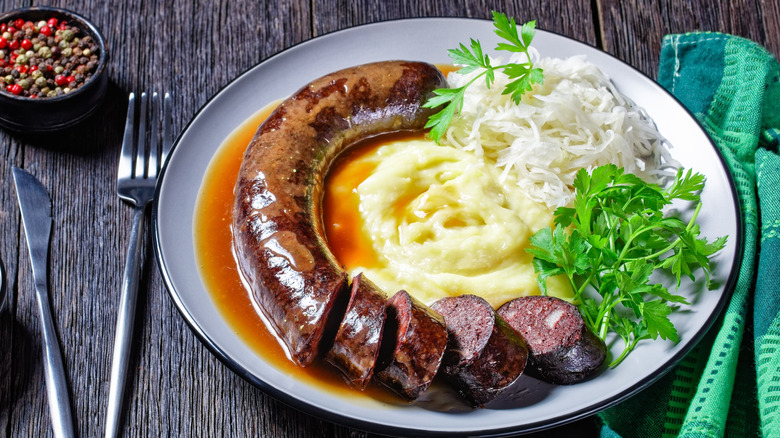
When you think of German food, sausage definitely comes to mind, with the most popular pick being Bratwurst. There are more than 40 different versions in Germany alone. But the Blutwurst, or blood sausage, is another type of sausage that many may hesitate to try (though my husband will order it any time he sees it on a menu). It is predominantly pork, but gets its color, and name, from its namesake ingredient: the animal's blood.
Blutwurst dates back to medieval Germany, where it was a necessity staple food due to its affordability, and sustainability. Over time, Blutwurst evolved from its origins as a way to minimize waste, and became a mainstay in German cuisine. Blutwurst can be found at festivals, and at dinner tables in Germany, with different tweaks commonly made by region.
Though Germany has a profound appreciation for the Blutwurst, many countries have their own take on blood sausage. A well-known example is black pudding in England (which is definitely not a dessert), and the Spanish-style blood sausage called Morcilla. Whether it's due to a general squeamishness towards blood or the fact that it's just not mainstream enough, Americans don't seem to embrace blood sausages like other countries do.
Sülze
Alesia.Bierliezova/Shutterstock
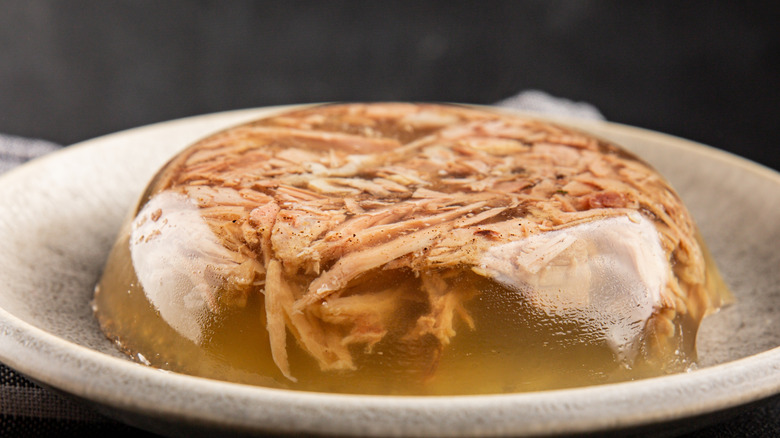
Decades ago, a gelatinous invention called aspic was a staple on many dinner tables in the U.S. These days, however, the meat-based gelatin is not a huge fad. That's not the case in Germany, where Sülze is frequently served sliced and cold, with bread and pickles, at home and in German delis. In Germany, Sülze is typically made with collagen-rich parts of pork, like knuckles, which create the gelatinous aspic once cooled.
Meat aspic has certainly been around for a long time. Back in the 1300s, aspics were used to keep bacteria out of foods, and thus to preserve cooked meats for longer periods without refrigeration. Aspics generally lost their steam in the U.S. after the Jell-O boom of the 1900s. Back then, aspics were used through the Great Depression to avoid food waste, and to use up small amounts of food. An evolution occurred when cooking that featured more fresh ingredients took hold, and aspics were then thought to be old-fashioned. However, certain regions of the United States still use gelatin, like the tomato aspic of the South, and Jell-O salad that's still prevalent in Mormon culture. But a meat-based aspic like Sülze is not as mainstream as it once was.
Matjesfilet
geogif/Shutterstock
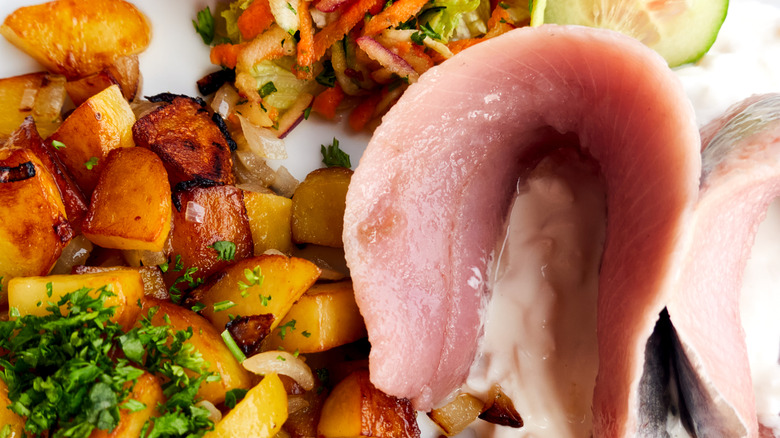
While pickled fish is certainly popular around the world, you may not know about Matjesfilet. Matjes is a minted, salted, and aged herring that is popular in Nordic countries, and Matjesfilet gets its name from the Dutch word "maatjes," or maiden herring, in filet form. Matjesfilet is particularly popular in Northern Germany, though different regions have their takes on the dish. It has a long history in Germany, dating back to the 17th century. In current times, you will find it at festivals, and markets, as well as served as an appetizer at gatherings.
Though you may find pickled fish varieties available in the States, you typically won't find it as the star of a dish. Some have said they have been served pickled herring on relish trays in colder climates, but the smoked, salted fish varieties appear to be more popular. A Nordic version of Matjes can have a stronger, spicier flavor, but American preferences tend to lean toward a milder fish taste.
Königsberger Klopse
Sham Clicks/Shutterstock
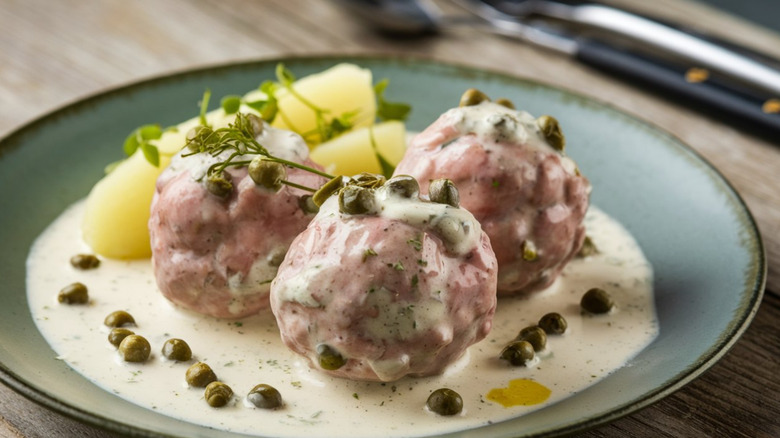
Italian cuisine has spaghetti and meatballs, while Swedish meatballs make a popular appetizer. Neither is a foreign concept in the U.S., but you don't hear as much about German meatballs, or Königsberger Klopse. These hail from the Eastern Prussian city of Konigsberg, which is now in Russia, and named Kaliningrad. They were originally served on special occasions, but are now vastly popular across the country, frequently enjoyed by diners of all ages. From traditional recipes to modern takes from Michelin-starred restaurants, Konigsberger Klopse can be considered one of the most common traditional meals in Germany. It's a bit surprising, then, that they are not so well know elsewhere.
What makes the German version of meatballs unique is its sauce. The typical sauce for Königsberger Klopse is cream-based, and filled with briny capers, making it a departure from the usual tomato-based sauce, or the sweet sauce that other cuisines call for. Some traditional Königsberger Klopse recipes include anchovy paste and veal as the base, but pork and ground beef are used interchangeably nowadays. As yet another polarizing food, anchovies might be a reason why these meatballs aren't commonplace in the U.S., but they're also a reason to give them a shot. After all, anchovies are delicious in recipes, even if you don't like fish.
Labskaus
Foodgraphy39/Shutterstock
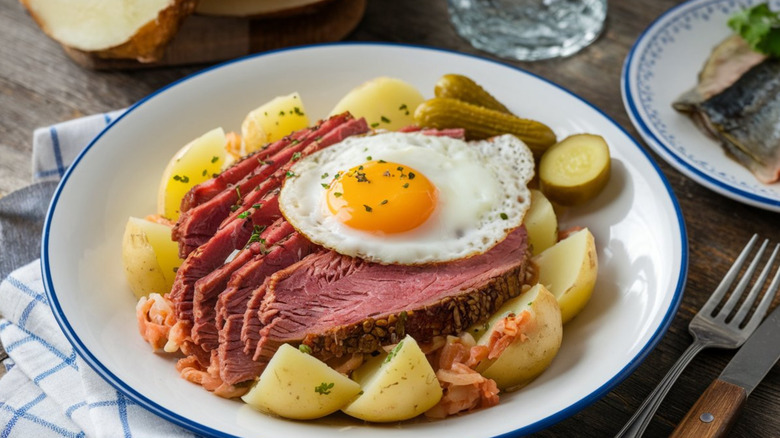
We have 16th-century German sailors to thank for this hearty breakfast dish that combines both seafood and meat. Labskaus hails from Northern Germany, where it began as a large breakfast that sailors could have while at sea for months without refrigeration. The dish contains potatoes — though some say that, historically, bread was swapped out for the potatoes on ships — as well as a fried egg, and corned beef. So far, this might sound similar to many breakfast dishes, but Labskaus has some additional ingredients that differentiate it. These include beetroot, which lends a vibrant color; rollmops, or pickled rolled herring; and a garnish of pickles.
Though Labskaus was originally more of a working-class dish, it has grown in popularity beyond the peasant population in recent years. It has even been coined a hangover cure, though it's not exactly clear why. Labskaus is particularly popular in the Northern German port city of Hamburg, where chefs today take creative liberties to craft more upscale versions. The dish has crossed borders into other countries, like Denmark and Norway, as well. Unfortunately, this particular hangover cure has not become popular in the U.S.

 Arabic
 French
 Spanish
 Portuguese
 Deutsch
 Turkish
 Dutch
Dutch
 Italiano
 Russian
 Romaian
 Portuguese (Brazil)
 Greek
Greek