


The Outer Worlds 2 review - heavy decisions, weak combat
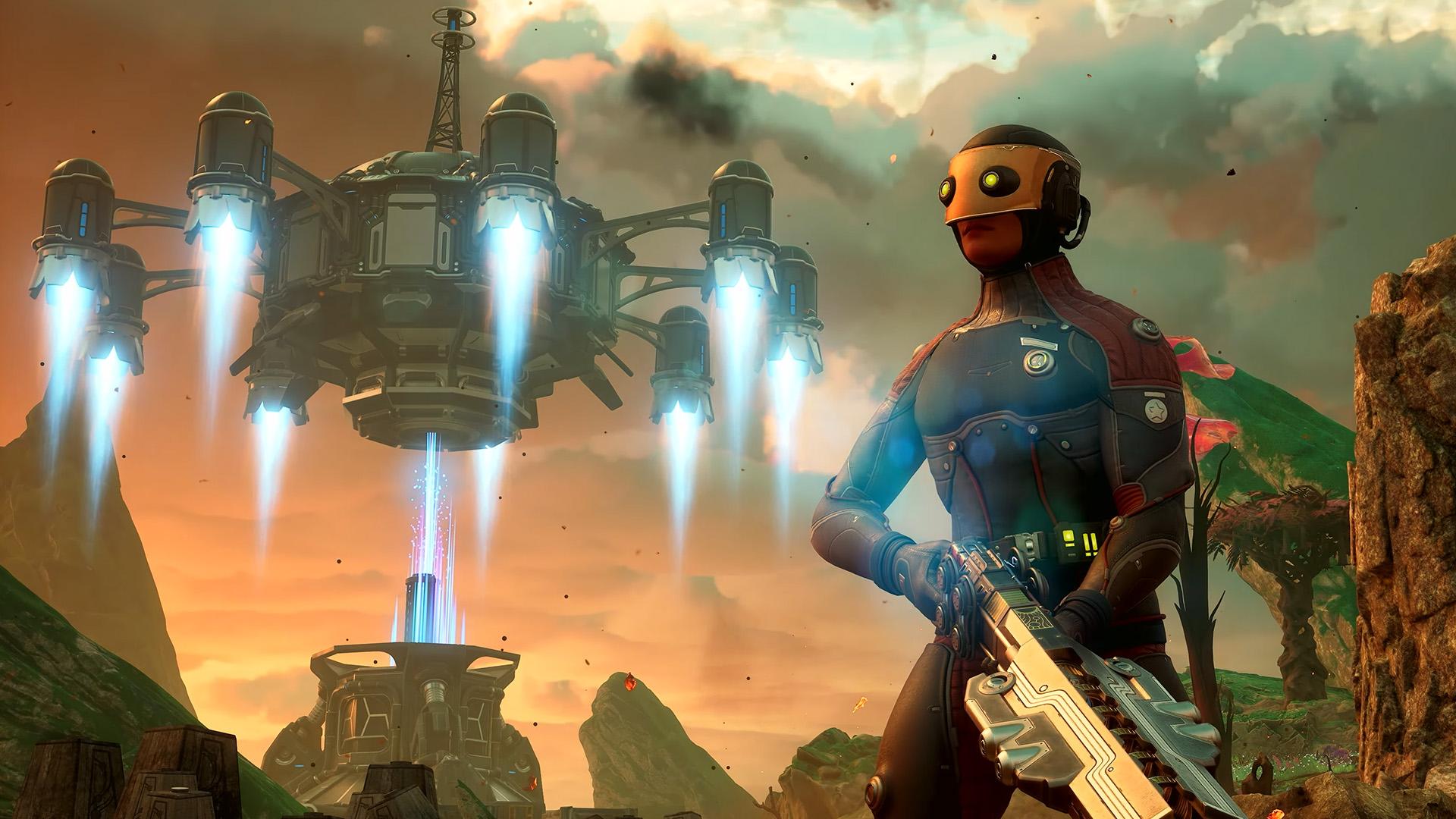
The Outer Worlds 2 review - heavy decisions, weak combat
Verdict

By building on the original’s foundations with more impactful decision-making and gameplay refinements, The Outer Worlds 2 feels like the Obsidian game that Fallout: New Vegas fans have craved for over a decade.
Fallout: New Vegas is up there among the greatest games of all time, and it's difficult not to compare anything Obsidian does to its 2010 masterpiece. I already went through it at the beginning of last year with the middling Avowed and half-baked The Outer Worlds 1 before that. But this time, The Outer Worlds 2 actually delivers, finally living up to the high bar that New Vegas set all those years ago.
Though there are some loose connections to the first game, The Outer Worlds 2 is set in a different galaxy, so you can start here without any issues. As an Earth Directorate agent, your primary objective is to stop the deadly rifts appearing across the galaxy. You've been sent to the Arcadia colony, the birthplace of faster-than-light travel, to investigate how this invention has caused such a catastrophe. Tensions are high as the galaxy is in a state of turmoil due to the ongoing war between the major factions, each with its own designs on exploiting the rifts.
It's hard not to laugh at the situation Obsidian Entertainment has ended up in, whereby it has made a series about a hyper-capitalist dystopia while being owned by Microsoft. That irony isn't lost on the developers, and they lean into it multiple times during the story.

You may have seen the consumerism flaw that you unlock by purchasing the Premium Edition or the wink during the credits where the Xbox logo transforms into the Spacer's Choice mascot, a representative of exploitative labor practices. Obsidian's writing is as witty as ever, with some lines being legitimately laugh-out-loud funny despite the game's high-stakes plotline.
One of The Outer Worlds 2's core tenets is that your choices matter, heavily encouraging you to live with your decisions. This starts with your basic build, which alters your entire playthrough, for better or worse. Led by my ignorance, I foolishly chose the worst negative trait on offer: Dumb, which locked away five of the game's skills.
My goal was to create a smooth-talking, yet somewhat dimwitted, professor who smashes enemies using giant melee weapons, so it seemed pointless to have access to skills like Guns, Explosives, and Leadership. It wasn't until a few hours into my adventure that I realized the severity of my error. Looking at the full perks list, it became clear that Leadership and Speech go hand in hand, meaning that there were game-changing perks that I could never obtain due to a decision I made at the very beginning.

I underestimated all five of the skills I locked out right from the start, and throughout my journey, I kept running into situations that made me regret my shortsighted decision. Thankfully, there are plenty of ways to get quests done, so even if you put together a terrible build, there's a good chance that you can utilize one of your specialized skills to escape a jam.
After learning the hard way that I could seriously hinder my build by choosing poorly, I was cautious when selecting any flaws that popped up. Obsidian has overhauled the series' flaws system to make them far more interesting. Instead of simply altering your stat points like in the first game, flaws now offer a wide range of positive and negative effects, appearing when you complete a specific action multiple times.
You can purposely obtain flaws, but if you avoid having them spoiled for you, there's a good chance you'll miss most of them. I never found the Sungazer flaw, which permanently damages your eyesight for a small buff, with any of my characters, but that's because I don't tend to stare into the sun for long stretches of time.

There are several flaws that I can't imagine ever taking (or unlocking), but that's also part of what makes them so intriguing. Some flaws are so powerful that the game even warns you that you shouldn't take them on your first playthrough, though I have to ask, where was that warning when I was offered the Dumb trait…
The Outer Worlds 2 constantly reminds you that you can't do everything, and no matter how hard you try to change that, you have to learn to accept this fact. During conversations with NPCs, you will see locked dialogue options that someone with the correct requirements could access, but that person isn't you.
The same thing goes for objects in the environment that could be repaired; sometimes you can get past an obstacle using your skillset, and other times you'll have to take the longer route. These locked options act as the perfect incentive to create another character once the story ends, and that's exactly what I did once my campaign as the professor with savant syndrome wrapped up.

Speaking to other players really highlights just how different everyone's experience is, thanks primarily to the expertly crafted quests that have been designed to accommodate virtually any build. There are so many routes you can take to get the main quest done that no two players I spoke to ended up getting from A to B in the same way. What's more, some side quests are intertwined with the larger main quests, unlocking alternate paths that the quest log doesn't explicitly highlight. The final main quest on each planet concludes with a Megaton-esque event, forcing you to make a decision that will have a lasting effect.
This bleeds into the story, where you can side with Auntie's Choice, the hyper-capitalist faction focused entirely on profit, or the Order of the Ascendant, the science-based faction that governs by predicting world events through math. Neither option is inherently better than the other, but given the dire state of the galaxy, you have to decide which is the lesser evil. You'll then encounter the impact of your decisions throughout the world, whether that's the inhabitants of a town you recently sabotaged or your companions outright deserting you for doing something abhorrent.
If Niles or Marisol, my trusty companions, ever abandoned me, I don't know what I'd do. Niles is like your younger brother, constantly looking up to you for approval and simultaneously trying to establish his own identity, while Marisol is a cold-blooded assassin who knows just how brutal this world can be. These two were so charming that I felt compelled to see their stories through, actively going out of my way during the main mission to make sure they could complete their own personal quests. You can only take two of them with you at any given time, but you can swap between all six of the available companions by heading back to your ship.

You may not meet all of The Outer Worlds 2 companions on your travels, and in some instances, you might end up inadvertently killing them through your actions in the main quest. In my brief time with Aza, the violent cultist who worships the rifts, and Tristan, the Protectorate arbiter, I found that both offer wildly different views on the galaxy, which is precisely what you would want in an RPG.
Eden and Dorado, the first two planets, showcase the best of The Outer Worlds 2, packed with quests that explore the inhabitants and how they cope with the warring factions. The game's final third doesn't hold up as well, with Cloister's large, icy swaths of land feeling barren compared to its predecessors. I also found that its quests didn't have as many alternate paths to stumble upon, leading to several long and drawn-out combat sequences.
The gunplay has been drastically improved to the point where The Outer Worlds 2 feels more like a modern shooter than a traditional RPG with watered-down combat mechanics. That said, you can still expect to face off against waves of brain-dead, bullet-sponge enemies. Likewise, you don't have to strategically plan your attacks when facing multiple foes - as long as you're the right level, you can switch off your brain whenever you're tasked to clear out any dangerous areas.
Although the combat feels better than the last game, it's still not good. There's no real depth to the fights, and it's usually easier to shoot things until they die rather than explore alternative options. A perfect example of this is how you can hack auto-mechanicals with the right set of perks to improve your odds of winning fights, but the odds are already stacked in your favor. I ended up picking up these types of perks to help me in combat, only to never utilize them because my weapons alone were simply more efficient.
Similarly, the game features a fully fledged crafting system that you can use to create consumables, armor mods, and much more. Depending on how you play, you may never need to interact with it because the combat can be so trivial on the normal difficulty setting.

I only used the workbench a handful of times with my first character because my equipment never seemed to matter, most likely because I let my companions take all the aggro while I melee'd things to death. I felt so powerful in virtually every combat scenario that I rarely switched out my weapons and armor, opting only to use something new when the game rewarded me with legendary gear.
Performance-wise, I've seen a lot worse from Unreal Engine 5 games over the past year. The game ran at over 100fps on my PC (RTX 5090, AMD 9800X3D) using the highest settings. There is a hardware ray tracing setting you should definitely avoid, as it barely enhances the visuals despite halving the frame rate. The Outer Worlds 2 also supports ultrawide aspect ratios and HDR, which ordinarily wouldn't be anything to celebrate, but we've seen many high-profile games like Elden Ring Nightreign's PC port omit these basic features, much to my disappointment.
The Outer Worlds 2 has thoroughly impressed me in ways that no other Bethesda-style RPG has in quite some time. Obsidian has succeeded in making your choices feel genuinely important, and you may not realize their consequences until you go through the game a second time. It's just a pity that the combat can't keep up with the standards set by the rest of the game. The fights towards the latter half are especially dull; it's like being forced to eat your veggies before you're allowed to enjoy the main course. While the refinements to the gunplay are certainly welcome, it's clear that the Fallout 3-era combat loop needs to be evolved in order for Obsidian to take their sci-fi epic to the next level.

 English
 Arabic
 French
 Spanish
 Portuguese
 Deutsch
 Dutch
Dutch
 Italiano
 Russian
 Romaian
 Portuguese (Brazil)
 Greek
Greek