


Interstellar Comet 3I/ATLAS Snapped By NASA's Europa Mission: “We're Still Scratching Our Heads About Some Of The Things We're Seeing”
Interstellar Comet 3I/ATLAS Snapped By NASA's Europa Mission: “We're Still Scratching Our Heads About Some Of The Things We're Seeing”
Comet 3I/ATLAS continues its flight away from the Solar System, and the data we have collected from this incredible interstellar object by missions in deep space continues to be steadily delivered to Earth. The latest is from Europa Clipper, the NASA mission bound for the eponymous icy moon of Jupiter. The full data is still being analyzed, but IFLScience spoke to the team and the first tidbits provide some confirmations and something unexpected.
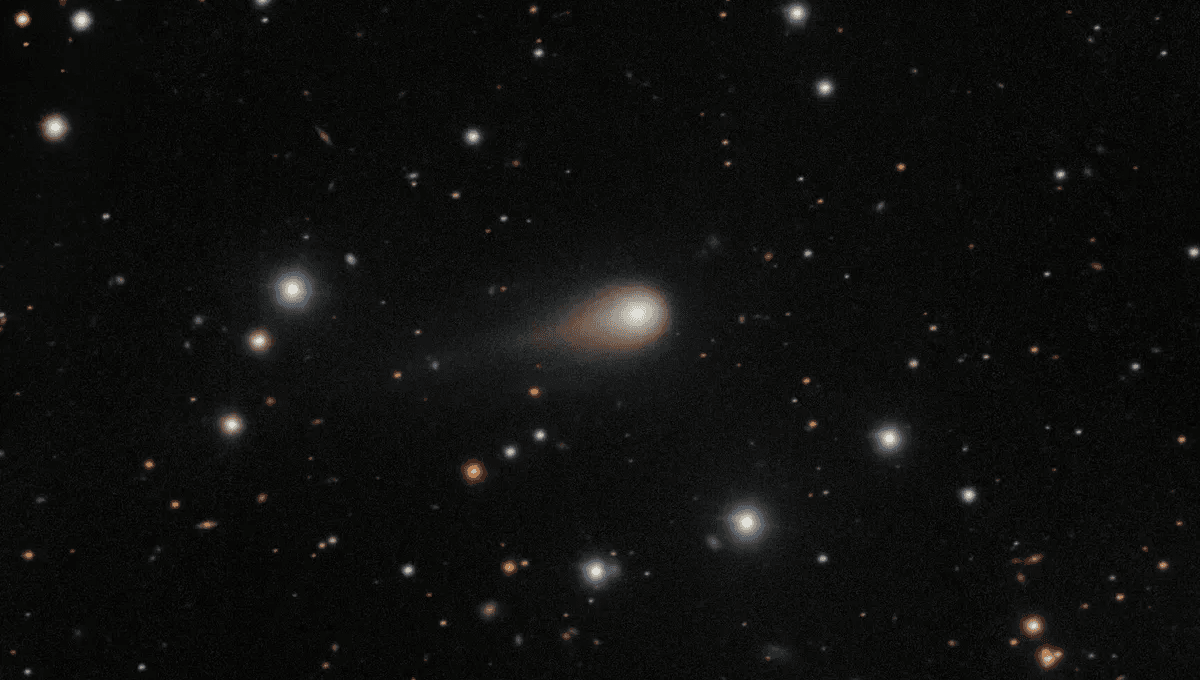
The rest of this article is behind a paywall. Please sign in or subscribe to access the full content. The observations were conducted on November 6, just days after the perihelion of Comet 3I/ATLAS. This was its closest passage to the Sun, although this interstellar interloper wasn’t exactly close – around 203 million kilometers (126 million miles) from the Sun – but having spent billions of years in cold interstellar space, the approach brought a flurry of activity for the comet. The Europa Clipper team used the spacecraft’s Europa Ultraviolet Spectrograph (Europa-UVS) to work out the composition of the comet. 3I/ATLAS was 164 million kilometers (102 million miles) from the probe, so alas, no spectacular images, but some very interesting insights. [The tails are] not entirely explained by just that model. So, we're still scratching our heads about some of the things we're seeing.” Dr Kurt Retherford “We're excited to see the gases that are escaping from the comet, hydrogen and oxygen atoms for sure. Maybe we'll get some detections or limits on carbon as well, from like the dry ice in the comet,” Dr Kurt Retherford, Principal Investigator of Europa-UVS from the Southwest Research Institute, told IFLScience. Interstellar comet 3I/ATLAS is seen in this composite image captured on Nov. 6 by the Europa Ultraviolet Spectrograph instrument on NASA’s Europa Clipper spacecraft, from a distance of around 102 million miles (164 million kilometers). Image Credit: NASA/JPL-Caltech/SWRI The observations were also a chance to check the instruments for Europa Clipper. Retherford is also the Deputy PI of a similar instrument on the European Space Agency’s JUICE mission, also going to Jupiter but targeting the other two icy moons, Ganymede and Callisto. JUICE too observed comet 3I/ATLAS. The full data for both missions will not be available for a few more months, though. While good things come to those who wait, we are an impatient bunch! We wanted to know everything that Europa Clipper saw from this comet. Still, we respect that science has its timings and necessary double-checking before results are shared. We did get to ask about some of the observations, especially regarding the comet's tails. In mid-October, models had suggested that Europa Clipper might find itself at a very advantageous position to study the ion and dust tail of 3I/ATLAS, after perihelion. We were not sure if the observations were going to take place at the time, but since they did take place, we had to ask what they saw. “We did use that model to understand where the tails were, and at first glance, what we're seeing from our vantage point on Europa Clipper is consistent with that expected location for the tails,” Dr Retherford told IFLScience, before teasingly adding “but [the tails are] not entirely explained by just that model. So, we're still scratching our heads about some of the things we're seeing.” It seems that the model focused more on the ion tail, the tail of charged particles that tend to be moving straight away from the Sun. The geometry of the dust tail, created by the larger material sublimating from the comet, is a more complex beast, and the team is working to make sure it is clear what they are looking at. Still, all of this is what you expect to see from a comet, even one as fascinating and peculiar as 3I/ATLAS. “Everything we're seeing is really consistent with an active comet being active after its perihelion passage,” Dr Retherford told IFLScience. “We're excited to put some more information on this really intriguing interstellar object and help understand more about where it came from, potentially.” Interstellar comet 3I/ATLAS is still within the orbit of Jupiter, but even once it is gone from the Solar System, it won’t be forgotten.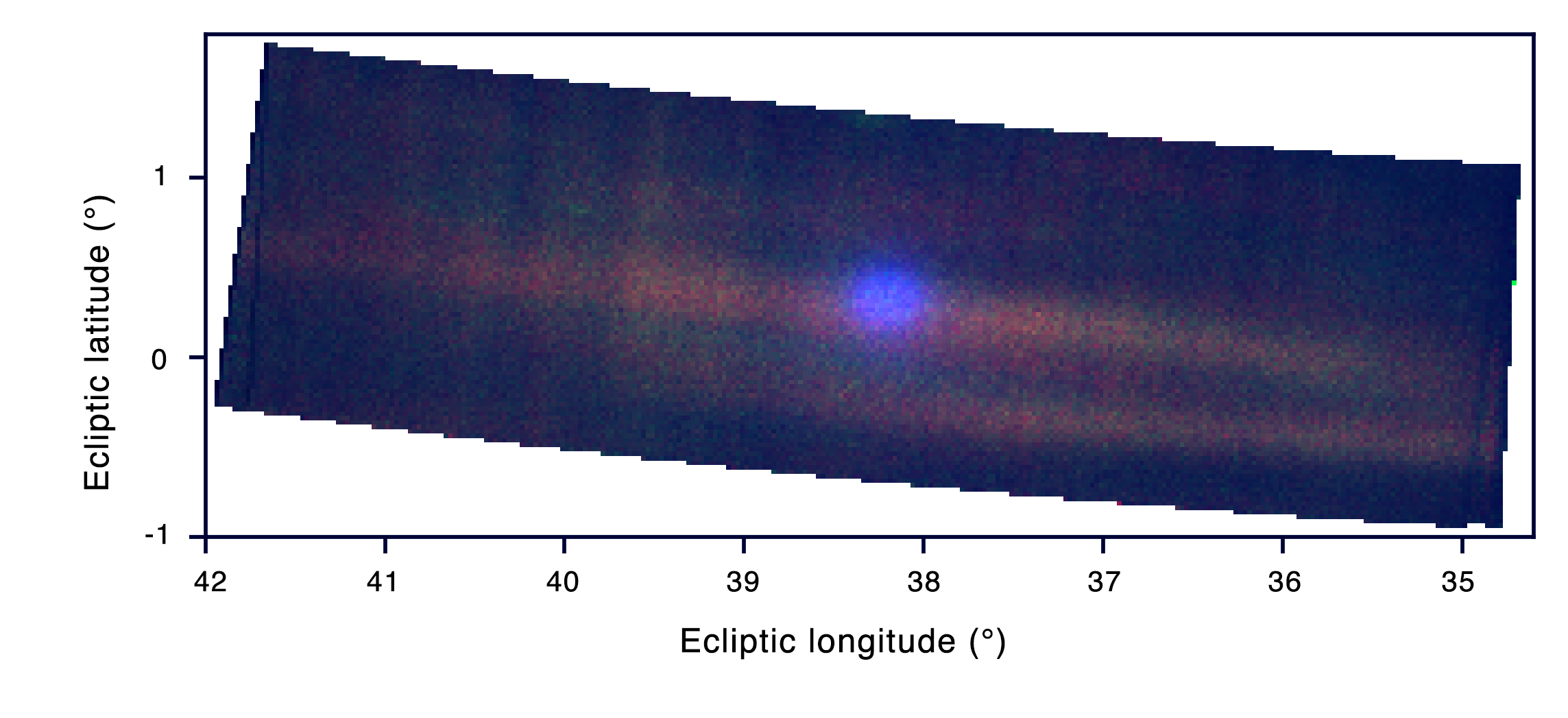

 English
 Arabic
 French
 Portuguese
 Deutsch
 Turkish
 Dutch
Dutch
 Italiano
 Russian
 Romaian
 Portuguese (Brazil)
 Greek
Greek