


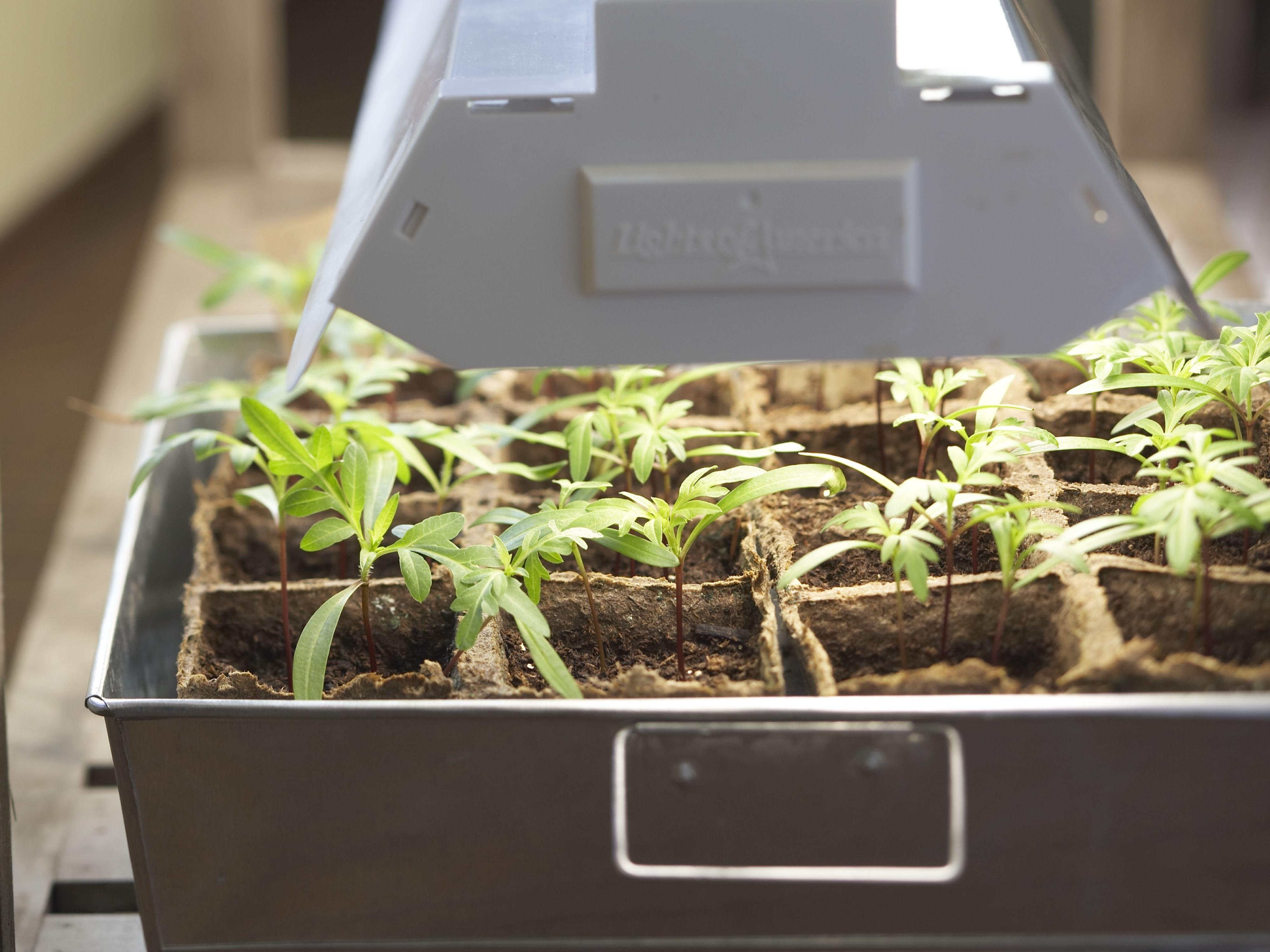
Some low-light houseplants don’t mind short winter days. Meanwhile, other plants struggle when light levels drop in winter, developing spindly stems and discolored leaves. They may even stop growing entirely. Here are 6 types of plants that benefit from grow lights in winter, plus tips on how to get the very most out of the grow lights you use.
1. Seeds and Seedlings
Seeds and seedlings need a lot of energy to fuel their rapid growth, so it makes sense that they’re some of the most light-hungry plants around. If you’re starting seeds indoors this winter, investing in some quality grow lights is a must, as most seedlings will stretch towards the light and develop weak stems if they’re only provided with light from a nearby window.
LED grow lights are some of the most cost-effective lights for seed starting, although you can use fluorescent grow lights, too. To ensure seedlings develop stout and sturdy stems, keep your grow lights on for about 14 to 16 hours per day and position the lights about 2 to 4 inches above the seed trays or seedling leaves.
2. Microgreens
Like seeds and seedlings, microgreens grow quickly and benefit from lots of light to support their rapid growth. LED or fluorescent lights that are long enough to cover the entire microgreen tray or flat are the best choice. Lights should be positioned about 6 inches above the top of the microgreens and remain on for 12 to 16 hours. If the plants look leggy or grow too slowly, your lights are probably too far away and need to be lowered closer to the seedling trays.
3. Indoor Herbs, Veggies, and Fruits
Herbs and veggies that you grow indoors during the winter also require grow lights; they simply won’t get enough sun when light levels are low in winter. Because the light requirements of plants vary, it's best to group plants according to their light needs, set up a separate grow light for each group, and leave the light on for the required number of hours per day.
Spinach, Swiss chard, kale, lettuce, and other leafy greens are usually content with about 12 to 14 hours of daily light. Basil, cilantro, parsley, dill, and mint are all herbs that take well to indoor growing, but these herbs need about 12 to 16 hours of light per day. Tomatoes, peppers, strawberries, and dwarf citrus trees have similarly high light requirements and won't bear fruit in insufficient light conditions.
4. Flowering and High-Light Tropical Plants
Many tropical houseplants grow just fine without a grow light as long as you place them in an east-, south-, or west-facing window. Indoor plants that prefer more intense bright light, or plants that you want to flower in winter, will often grow better with supplemental lighting. This includes common houseplants like philodendron, monstera, maranta, calathea, African violets, orchids, and some carnivorous plants.
Compared to seedlings, most houseplants don’t need quite as much light and will be content if your grow lights are left on for about 10 to 12 hours a day. Most houseplants should be happy if you position grow lights within 36 inches of their leaves. Keep in mind, though, that plants like calatheas can develop leaf discoloration if they get too much light. A good rule of thumb is to place grow lights closer to plants that crave lots of light and a little further away from plants that are sensitive to direct sun.
Related
5. Succulents and Cacti
Most succulents and cacti hail from hot and sunny areas and need lots of light to grow and maintain their color and form indoors. Plants like aloes, haworthia, echeveria, and most cacti will grow better in winter with the addition of a grow light for 10 to 12 hours daily. Take care not to place sensitive species too close to grow light bulbs.
If you keep succulents and cacti in a terrarium or dish garden, try using a grow light with a clamp base and adjustable neck to direct light right where you want it to go.
6. Tender Outdoor Plants
Some gardeners move tender outdoor plants like impatiens, geraniums, and heliotropes indoors for the winter to keep them alive until spring. If you go this route, your plants will grow much better if you place them under a grow light. After all, outdoor plants are accustomed to the brighter light conditions of the garden and struggle if they don’t get enough sun indoors. To assess the time that you should leave the grow lights on, take your cues from the light requirements of the plant outdoors (full sun means at least 6 hours of direct light).
Tips for Keeping Plants Under Grow Lights
Grow lights can be used on their own, or they can be positioned near a window to supplement the natural light plants receive. But no matter which type of grow light you’re using and the types of plants you’re keeping under them, there are a few simple rules to remember to get the most benefits from the lights.
- Choose full-spectrum bulbs. Some grow light bulbs emit red light that supports flowering and fruiting, while other grow lights emit blue light that supports vegetative growth. If you want indoor plants to thrive, choose full-spectrum light bulbs, which produce both red and blue light and are closest to the type of light plants would receive outdoors.
- Use a timer. Leaving grow lights on around the clock stresses your plants and wastes energy. To cut energy costs and provide plants with the perfect amount of light, hook your grow lights up to a basic automatic timer. Some grow lights even have built-in timers.
- Invest in adjustable lights. Grow lights need to be adjusted upwards as seedlings and microgreens grow, which is easily accomplished if your grow lights are attached to adjustable chains. Grow lights that are on clamps or have adjustable necks also make it easy to move lights closer or further away from houseplants as needed.
- Keep lights clean. As dust and grime build up on grow lights, they reduce the amount of light your plants receive. Dust your grow lights regularly and replace fluorescent bulbs every 12 to 18 months.

 English
 Arabic
 Spanish
 Portuguese
 Deutsch
 Turkish
 Dutch
Dutch
 Italiano
 Russian
 Romaian
 Portuguese (Brazil)
 Greek
Greek