


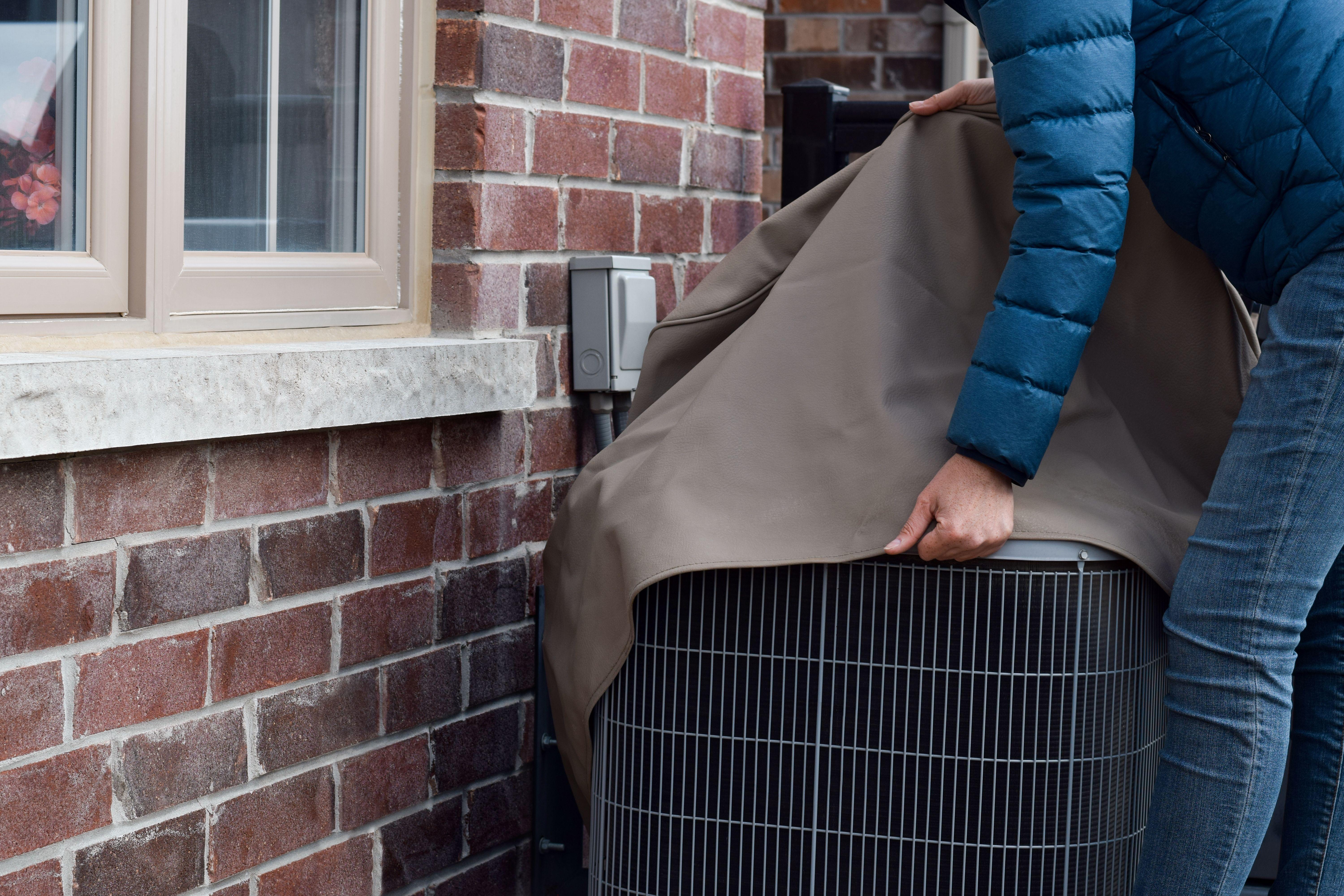
Many homeowners opt to cover their AC units during the winter to shield them from debris and protect them from ice and snow, but it can be hard to tell whether doing so causes more harm than good. Because not all HVAC covers are created equal, choosing the right option can also be challenging.
Below, we’ve consulted experts on whether it’s necessary to cover your AC unit in winter, including when to cover it, the best types of AC covers, and tips for protecting your unit without covering it.
- Keith Lawson is a licensed mechanical contractor (HVAC) and owner of Keith Lawson Services, a family-owned HVAC company.
- Eli Zimmer is CEO of Luxaire HVAC Services.
- Jon Gilbertsen is an HVAC technician and the president and CEO of Chris Heating & Cooling.
Is It Necessary to Cover Your AC Unit for Winter?
Keith Lawson, owner of Keith Lawson Services, a family-owned HVAC company, often advises homeowners against fully covering an outdoor AC unit, saying it will likely do more harm than good. He warns that full covers often trap moisture, creating an ideal environment for rodents and leading to corrosion and long-term damage.
Eli Zimmer, CEO of Luxair HVAC Services, says this excess moisture accumulation can lead to mold growth and corrosion, which, if left unchecked, could completely compromise your unit.
Covering an AC unit and the resulting damage it might cause could shorten the system’s lifespan, and some manufacturers might not cover damage caused by pests or improper winterization under warranty.
When Covering Is Encouraged
While full coverage is often discouraged, there are a few situations where limited protection makes sense. The main instance in which a homeowner might consider covering their AC unit is in an area that receives significant snowfall or heavy debris from surrounding trees, as the debris could damage the fins and fan if it enters the unit.
Apart from these severe conditions, Zimmer says outdoor units rarely need to be covered, as they're designed for outdoor use and built to withstand such conditions.
Related
How to Choose the Best AC Unit Cover
The best AC unit cover is breathable and protects only the top of the unit. It should fit securely on top without sealing the unit, allowing air to circulate freely around the sides. This design helps prevent condensation buildup and discourages rodents and pests, while still reducing the risk of damage from falling debris during winter storms.
If homeowners are experiencing snow, leaves, branches, or other debris entering their AC unit, or if they're concerned about future issues, Lawson recommends they contact their local HVAC contractor to discuss the best options.
"They [HVAC contractors] can come out and advise if your condenser model has what's called a snow cap, an optional accessory that is engineered to provide optimum airflow while protecting the unit from snow and debris buildup," he explains.
Both Zimmer and Lawson recommend homeowners avoid full wraparound covers and stick to top shielding only, as it prioritizes protection without inviting rodents or causing excess moisture.
Tips for Protecting Your Outdoor AC Unit
While covering your AC unit will protect it from falling debris, it's not always the most effective way to maintain your investment. Here's how to protect your AC unit without causing more harm than good.
- Use a board as a cover. "If you're in a pinch, you could place a sturdy elevated board or top panel over the unit and secure it with a small weight," offers Lawson. "This blocks debris while still allowing the sides to breathe and moisture to escape."
- Only cover if absolutely necessary. "Covers aren't necessary if the only concerns are freezing temperatures, rain, or wind," explains Jon Gilbertsen, president and CEO of Chris Heating & Cooling, adding that outdoor AC units are designed to withstand those conditions.
- Create natural barriers. AC unit covers aren't the only way to protect your unit. Creating barriers with plants, lattices, and fences can shield your unit from debris without interfering with its operation or putting it at risk of damage.
- Trim overhanging trees. If surrounding trees are contributing to harmful debris buildup in your AC unit, pruning overhanging branches or removing the trees might be necessary to protect the unit.

 Arabic
 French
 Spanish
 Portuguese
 Deutsch
 Turkish
 Dutch
Dutch
 Italiano
 Russian
 Romaian
 Portuguese (Brazil)
 Greek
Greek