


Why People Still Eat Bacteria Taken From The Poop Of A First World War Soldier
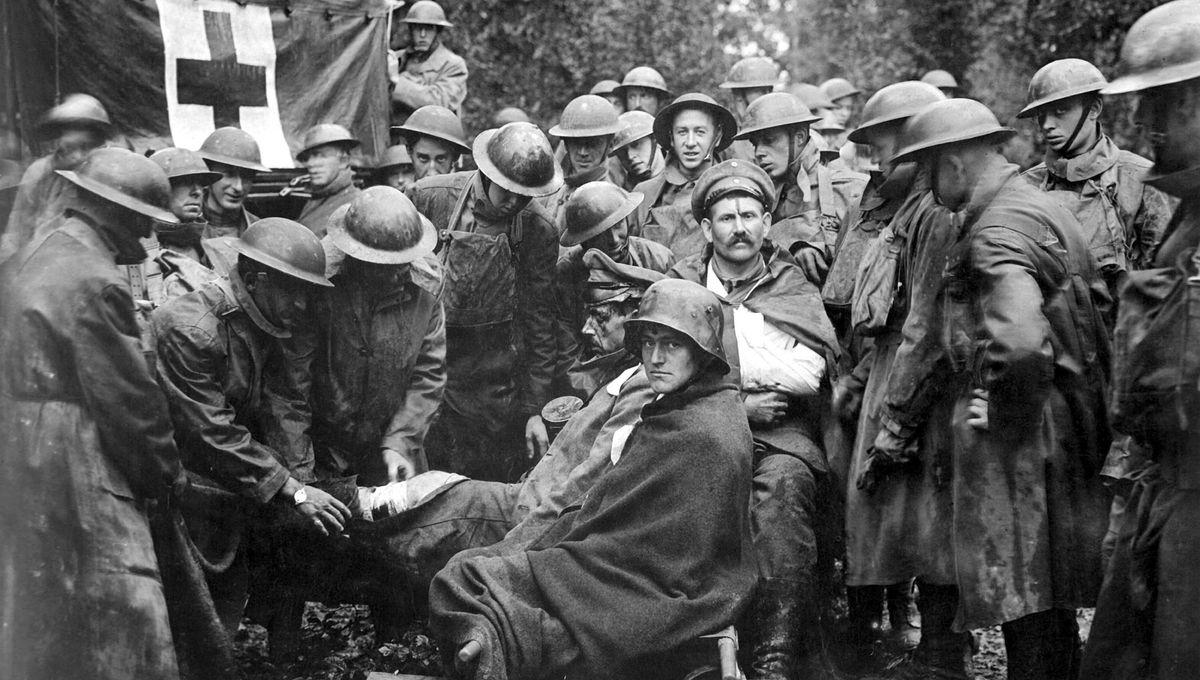
Why People Still Eat Bacteria Taken From The Poop Of A First World War Soldier
In 1917, a group of German soldiers arrived at a military hospital near Freiburg after returning from a campaign in Dobrudja, a region of the Balkans that had been riddled with disease. All of the troops had been struck down with a nasty case of dysentery caused by the Shigella group of bacteria – except for one soldier, who was remarkably unaffected by the deadly illness that struck down his comrades.
The rest of this article is behind a paywall. Please sign in or subscribe to access the full content. The case caught the attention of Professor Alfred Nissle, a physician at the hospital who had grown increasingly interested in the bacterial contents of the human intestine. As part of his classes, Nissle would ask medical students to give a stool sample (as you do), spike it with a pathogenic strain of Salmonella, and leave it on an agar plate overnight. Typically, Salmonella flourished and dominated the other bacteria. But in rare cases, it barely grew at all, and Escherichia coli reigned supreme. Nissle suspected these special stools contained certain strains of E. coli capable of suppressing the activity of Salmonella, either by competing for nutrients in the gut or by producing antimicrobial substances that kept the pathogen at bay. He called this phenomenon “antagonistic activity.” To explore it further, Nissle devised experiments that allowed him to rank different E. coli strains along a spectrum from “antagonistically strong” to “antagonistically weak.” When he learned about the mysterious soldier, Nissle knew what needed to be done. Without further ado, a sample of the soldier’s poop was taken, and his team managed to isolate particularly high-grade antagonistically active E. coli. It’s unclear how this strange strain of E. coli had emerged in the man’s gut. Perhaps it was the result of an unusual childhood diet, exposure to livestock, or fermented foods rich in beneficial bacteria. It may have been the result of an early infection that reshaped his gut ecosystem or contact with contaminated water that introduced a particularly robust strain of E. coli. Unfortunately, there's little to no information about his medical or personal history (at least that we know of). Whatever its origin, the strain was special. Through a series of lab tests and experiments, it consistently showed strong antagonistic activity against pathogenic bacteria. The bacterium was named E. coli Nissle 1917, after its discoverer. The physician began culturing the strain en masse and encapsulating it in gelatin capsules with the dream of using it as a treatment. The bacterial concoction was eventually patented by Nissle under the trade name Mutaflor, and its production was assigned to a pharmaceutical company. It’s widely reported that Adolf Hitler, who notoriously suffered from stomach problems throughout his life, was given doses of E. coli Nissle 1917 from his personal doctor, Theodor Morrell. So the accounts say, after six months of treatment, Hitler was able to eat normally without suffering abdominal cramps. His gastrointestinal woes, however, returned a few years later. Oh, boo hoo. Beyond obscure anecdotes of dreadful dictators, there is clinical evidence that backs up the much-touted promises of E. coli Nissle 1917. Some of the most intriguing research regards the treatment of inflammatory bowel diseases by reducing inflammation and regulating the gut’s immune responses. While the research is not yet settled, a bunch of studies indicate the strain could be used as a tool to support remission in patients with ulcerative colitis. In some European countries, it has even been approved as an early treatment for the condition. The modern-day makers of Mutaflor also cite evidence that it can ease chronic constipation in adults and diarrhea in infants. All of this traces back to an unknown soldier whose gut bacteria refused to bow to disease. We might never know his name, nor how his body fostered such a useful bacterial freak, but his legacy still lives on in the bowels of many.

 English
 Arabic
 French
 Spanish
 Portuguese
 Deutsch
 Turkish
 Italiano
 Russian
 Romaian
 Portuguese (Brazil)
 Greek
Greek