


World’s Longest Jellyfish Can Reach A Whopping 36 Meters, Even Bigger Than A Blue Whale
World’s Longest Jellyfish Can Reach A Whopping 36 Meters, Even Bigger Than A Blue Whale
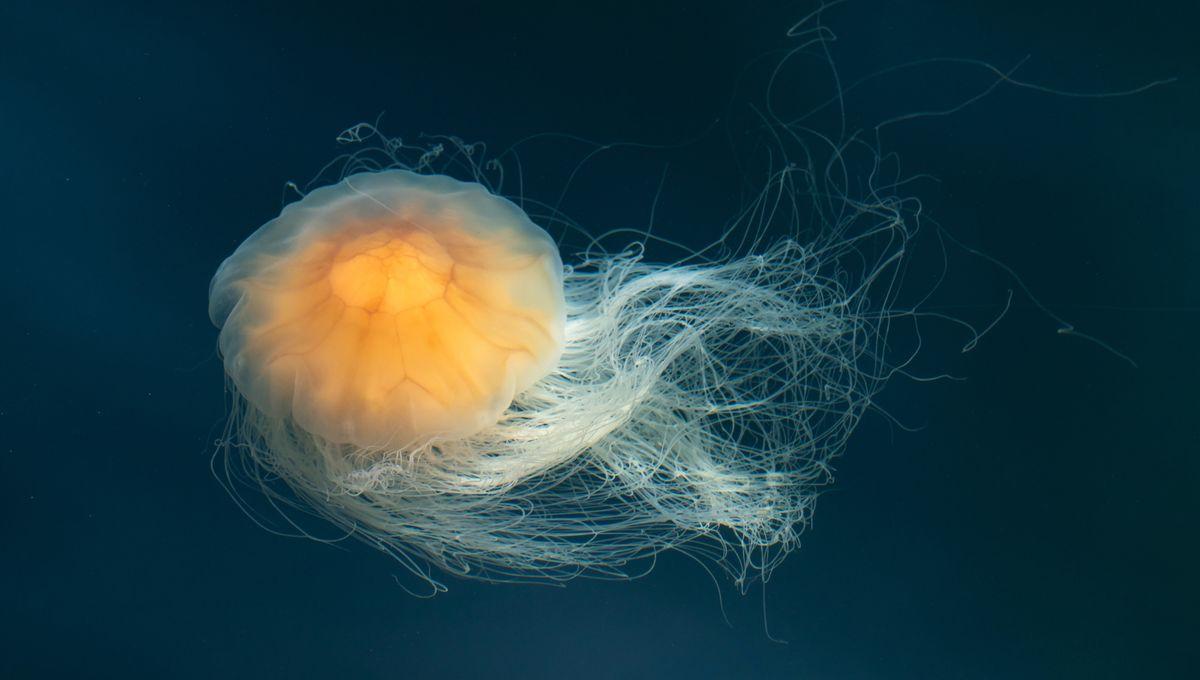
The blue whale might be the largest known animal ever to have lived on the planet, but it turns out it has a rival, at least when it comes to length. It’s tentacle-y, it’s deliciously peachy and red, it’s… the lion’s mane jellyfish (Cyanea capillata).
The rest of this article is behind a paywall. Please sign in or subscribe to access the full content. One of the largest jellyfish in the ocean (if not the largest, although there’s some debate over that – more on that in a bit), the tentacles of these officially giant jellies can reach more than 30.5 meters (100 feet) long. Blue whales can grow up to the same length, but on average reach around 27 meters (89 feet). In fact, the largest lion’s man jelly specimen ever recorded had tentacles measuring a lengthy 36.5 meters (120 feet), nearly 10 meters (33 feet) beyond the blue whale’s average. If, for some bizarre but presumably scientific reason, you were to lay it side by side with the world’s tallest animal, a giraffe, it’d be 6.5 times as long. But the lion’s mane jelly isn’t just a certified Long Boi; according to Guinness World Records, it’s also the heaviest jellyfish on the planet. Its estimated weight – estimated because it’s not particularly common to collect and weigh giant jellies, nor would it be simple to get an accurate weight anyway – is 1 metric ton. Definitely not as heavy as a 200-ton blue whale, but certainly nothing to be sniffed at, at around the same weight as an adult male American bison. As for whether it’s the largest of the jellyfish, that depends on how “largest” is defined. Some believe Nomura’s jellyfish (Nemopilema nomurai) to be the title holder, its bell (the main, umbrella-shaped bit of a jelly’s body) reaching up to 2 meters (6.6 feet) in diameter compared to around 1 meter (3.3 feet) for the lion's mane. Either way, they’re both still classified as giant jellies. Fancy trying to catch a glimpse of the lengthy lion’s mane? You’ll have to head to chillier climes, as they’re typically found out in the open waters of the colder regions of the Atlantic (like the North Sea), Pacific, and Arctic Ocean. The UK, for example, is a great place to see them, as they can be found around the whole coast come the summer months (yes, summer – it doesn’t get very hot here). If size alone doesn’t give it away, you’ll be looking for a jelly with a bell that’s anywhere from peach or light brown through to a deep red, the darker colors typically indicating that it’s an older specimen. And while the lion’s mane sting is rarely fatal, it can be super painful and cause a number of unpleasant symptoms like nausea, sweating, cramps, and headaches – so maybe best just stick to spotting one from a boat.

 English
 Arabic
 French
 Spanish
 Portuguese
 Deutsch
 Turkish
 Dutch
Dutch
 Italiano
 Russian
 Romaian
 Greek
Greek