


Key Takeaways
- Sweater shavers are ideal for removing fuzz from sweaters, but they are also handy for removing pills from other items.
- Sturdy upholstery, throw pillows, low-pile rugs, curtains, and car seats can also benefit from an occasional shaver touch-up.
- However, they shouldn't be used on everything: sweater shavers can damage delicate knits, high-pile rugs, sheer curtains, quilts, and leather surfaces.
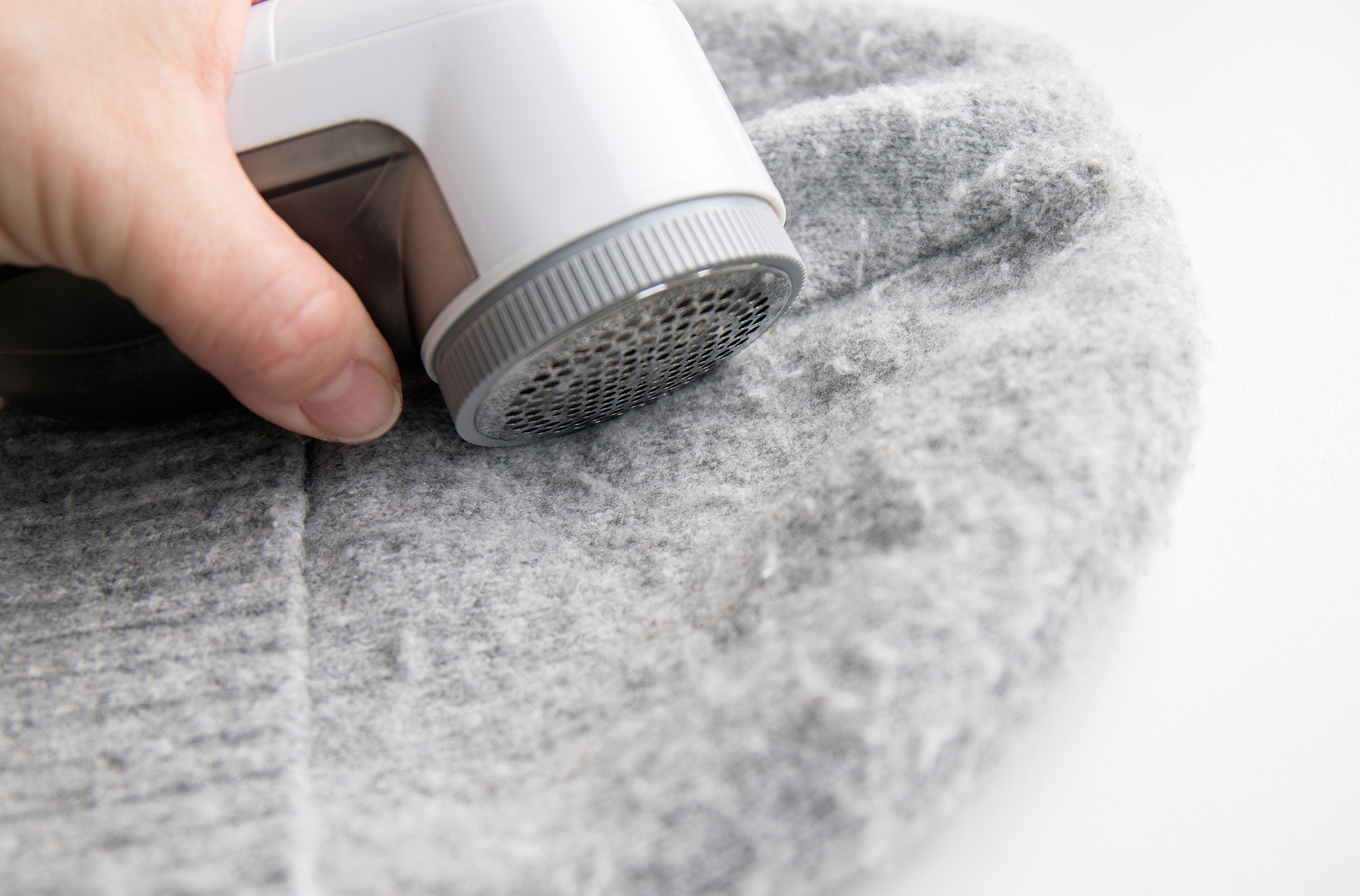
If you’ve ever pulled your favorite sweater out of storage only to find it covered in fuzz, you might have reached for a sweater shaver to save the day. The small gadget, sometimes referred to as a fabric shaver, works by gently shaving away pills and lint to restore sweaters and make them look like new again. The beauty of sweater shavers is that their usefulness doesn’t end with your wardrobe. They can also breathe new life into worn upholstered furniture, rugs, curtains, and more.
However, not every fabric or surface is fair game. The spinning blades that make sweater shavers effective can damage delicate materials. That’s why knowing where to use them—and where to avoid using them—is essential. Below, we break down which household items are safe to shave and which ones are not.
What You Can Use a Sweater Shaver On
1. Some Sweaters
Most durable knits, such as cotton and wool sweaters, respond well to a quick once-over with a sweater shaver. Pills usually develop in high-friction areas, such as under arms or along side seams, and the shaver can make those areas look brand new. Always move the tool gently in small circles, avoiding excessive pressure, especially with thin sweaters. Some shavers are designed to be gentle on cashmere, but if you’re nervous about using one on your luxe garments, stick to a cashmere comb instead.
2. Upholstered Couches and Chairs
If you’ve noticed your sofa cushions looking a little worse for wear, a sweater shaver can help. Fabrics like microfiber, cotton blends, and polyester upholstery often develop pilling over time (especially if you sit on them frequently), and a shaver can remove that buildup to make them appear smoother. Stick to flat areas of the cushions or armrests and avoid piping, buttons, or loose threads where the blades could catch.
3. Throw Pillows
Decorative pillows see just as much wear and tear as couches and chairs. Fortunately, most pillow covers made of durable fabrics can handle a quick shave. Removable covers are best because you can remove them from the insert, lay them flat, and run the shaver over the surface. This keeps the fabric taut and reduces the chance of catching on seams.
4. Low-Pile Rugs
Low-pile area rugs, especially those made of wool or cotton, can pill and fuzz just like sweaters. A sweater shaver can neaten them up, but proceed carefully. Stick to small or medium-sized rugs where you can work section by section. High-pile, shaggy, or looped rugs are off-limits as the blades can snag loops and cause permanent damage.
5. Curtains and Drapes
If your cat has turned your curtains into their personal climbing wall, a sweater shaver can minimize the snags and fuzz they left behind. Heavy drapes, like velvet, chenille, or cotton blends, usually respond well. However, skip it for sheer or gauzy curtains, as the thin material is likely too delicate to withstand a shaver. Always remove curtains from the rod first so you can lay them flat before shaving.
6. Fabric Car Seats
Car interiors take a beating, especially if you have kids, pets, or a daily commute. Over time, fabric seats can develop pilling in high-contact areas, such as the driver’s seat edge. A sweater shaver can smooth them out and make the upholstery look fresher. Just make sure the car is parked and in a well-lit area so you don’t miss any spots.
Related
What You Should Not Use a Sweater Shaver On
1. Delicate Knits
Some sweaters aren’t good candidates for a shaver. Very thin cashmere, loosely knitted mohair, lace, or crochet can tear or unravel when exposed to the blades. In these cases, a lint roller or fabric comb is a safer choice.
2. High-Pile Rugs
Although low-pile rugs can usually handle a sweater shaver, plush or shaggy rugs are a different story. The longer loops and fibers are almost guaranteed to get caught in the blades, which could not only damage your rug but also cause the device to jam. It’s also a good idea to steer clear of shaving a sheepskin rug. Stick to trimming with scissors if you need to address snags in these thick materials.
3. Sheer Curtains
As tempting as it may be to smooth out snags on your lightweight curtains, the thin fabric is no match for a sweater shaver. Even a gentle pass can create a hole or pull. Instead, carefully trim frayed threads with sharp scissors and use a fabric refresher spray to keep them looking neat.
4. Quilts and Embroidered Fabrics
Keep anything with intricate embroidery or patchwork details far away from your sweater shaver. The blades can cut loose threads or distort the stitching. If your quilt is looking fuzzy, gently hand-pick pills or use a fabric comb instead.
5. Leather or Faux Leather Surfaces
Leather couches, chairs, or clothing should never come into contact with a sweater shaver. The blades won’t actually remove lint from leather; instead, they will scratch or scuff the surface. Use a leather cleaner and conditioner to freshen these items instead.
6. Fragile Furniture Upholstery
Some furniture fabrics are far too delicate for a sweater shaver. Materials like silk and boucle can snag easily and ultimately be ruined if shaved. For these pieces, a lint brush is the safest option. If the fabric is heavily worn, professional cleaning or repair might be worth the investment.
Tips for Using a Sweater Shaver Safely
- Test a small spot first: Before committing, run the shaver on an inconspicuous area to make sure the fabric can handle it.
- Keep fabric taut: Wrinkles or folds increase the chance of snagging. Lay items flat whenever possible.
- Don’t rush: Slow, gentle passes are more effective than pressing down hard or moving too quickly.
- Empty the lint bin frequently: A full bin reduces efficiency and can cause the device to drag.
- Choose the right shaver: Battery-powered shavers are great for clothing, while larger plug-in versions are better for upholstery, rugs, and curtains.

 English
 Arabic
 French
 Spanish
 Portuguese
 Deutsch
 Turkish
 Dutch
Dutch
 Italiano
 Romaian
 Portuguese (Brazil)
 Greek
Greek