


PUBG creator's take on a metaverse is radically different from Roblox or Fortnite: "Everyone's doing it the wrong way"
PUBG creator's take on a metaverse is radically different from Roblox or Fortnite: "Everyone's doing it the wrong way"
I find Prologue, the new survival game from PlayerUnknown Productions, a fascinating project. It takes survival gameplay back to basics, yet hosts it in millions of huge, life-like maps created with innovative machine learning tech. That juxtaposition is interesting in and of itself, but so too is the reason why Prologue was built in the first place. Sure, studio head Brendan 'PlayerUnknown' Greene, the creator of PUBG, wants it to be an enjoyable, community-driven game, but it's also game number one in a trio of projects that will test features for his end goal: a metaverse project currently codenamed Artemis. However, while the likes of Roblox and Fortnite are investing heavily in growing their own metaverses, Greene tells me he'll be doing things very differently.
I got the chance to interview Greene about all things Prologue, ranging from his reaction to critical Steam reviews at launch, to some of the features he wants to see added to the game throughout early access.
But an interaction between Greene and Epic Games CEO Tim Sweeney on X - in which the pair showed a mutual love for the battle royale franchise - motivated me to ask about Artemis, too. Fortnite is of course a behemoth now, but its beginnings as a battle royale game were inspired by PUBG. I ask Greene if things have, in a way, come full circle, where PlayerUnknown Productions is now inspired by Fortnite and its evolution into a metaverse platform.
"No," Greene says with a chuckle, the bluntness of his reply taking me aback slightly. "Well, yes and no. So I think Tim and everyone else metaverse-y are all chasing that Ready Player One dream, right? That idea of this multiverse of digital worlds where you can go and explore. I just think everyone's doing it the wrong way. I think everyone is building server client models for these worlds, and you'll never get beyond maybe 10,000 people [in a single experience]. I'm trying to create a way to do the internet in 3D. [There are places on the internet right now] where you have millions, if not billions, of people coming together to share ideas, create content, and have conversations in 2D and there's nowhere really like that in 3D."

"Tim says he doesn't think the metaverse is possible, because we don't have server farms big enough yet," Greene adds, although I was unable to find evidence of Sweeney making such comments, explicitly. What PlayerUnknown Productions is trying to build, though, is technology that can create the infrastructure for a metaverse locally on players' devices.
"With Prologue, you have a machine learning agent that generates a height map, a simple black and white image, that we then feed into Unreal Engine and it builds the rest of the world based on that. With Preface [PUP's un-gamified tech demo that builds much larger environments than Prologue], we're using ML models to build an Earth-scale world locally on your GPU and all offline without relying on server farms to create the content. And I think that's the big difference […] I want to build it from the bottom up, and I think the others are trying to build it from the top down. I just don't see that as the right way."
One of Greene's non-negotiables with Artemis is that it'll also be open source. He says that PUP isn't trying to build "an engine to compete with Unreal or Unity," but rather an "open framework" that will support experiences built across all manner of engines. On the topic of the recent deal struck by Epic to let Unity-built games run and be featured in Fortnite Creative, Greene again distances himself from Sweeney and co's approach.
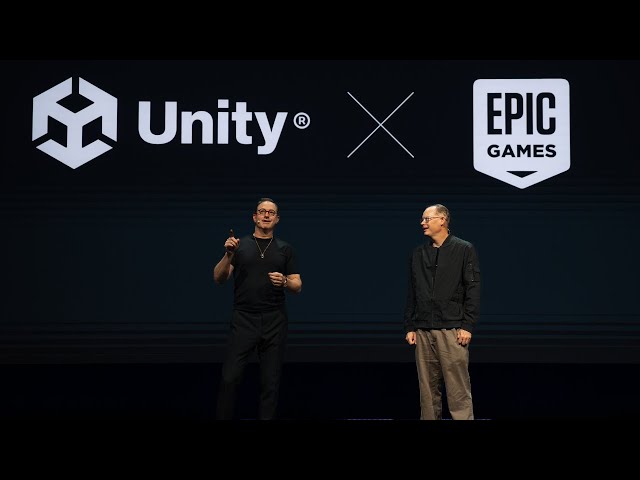
"You can now release Unity games in Fortnite, but it's a partnership," he says. "It's not just an open platform where I can just plug [my creation] in and it works. And that, I think, is the big difference - I don't think the metaverse is business to business deals. I think the metaverse has to be an open framework where everyone can plug in, and it's just agnostic to everyone."
When I spoke to Greene at the beginning of the year, he said that Project Artemis would be roughly a decade away. In the shorter term, Prologue will be in early access for around a year, expanding its survival sandbox and perfecting its map generation tech. Support for Prologue will run another couple of years after hitting 1.0, according to Greene, while PUP gets its engine "ready for game two." So, the likes of Epic may have a generous headstart in the metaverse race, but maybe there's a world where PUP's more open, locally generated tortoise surpasses hares like Fortnite and Roblox.

 English
 Arabic
 French
 Spanish
 Portuguese
 Deutsch
 Turkish
 Dutch
Dutch
 Italiano
 Russian
 Romaian
 Greek
Greek