



Trevor Srednick/Getty Images
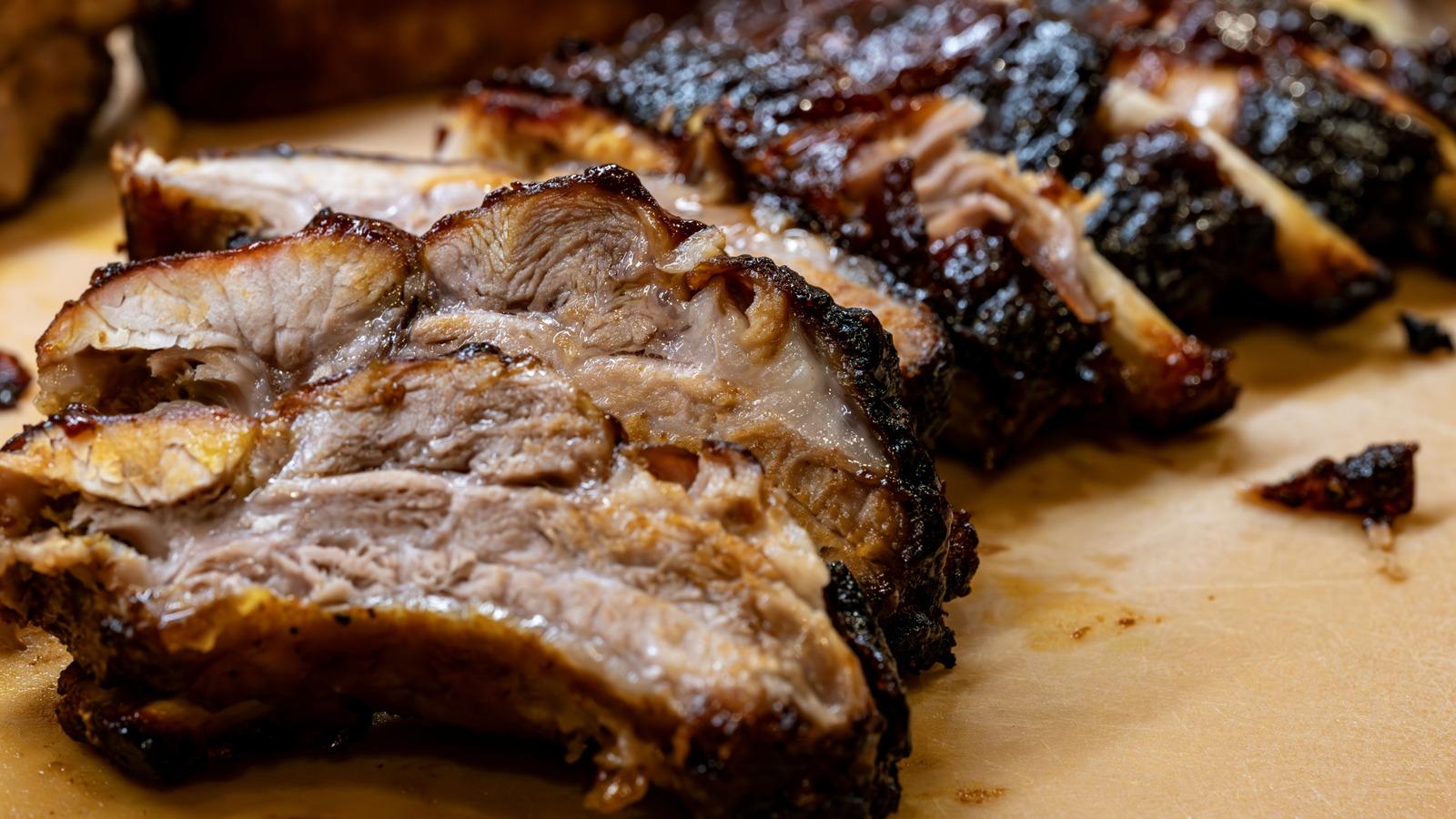
If you want to cook a world class rack of ribs, they're going to have to be juicy, sticky, and so tender that the meat damn near falls right off the bone. Pre-cooking the ribs in the oven before putting them on the grill is the best way to get super soft meat with a solid char. (Seriously, try steaming them in foil with a bit of beer.) And while you may be able to achieve decent results either way, leaving the membrane on the back of the ribs is a surefire way to keep your baby-back ribs recipe from being the absolute best it can be.
For a few reasons, not removing the membrane is one of the biggest mistakes folks make when it comes to ribs. Attached to the underside of the cut, the membrane (which you might also hear referred to as the silver-skin or peritoneum) is a layer of connective tissue that protects the organs and allows the pig's blood vessels and nerves to do their thing. It's made from a stretchy and tough protein called elastin, so it won't break down during the cooking process like collagen. On the contrary, it becomes rather rubbery, which not only detracts from the overall texture, but quite literally prevents you from the accomplishment of cooking fall-of-the-bone ribs. Removing it both improves the overall eating experience and ensures that the meat absorbs the maximum amount of flavor during the cooking process.
Take that membrane off with a little elbow grease
Candice Bell/Shutterstock
The membrane is so effective as a protective layer that it can actually prevent marinades, seasonings, and smoke from reaching the meat. Taking it off ensures that all of the intended flavors actually come into contact with the surface of the meat. The best way to marinade meat is to combine oil, acid, salt, and aromatics, which will work to tenderize and flavor the meat, even beyond the surface.
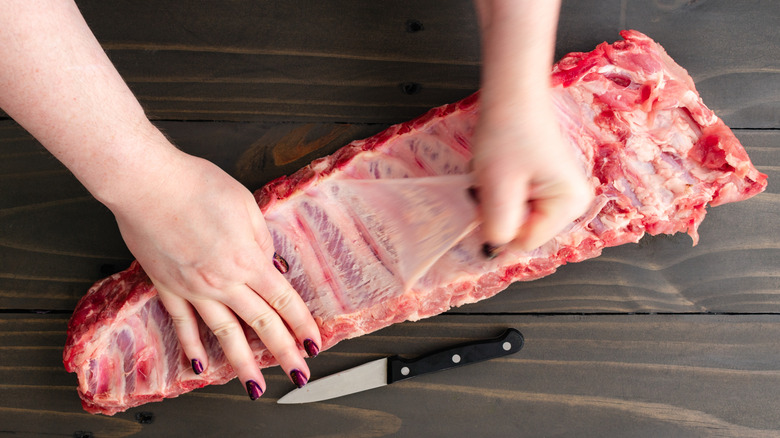
To take the membrane off the back of your ribs, begin by putting the ribs meat side down on a cutting board with the membrane facing up. Slide a butter knife in between the silvery layer and the bone, and create a lip separation big enough for your fingers to grasp. Holding the meat down on the board with one hand, use the other to gently pull the membrane away from the ribs. Doing it in a slow and measured way can help the connective tissue stay in one piece, so you aren't pulling it off bit by bit. You may still notice some white bits of fat attached to the meat underneath the membrane, but this adds a significant amount of flavor and moisture to the meat while it cooks, so don't cut it off.

 English
 Arabic
 French
 Spanish
 Deutsch
 Turkish
 Dutch
Dutch
 Italiano
 Russian
 Romaian
 Portuguese (Brazil)
 Greek
Greek