


The Planet’s Oldest Bee Species Has Become The World’s First Insect To Be Granted Legal Rights
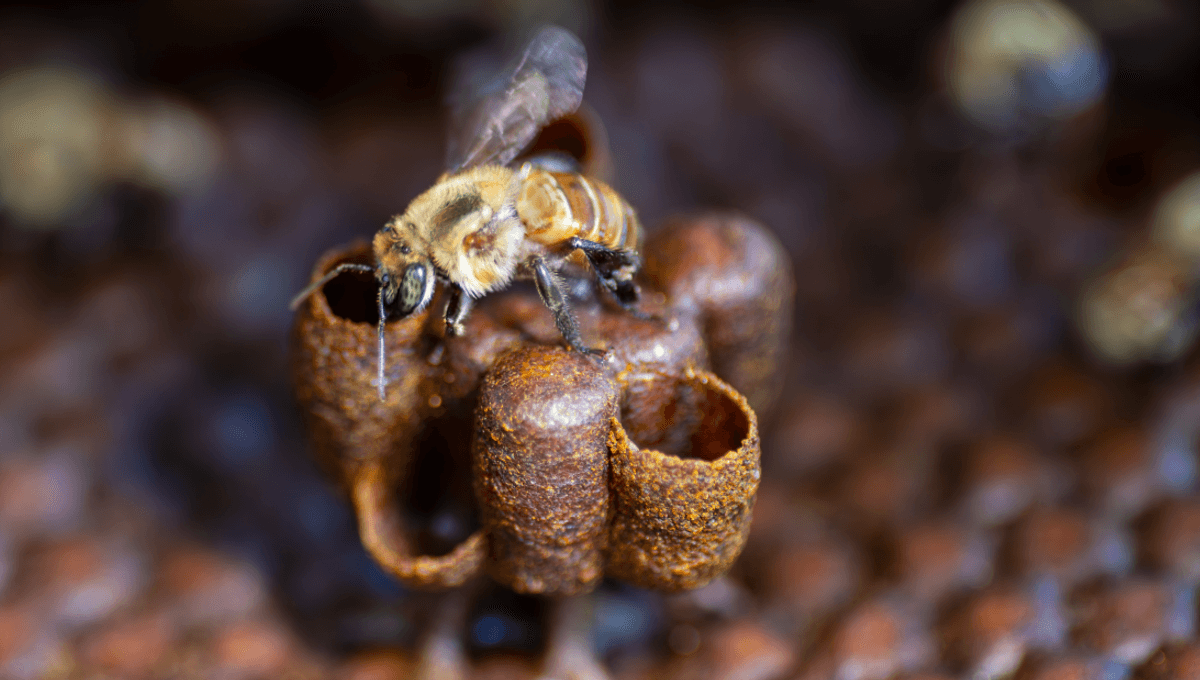
For The First Time Ever, An Insect Has Been Granted Legal Rights
In a first for nature and the planet, an insect has been given official legal rights. The revolutionary move comes from Peru, where the world’s oldest bee species is responsible for pollinating over 80 percent of Amazonian flora.
The rest of this article is behind a paywall. Please sign in or subscribe to access the full content. In recognition of their service, Peru has awarded the bees and their ecosystems inherent rights including: In doing so, the first-of-its-kind ordinance hopes to ensure that immediate action can be taken against activities that threaten these rights. A novel and powerful position for an insect that’s backed by science and centuries of indigenous knowledge. “In a precedent with no equivalent worldwide, the Provincial Municipality of Satipo has approved Municipal Ordinance No. 33-2025-CM/MPS, which grants legal rights to native stingless bees within the Avireri VRAEM Biosphere Reserve,” writes Earth Law Center (ELC), a non-profit working toward a paradigm shift in environmental law, in a release. ELC put together a technical report to underpin the ordinance with Amazon Research Internacional, a non-profit organization based in Peru that’s dedicated to conserving Amazonian biodiversity, ecosystems, and indigenous knowledge. Working in collaboration with Ashaninka Communal Reserve and EcoAshaninka, they succeeded in obtaining approval and announced the happy news in November 2025. “This legislation is the result of a unique alliance between Indigenous leaders, scientists, and environmental advocates – a unique partnership that, campaigners say, could inspire similar efforts worldwide and advance the recognition of the intrinsic value of wild bees and the ecosystems they sustain,” says ELC. Peru’s native stingless bees encompass several species, many of which are currently under threat from deforestation, pesticides, habitat loss, and climate change. They’ve been cultivated by Indigenous People for centuries to treat disease, and research into their honey composition has found it contains anticancer, antibacterial, antifungal, anti-inflammatory, and antiviral properties that underpin this medicinal value. “These insects – the oldest bee species on the planet, and which are responsible for pollinating over 80% of Amazonian flora, including globally cherished crops like coffee, chocolate, avocados, and blueberries – are now formally recognized as beings with inherent rights. This is the first formal recognition of rights for an insect in history, a revolutionary step in protecting Peru’s biodiversity and biocultural heritage.” These bees influence their immediate environment, but this extends to the overall health of the planet as well as some particularly delicious aspects of global trade. It seems only fitting, then, that such an influential invertebrate should kick off a new era for environmental law. “This ordinance marks a turning point in how we understand and legislate our relationship with Nature,” added Constanza Prieto, founder and director of the Latin America Legal Program at ELC.

 Arabic
 French
 Spanish
 Portuguese
 Deutsch
 Turkish
 Dutch
Dutch
 Italiano
 Russian
 Romaian
 Portuguese (Brazil)
 Greek
Greek