



 PUBLISHED
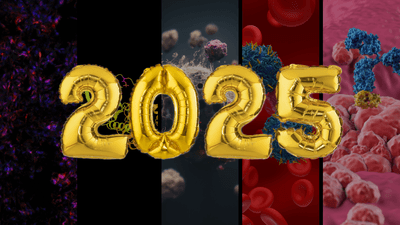
Cancer touches most of us at some point in our lives, whether it’s getting a diagnosis ourselves or supporting a friend or family member through a treatment journey. Countless hours of scientific research each year are dedicated to developing innovative new therapies and improving survival rates, and 2025 was no exception.
The rest of this article is behind a paywall. Please sign in or subscribe to access the full content. As Health & Medicine Editor, I have the privilege of getting to report on many impressive discoveries and promising clinical trials. So, as we close out 2025, here are my picks for the stories that pushed cancer treatment towards ever greater heights this year. We started strong in January with a study that provided answers to an enduring mystery. We know radiotherapy is effective for many cancers, but we didn’t really know why. That is, until a team from Sydney Children’s Medical Research Institute discovered that it’s not just about killing the cancer cells – the way they die is just as important. Cancer cells that die during the regular cell division process go unnoticed by the immune system. A better way is for the cells to survive just long enough to release signals that the immune system interprets as an infection. When immune cells come in to clear away the dying cells, some of the other tumor cells get caught in the crossfire. Lead researcher Professor Tony Cesare told IFLScience that now we’re aware of this mechanism, there are drugs that could help make radiotherapy more efficient. Read the full story here. More sleuthing came along in April, as scientists found answers to why drugs targeting the enzyme CDK7 are so effective at slowing tumor growth. It turns out that CDK7 is kind of a master switch in many cancers. Inhibiting it has the power to stop cell proliferation in its tracks by switching off numerous different downstream transcription factors. Cancer is a disease of unchecked cell growth, so if you stop the cells from proliferating, that’s half the battle won. CDK7 has useful roles within the body too, so completely knocking it out isn’t an option. Instead, armed with this improved understanding, scientists now hope to develop a drug that can inhibit CDK7 in a nuanced way, achieving anticancer effects while not stopping its activities altogether. Read the full story here. A vaccine for cancer is something many have dreamed of, and recent advances have brought it closer to reality than ever before. A new study in October of this year showed the potential of a nanoparticle vaccine powered by a “super-adjuvant” – that’s the component of a vaccine that provokes the immune response. By engineering a vaccine that elicits multiple different types of immune responses, the team were able to achieve stunning results in mice: 88 percent of vaccinated mice were protected against pancreatic cancer, 75 percent against breast cancer, and 69 percent against melanoma. As well as stopping tumors from forming in the first place, the vaccine could also prevent metastasis – the way cancer spreads to different locations within the body. Read the full story here. Early December brought us news that a world-first gene therapy for aggressive leukemia had been a resounding success in phase 1 trials. The first patient treated, a British teenager who had not responded to the first-line treatments of chemotherapy and a bone marrow transplant, has now been disease-free for three years. Of the other patients in the small trial, 82 percent achieved “very deep remissions”, and 64 percent remain free of detectable disease. “We’ve seen impressive responses in clearing leukaemia that seemed incurable – it’s a very powerful approach,” said consultant hematologist Dr Deborah Yallop in a statement. Funding has now been made available for a further 10 patients to try the treatment, which builds on the transformative success of previous CAR-T cell therapies by engineering donor white blood cells to make them perfectly primed to attack cancer cells. Read the full story here. Finally, a study that hinted that it’s not only the type of cancer treatment you receive that makes a difference – the timing matters too. In a group of patients receiving immunotherapy for a type of lung cancer, scheduling their treatments in the morning had a surprisingly positive impact. Those treated before 3:00 pm had a 63 percent lower risk of death and a 52 percent lower risk of their cancer showing detectable progression on scans. It’s not a perfect study, being retrospective in nature and with relatively small sample sizes, but it corroborates other research that’s shown a similar trend in recent years. If treatment timing could make such a substantial difference, it’s important that medics are aware: “This study has immediate clinical applicability and the potential to transform current treatment protocols for small cell lung cancer,” said senior author Dr Yongchang Zhang in a statement. Read the full story here.Radiotherapy Has Been Killing Cancers For Decades – We Might Finally Understand How
We May Finally Understand Many Cancers' Weak Point As Long-Standing Mystery Solved
Experimental Nanoparticle “Super-Vaccines” Stop Breast, Pancreatic, And Skin Cancers In Their Tracks
Radical New Treatment Clears Disease In 64 Percent Of Patients With Incurable Cancer
Scheduling Cancer Immunotherapy In The Morning May Lower Your Risk Of Death By As Much As 63 Percent



 English
 Arabic
 French
 Spanish
 Portuguese
 Turkish
 Dutch
Dutch
 Italiano
 Russian
 Romaian
 Portuguese (Brazil)
 Greek
Greek