


The Freaky Reason Why You Should Never Store Tomatoes And Potatoes Together

Something Really Weird Happens If You Store Your Potatoes With The Wrong Fruits And Vegetables
There are three rules to live by in life. Be kind. Wash your hands. And never, ever, store tomatoes and potatoes together.
The rest of this article is behind a paywall. Please sign in or subscribe to access the full content. I know, you’re sick of being told what to do. “It’s my right,” you may be thinking, “to put the tomatoes with the potatoes.” And hey, I can’t stop you, but I can ask you one thing: Is this what you want to happen to your lovely potatoes? Potatoes that have sprouted and gone green can be toxic, so you’re best off tossing them if they look like this. A waste potato is a terrible thing, but there is a way to slow down its demise. You’ll have to excuse the melodrama, but it really is quite interesting how the storage of vegetables can alter their activity and shelf life. In the same way that the humble banana is banished from the fruit bowl, you have you be careful when letting onions play with others. It all comes down to ethylene sensitivity. Ethylene is a plant hormone that’s critical for ripening. It’s a colorless gas produced by several species of plants, fruits, and (in trace amounts) animals – including us! Although it’s worth noting that ethylene gas in human breath could be an early marker of bad news… Not great for us, but it’s a wonder gas for plants. It’s a powerful signalling molecule that regulates growth and development, from germination to shedding leaves and ripening fruit. Fruits like apples have a clever feedback loop so that once they start producing ethylene gas, it triggers a burst of production. This ensures the fruit ripens quickly and uniformly, making it more alluring to the frugivores plants need to spread their seed. Then there’s the influence of picking fruit. Doing so removes it from the host plant that was likely releasing a few ripening inhibitors to control the fruit’s development. Free from its ruler, the fruit can ripen with gay abandon, producing more and more ethylene as it does. The degree of ethylene production varies drastically across plant groups, but the highest producers are mostly fruits, particularly climacteric fruits that ripen after harvest like tomatoes, bananas, apples, and peaches. So why would certain fruits and vegetables – also plants – have beef with being stored next to ethylene producers? It comes down to the fact that there’s also pretty drastic variation in plants’ sensitivity to ethylene, with some of the most fragile being vegetables like our onions and potatoes. For fruits that are sensitive to ethylene, you’re looking at rapid ripening that’s going to drastically shorten the shelf life and increase the likelihood of rot. The same is true of vegetables that are sensitive to ethylene, like onions, but potatoes go particularly weird. That alien potato I showed you earlier is sprouting, or “chitting”. It’s a natural part of a potato’s life (if it doesn’t end up a chip) where shoots called tubers grow from “eyes”. Turns out there’s a lot of weird stuff going on with potatoes. Ethylene gas has a curious influence on when and how quickly chitting happens. Slow, even exposure to ethylene can actually inhibit tuber growth, but if there’s a sudden spike caused by – say – sitting your potato next to a banana, it can disrupt a tuber’s dormancy and trigger rapid growth. And hey presto, The Day Of The Triffids has arrived in your pantry. Want to overcome the persuasive ripening power of ethylene gas? You can find a full list of ethylene-sensitive and producing fruits and vegetables from US Foods here.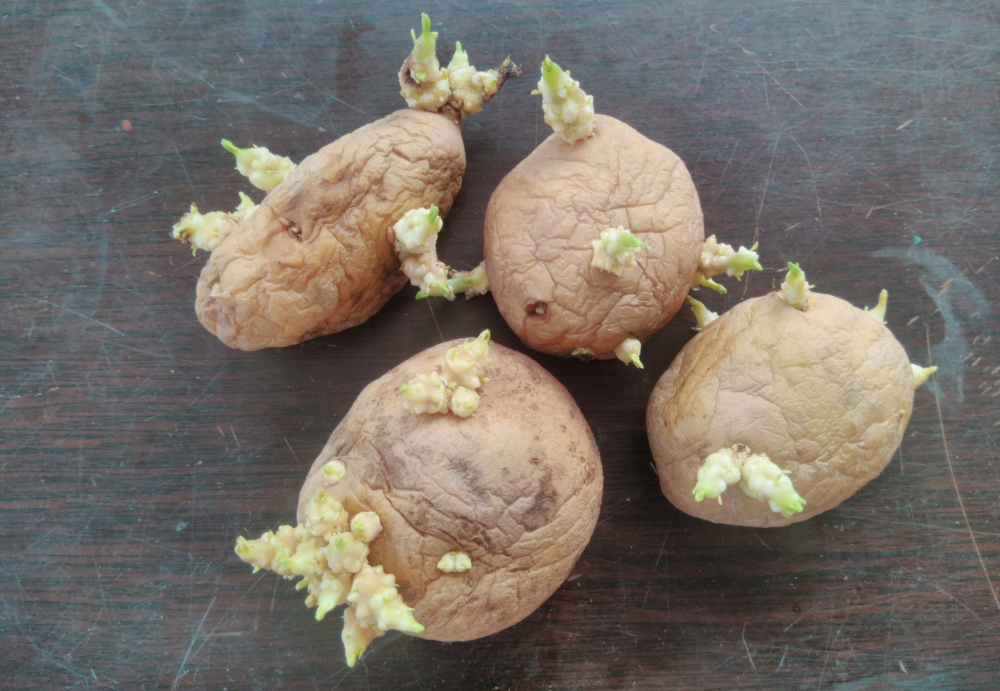
Ethylene gas: A powerful plant hormone
Why some fruits and vegetables don't play well

 English
 Arabic
 French
 Portuguese
 Deutsch
 Turkish
 Dutch
Dutch
 Italiano
 Russian
 Romaian
 Portuguese (Brazil)
 Greek
Greek