


Experimental Alzheimer’s Drug Could Have The Power To Halt Disease Before Symptoms Even Start
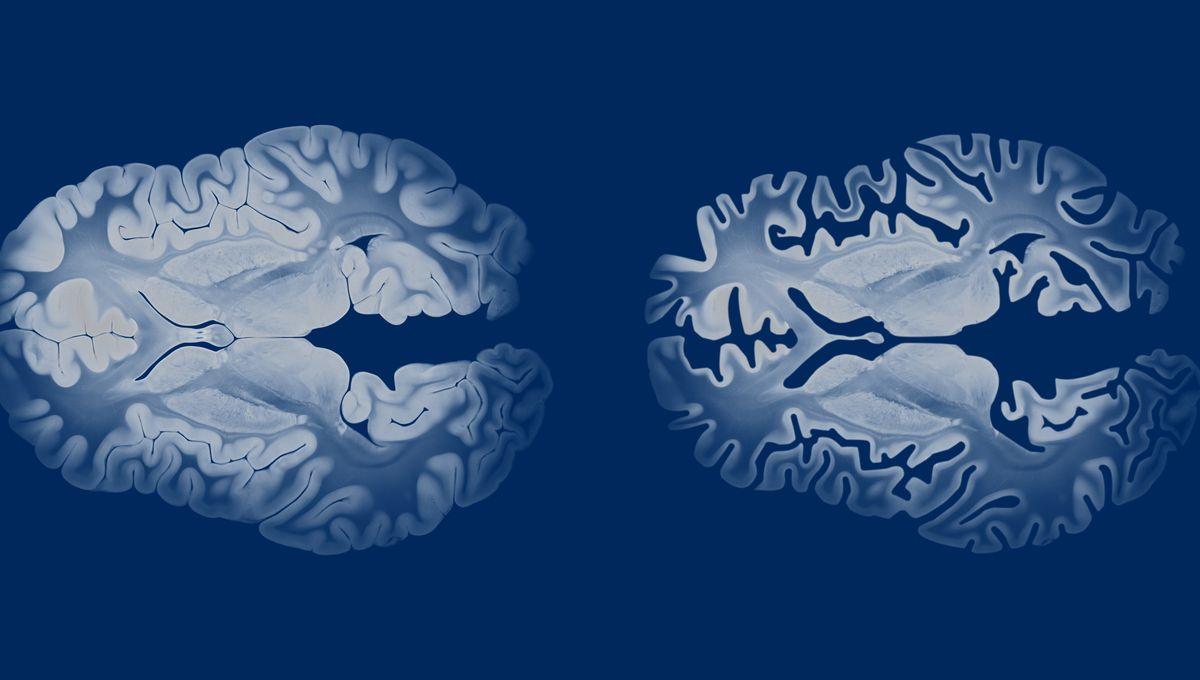
Experimental Alzheimer’s Drug Could Have The Power To Halt Disease Before Symptoms Even Start
A breakthrough new Alzheimer’s disease treatment is stopping neurodegeneration in its tracks, even before symptoms appear. The experimental drug, called NU-9, has been showing these radical results in a mouse model, but if all goes well then human trials may not be too far away.
The rest of this article is behind a paywall. Please sign in or subscribe to access the full content. Only a handful of Alzheimer’s drugs have ever been successfully trialed and approved for use. Medications like donanemab and lecanemab are designed to target one of the pathological proteins thought to play a key role in the disease, amyloid-β. But the very theoretical basis of this has been called into question, and the benefits of these drugs have been hotly debated. There have always been complementary and competing theories about the underlying pathology of Alzheimer’s disease – very few people would say amyloid-β is the be all and end all – and research has been going in new and interesting directions. All this is happening against the backdrop of forecasts suggesting 1 million US adults per year will develop dementia (including Alzheimer’s and other forms) by 2050. NU-9 is not like the drugs currently on the market, although it does still target amyloid- β. It’s been a long time in development, and is also in clinical trials for another devastating neurodegenerative disease: amyotrophic lateral sclerosis (ALS), also known as Lou Gehrig’s disease. “In both ALS and Alzheimer’s disease, cells suffer from toxic protein buildup,” explained professor of neurobiology William Klein in a statement. “Cells have a mechanism to get rid of these proteins, but it gets damaged in degenerative diseases like ALS and Alzheimer’s. NU-9 is rescuing the pathway that saves the cell.” According to the first author Daniel Kranz, the key to the success of NU-9 in trials so far has been time. “By the time symptoms emerge, the underlying pathology is already advanced. This is likely a major reason many clinical trials have failed. They start far too late. In our study, we administered NU-9 before symptom onset, modeling this early, pre-symptomatic window.” In their latest study, the team learned more about how NU-9 works. They identified, for the first time, a highly toxic subtype of amyloid- β that appears to drive cellular dysfunction and inflammation very early in the disease process. “We identified a distinct amyloid beta oligomer subtype that appears inside neurons and on nearby reactive astrocytes very early in the disease. It potentially acts as an instigator of early Alzheimer’s pathology,” said Kranz. NU-9 neutralizes this by substantially decreasing levels of these toxic protein clusters, called ACU193+ oligomers. The mice in the study, which had been genetically modified to act as a model for Alzheimer’s disease, received an oral dose of the drug daily for 60 days. As well as identifying these new ACU193+ oligomers, the team observed how NU-9 was able to combat an early inflammatory reaction mediated by star-shaped immune cells called astrocytes. “These results are stunning,” said Klein. “NU-9 had an outstanding effect on reactive astrogliosis, which is the essence of neuroinflammation and linked to the early stage of the disease.” Levels of another abnormal protein linked to cognitive decline, called TDP-43 – which plays a role in ALS too – were also reduced by the treatment. All in all, the team believes that NU-9 has the potential to stop Alzheimer’s disease in its tracks, if used early enough. That does pose a problem right now, because a typical diagnosis of human Alzheimer’s disease comes much later, once symptoms like forgetfulness are already apparent and after a lot of the damage to the brain has already been done. But it’s a problem science is already trying to get a handle on. “There are a couple early diagnostic blood tests for Alzheimer’s disease in development,” said Klein. “The promise of better early diagnostics – combined with a drug that could stop the disease in its tracks – is the goal.” Next up for the team are further tests in animal models that more closely mimic the later stages of human Alzheimer’s, as well as longer-term animal studies. If there’s one prediction for 2026 that’s sure to come true, it’s that we will be hearing much more about this and other work in the quest to find new and better treatments for this disease. The study is published in the journal Alzheimer’s & Dementia.

 English
 Arabic
 Spanish
 Portuguese
 Deutsch
 Turkish
 Dutch
Dutch
 Italiano
 Russian
 Romaian
 Portuguese (Brazil)
 Greek
Greek