


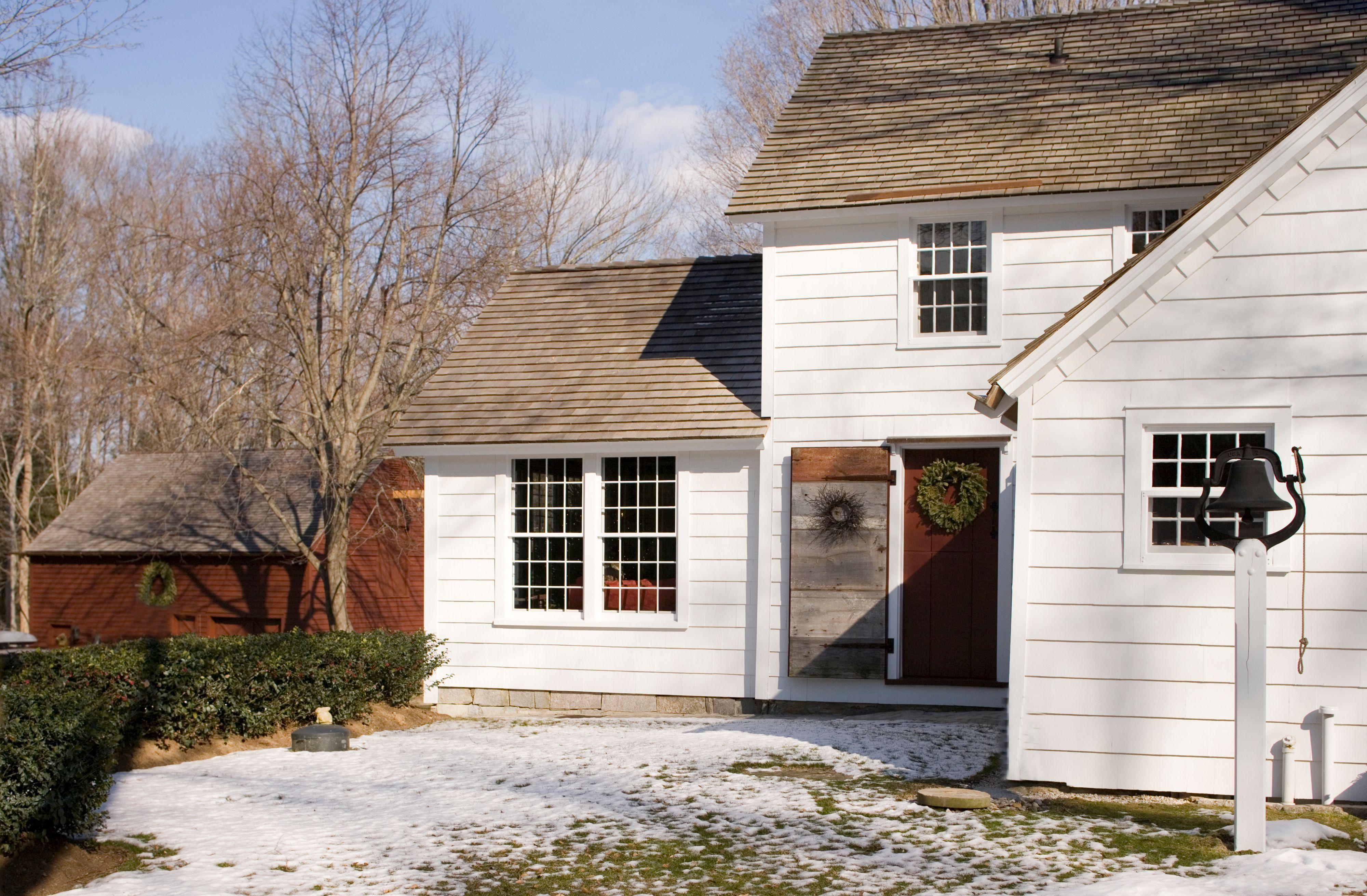
Winter is finally here, but is your home prepared for the cold? Fortunately, winterizing your home doesn’t have to be expensive—there are some simple, budget-friendly ways that you can conserve energy and save money on the must-do winter maintenance tasks.
We spoke to Angie Hicks, co-founder of Angi (formerly Angie’s List), to figure out all of the best ways to prepare your home for winter, without racking up a large bill. From door draft stoppers to the temperature you choose for your home, here are her best tips to help you save money while keeping your home safe this winter.
1. Check Doors and Windows for Drafts
Thoroughly check all the doors and windows in your home to ensure they’re fully sealed. You may also want to consider using inexpensive accessories to help protect these areas from the cold. “You can also add weatherstripping or a door sweep for added protection against the elements,” Hicks says. Solutions like these can be found for under $10, and they’re easy to install yourself.
“For a more temporary (and rental-friendly!) solution, consider adding draft guards under your external-facing doors,” Hicks says. These are a good addition to your home, even if you already have your doors and windows thoroughly sealed, because they add an extra layer of protection from any drafts or gaps that may arise during the winter season.
2. Change Your Furnace Filter
Hicks also recommends changing out your furnace filter regularly. If you’re able to have your furnace checked by a professional, that’s a good idea—regular tune-ups can help prevent a maintenance disaster later on. But changing your furnace filter consistently makes your HVAC more efficient, which can help your system last longer.
3. Reduce Your Thermostat While You’re Away
To help you save money on your electric bill, you should reduce your home’s temperature when you leave. Lowering the temperature of your home keeps costs down without making it too difficult (or costly) to return to a comfortable temperature once you get back. According to the Angi platform’s data, you could save up to 10% on your heating bill by lowering your home’s temperature when you leave.
“I recommend setting [your thermostat] somewhere between 55 and 68 degrees Fahrenheit, depending on how long you’re away from home and whether or not you have pets,” Hicks says. Don’t forget about your plants, either—some houseplants can’t tolerate cold temperatures. To combat these issues, you can try heating a select few rooms in your house for your plants to stay in while you’re away. Otherwise, setting your home around 68 degrees is best.
Related
4. Insulate Pipes
“Protecting your pipes is critical,” Hicks says. “Even if you aren’t worried about damage to the home as a renter, if a pipe bursts, it could damage your belongings. I recommend insulating the pipes ahead of the first freeze.” Burst pipes are no fun to deal with—protect your home and furniture by taking precautions before winter begins.
Hicks recommends keeping your cabinets open during cold periods, so that warm air can flow into the cabinet and around the pipes, helping to prevent them from freezing over. In the case of an extreme cold snap, you might notice that water is no longer flowing properly out of your faucet. This is a strong indicator that your pipes are freezing over When this happens, you should always keep your faucet turned on so a bit of water can continue running out. Keep your water on until water flows out of your pipes freely again.

 English
 Arabic
 French
 Spanish
 Portuguese
 Turkish
 Dutch
Dutch
 Italiano
 Russian
 Romaian
 Portuguese (Brazil)
 Greek
Greek