


We Might Finally Know Why Humans Gave Up Making Our Own Vitamin C
Why Can Many Animals Can Make Their Own Vitamin C, But You Can't?
Mice that can’t make vitamin C are protected against the parasitic disease schistosomiasis, and possibly similar parasites. The finding might finally explain why deep in our evolutionary journey humans lost the ability to make one of the most important molecules for our body, forcing us to depend on our food supplies, sometimes to our cost.
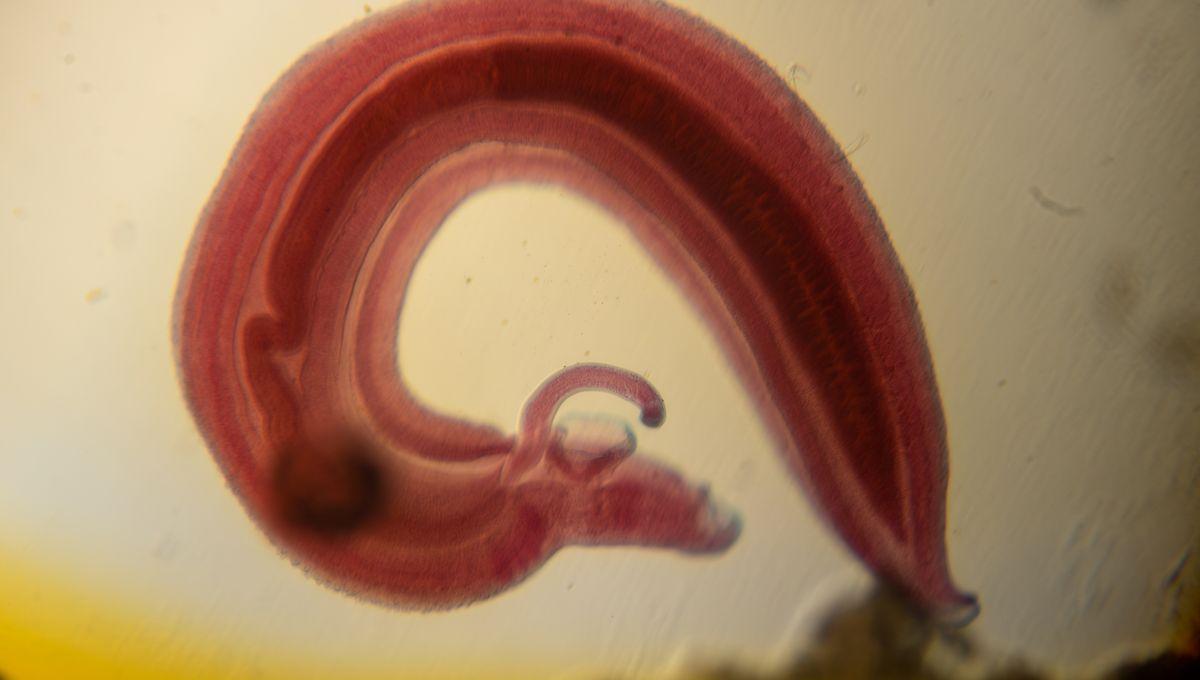
The rest of this article is behind a paywall. Please sign in or subscribe to access the full content. In the 1960s and 70s, Linus Pauling used the credibility he had won as a rare holder of two Nobel Prizes to promote the idea that humans should consume quantities of vitamin C far above recommended doses. To support his claims, he would hold up a test tube containing the amount of ascorbate (the molecule we call vitamin C) made by a goat each day, and compare it with the dose recommended by health authorities. Pauling would suggest the goat knew something the CDC didn’t. Most scientists disagreed with Pauling, and subsequent evidence has shown his claims were exaggerated at best, but the stunt did raise a question – why can goats make ascorbic acid and we can’t? Indeed, most animals can produce the molecule for themselves, leaving humans among the minority that need to access it through our diet. A new study provides evidence we dropped the capacity in order to make ourselves less vulnerable to parasites. Most animals use the enzyme L-gulonolactone oxidase (GULO) to make ascorbate, but some rely on getting it in their diet, particularly from fruits and vegetables. Primates other than lemurs can’t make their own ascorbate, and the same is true of fruit bats, some rodents, fishes, and birds. The loss has evolved several times, and there must be a reason. Gongwen Chen of Fudan University noted that Schistosoma mansoni worms, responsible for schistosomiasis, need vitamin C for their eggs to develop. Chen and colleagues proposed that animals that don’t make their own vitamin C have less of it, making it hard for the worms to reproduce. Perhaps before anti-parasitic drugs, it was worth it to occasionally get close to scurvy if it interrupted the parasite breeding cycle. To test the idea, Chen and co-authors compared the response to infection with S. mansoni of ordinary mice, which have the GULO enzyme, and a breed modified to not produce it. Within a week the worms had very different levels of ascorbate, proving S. mansoni obtain ascorbate from their hosts, but their growth was similar. In other words, S. mansoni don’t need the host’s ascorbate to live. Breeding is a different matter, however. The parasites were unable to reproduce in GULO-deficient mice, unless those mice were fed on a diet with plenty of vitamin C. It might seem like this is a no-win situation for the mice, and any other animals potentially infected by schistosomiasis: scurvy or the worms. Each can kill you, but scurvy will do it more reliably, so maybe make your own vitamin C and try to fight off the worms another way? That’s the approach most animals have gone with, but the authors noted there is another option. When they varied the non-GULO mice’s vitamin C intake on a four week cycle they found the mice were relatively unaffected by either condition. Vitamin C levels were low enough at the time the worms were trying to lay eggs that they couldn’t produce a new generation, but the mice never showed even early signs of scurvy, let alone dying from it. Only one out of the 19 mice tried on this cycle died during the study period, while most that produced their own ascorbate were killed by the parasite. For an animal with the same diet year-round, it’s hard to see how temporary vitamin C depletion would work, but seasonal diets could be a game-changer. Feast on vitamin C-rich foods like fruit when they’re available, and then suffer a deficiency mild enough to prevent egg production at other times. Clearly this is a risky strategy – if one’s main vitamin C source is late one year, or doesn’t produce at all, scurvy could strike you down. If vitamin C-rich foods are too abundant, levels never drop low enough that the parasite dies without reproducing. Nevertheless, there are benefits to the approach even if a host can’t get rid of the parasite entirely. The authors found that vitamin C interruption can reduce egg production even if it does not stop the breeding cycle entirely. Since eggs lodging in organs is one of the prime ways the parasite harms the host, the fewer eggs, the better. Low egg production also reduces the chance of transmitting the parasite through feces, a highly desirable feature in a social animal. Humans have often paid the price for our ancestors’ abandonment of GULO. During the age of exploration, scurvy was a leading killer of sailors on long voyages. History books pay less attention to the fact the disease killed vastly more captives forced to cross the Atlantic as slaves – sailors subsequently benefited from experiments performed on slaves to treat the condition. Even today, milder forms of scurvy crop up frequently where fresh food is hard to obtain. Besides scurvy, low vitamin C is associated with reduced production of red blood cells, poor bone development, and many other effects. Nevertheless, schistosomiasis is also a major killer, and was much more so until recently. Presumably, it would have been even more of a threat if we still made our own ascorbate. Today, drugs against schistosomiasis are a better approach than irregular vitamin C restriction, but perhaps advocates of seasonal eating have a point after all. The study is published in Proceedings of the National Academy of Sciences.

 English
 Arabic
 French
 Spanish
 Portuguese
 Deutsch
 Turkish
 Dutch
Dutch
 Russian
 Romaian
 Portuguese (Brazil)
 Greek
Greek