


Finding Diamonds Just Got A Whole Lot Easier Thanks To Science
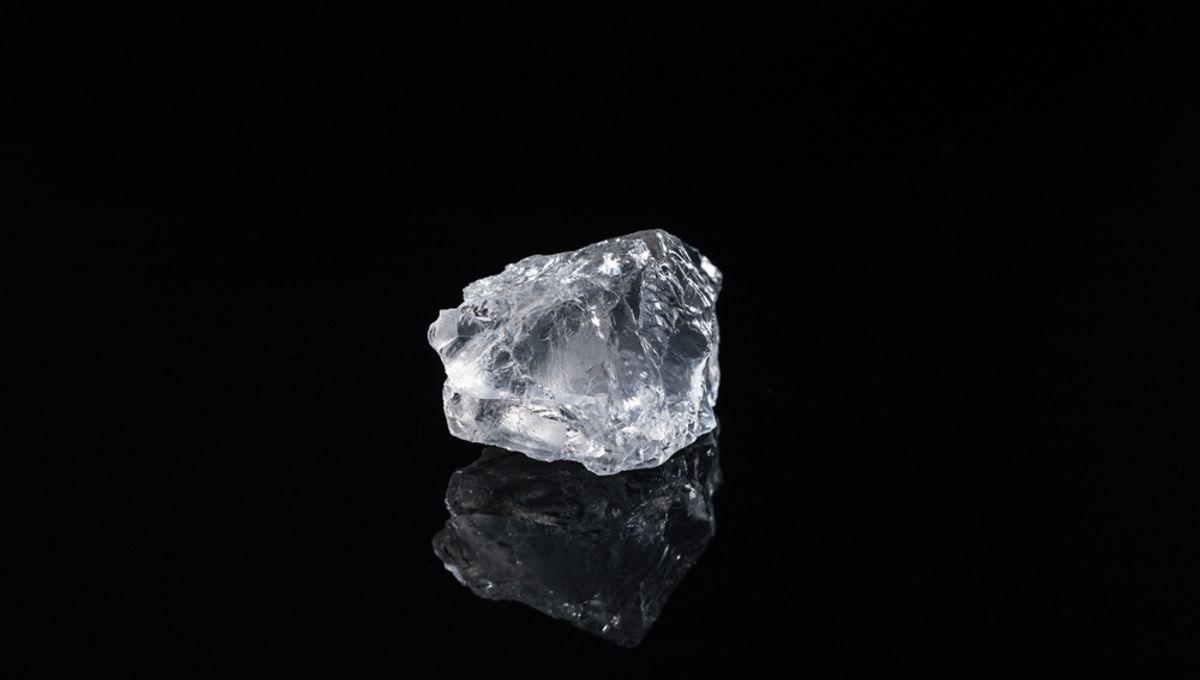
Finding Diamonds Just Got A Whole Lot Easier Thanks To Science
Finding diamonds is notoriously difficult, but a recent discovery may have made the search slightly easier. Researchers have found that a far less prized gemstone can hold clues about whether diamonds are likely to be nearby, potentially speeding up the hunt for them.
The rest of this article is behind a paywall. Please sign in or subscribe to access the full content. “Diamond producers sometimes wish they were mining gold, copper or some other raw material, because nothing is as complicated as finding and mining diamonds,” says Andrea Giuliani, Senior Scientist at ETH Zurich’s Institute of Geochemistry and Petrology, in a statement. “There’s no method that guarantees that you will find diamonds.” Rotten luck that humans have decided we want so many of them, then, but the pursuit of diamonds has turned up all kinds of interesting science. We’ve already worked out that diamonds are only ever found where a mineral called kimberlite is found, but that isn't even half the struggle. “Just looking for a kimberlite is like looking for a needle in a haystack,” Giuliani explained. “Once you’ve found it, then the arduous search for diamonds really gets underway.” Now, it seems another mineral may have sped up the process as it’s been discovered that there’s a connection between olivine and diamonds. Olivine makes up around half of kimberlite rock, and it contains varying concentrations of magnesium and iron. It’s the composition of olivine that is crucial here, because it seems that olivine that’s packing more magnesium than iron is a good sign for diamond miners. For olivine to be high in iron, melt has to penetrate the mantle, altering the composition of the rocks and wiping out diamonds in the process. Olivine that’s low in iron and higher in magnesium hasn’t undergone this geological process (known as metasomatism), and so the diamonds survive. So, high iron? You’re probably out of luck, bud. But high magnesium? You’re in diamond country, baby. De Beers provided the study with financial support and kimberlite samples, so they got early access to the results and are already using olivine analysis. “Our study shows that diamonds remain intact only when kimberlites entrain mantle fragments on their way up that haven’t extensively interacted with previous melt,” Giuliani concluded. “The great thing about this new method is not only that it’s simpler, but also that it finally allows us understand why the previous methods worked.” The study was published in Nature Communications. An earlier version of this article was published in 2024.

 English
 Arabic
 French
 Spanish
 Portuguese
 Deutsch
 Turkish
 Dutch
Dutch
 Italiano
 Russian
 Romaian
 Portuguese (Brazil)