


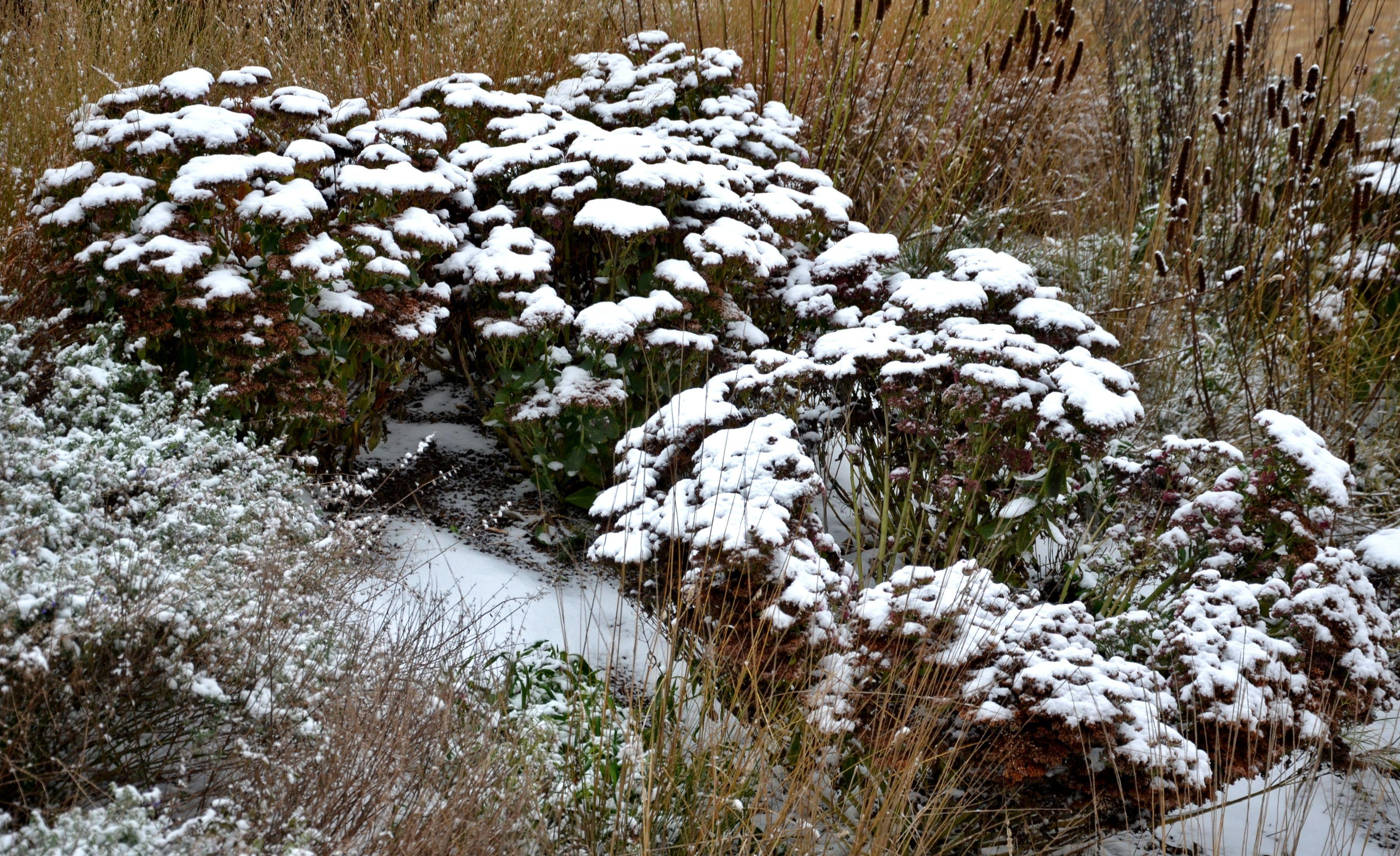
Many perennials fizzle out in late autumn, shedding leaves, dropping stems, and receding underground for a long winter's nap. Thankfully, there’s a whole host of these come-again plants that dazzle with color, texture, and form even through the coldest days of winter.
From leathery leaves to porcupine-like seedheads to foliage that sways gracefully, perennials offer all kinds of engaging winter interest. Not only will you delight in these treasures, but so will local wildlife. Add a few of these winter wonders to your landscape and watch it come alive in winter.
Bob Stefko
1. Coral Bells
Low-growing with ruffled foliage in shades of green, burgundy, purple, and yellow-orange, coral bells (Heuchera spp.) are semi-evergreen in most areas. The plant’s evergreen nature is largely dependent on the severity of the winter temperatures; most years it presents a technicolor show. Plant coral bells near a walkway where you can enjoy both the color and texture up close for months during winter.
How to grow: Plant coral bells in full sun or part shade and rich, loose, well-drained soil. In regions with hot summers, a planting spot in partial shade is best. Water coral bells during extended dry conditions, as they don’t tolerate drought well.
Recommended varieties: The hybrids ‘Cherry Truffles’ with cranberry red leaves, and 'Peachberry Ice’ with vibrant orange-red foliage
Zones: 3-9
Dean Schoeppner
2. Pigsqueak
With the onset of cold temperatures, the green foliage of pigsqueak (Bergenia cordifolia) turns brilliant shades of maroon. The name of this perennial points to its slippery, succulent foliage that makes a squeaking sound when two leaves are rubbed together. In moderately cold conditions, count on the large leaves to persist long into winter. Extreme cold, snow, and ice will cause the plant to degrade, but in Zone 6 and above, it remains evergreen.
How to grow: Plant this easy-to-grow perennial in full shade or part shade and well-drained soil. It grows best in moist, rich soil but will tolerate a wide range of conditions. Remove spent foliage in early spring.
Recommended varieties: ‘Fairytale Romance’ with large pink flower clusters in early spring; 'Happily Ever After’ with large, dark green leaves and white flowers
Zones: 3-8
3. Sedges
A grass-like perennial that grows in clumps, many sedges (Carex spp.) are evergreen. Plant several sedges together and repeat the grouping throughout the garden to create rhythm in every season. In winter, the wind tussled clumps often resemble a wild hairdo, which is a welcome dose of garden whimsy.
How to grow: Sedges are adapted to a wide range of growing conditions. Some species thrive in sun while others tolerate shade. Some sedges prefer wet soil, and others grow best in dry, sandy soil. Choose a species that is well-suited for the growing conditions in your landscape.
Recommended varieties: ‘Ice Dance’, a cultivar of C. morrowii, has dark green leaves with bright white edges; it grows well in shade and moist soil. ‘Bowles Golden’ (C. elata 'Aurea') has bright chartreuse leaves and grows best in moist to wet soil.
4. Coneflower
The seedheads of coneflower (Echinacea spp.) are like mini exclamation points in the garden. The spikey cones remain standing on sturdy, tall stems for months after the petals drop. Enjoy them through winter for their architectural qualities. Keep an eye out for visiting songbirds; they’ll enjoy coneflower seedheads for their nutrient qualities.
How to grow: Plant coneflower in full sun and moist, well-drained soil. Water it regularly during the first growing season to encourage a strong root system. Plants rarely need supplemental water once established.
Recommended varieties: The hybrid 'Frankly Scarlet’ has deep pink flowers with large center cones. ‘Cheyenne Spirit’ is a cultivar of E. purpurea that blooms in shades of orange and yellow and is notably long-lived.
Zones: 3–9
5. Sedum
Upright sedums (Hylotelephium spp.), standing 1 to 3 feet tall and blooming in fall, star in dry, high-heat gardens, but these tough plants also play a welcome role in the winter garden. Their stems and fleshy leaves have amazing staying power, regularly standing tall through the throws of winter. The bulky stems and leaves are a welcome contrast alongside sedge and ornamental grasses.
How to grow: Plant sedum in full sun and well-drained soil. Plants do not tolerate wet or boggy conditions. Divide plants every three or four years to make more plants and encourage robust, sturdy growth.
Recommended varieties: ‘Autumn Fire’, a popular cultivar of H. spectabile, has a dense, upright habit, growing 2 to 3 feet tall. ‘Coraljade’ is a hybrid with striking pink-green flowers in fall and a round form; it grows 1 to 2 feet tall.
Zones: 3–9
Carson Downing
6. Hellebore
We can’t talk about winter perennials without mentioning hellebore (Helleborus spp.)! This cold-weather bloomer has nodding bell-shaped flowers in late winter. The flowers are spectacular, but it’s the evergreen foliage that carries that plant through all the winter months. Large, dark green palmlike leaves have a leathery texture that shrugs off snow and ice with ease.
How to grow: Plant hellebores in full shade or part shade and moist, rich soil. Cut back foliage after the flowers fade in spring to promote new growth. Excellent groundcover plant for shade.
Recommended varieties: There are hundreds of named hellebore varieties in a multitude of flower colors. ‘Blushing Bridesmaid’ is a hybrid with soft pink flower petals that are outlined with deep magenta. ‘California Dreaming’ is a hybrid has sunny yellow flowers.
Zones 4–9
Bob Stefko
7. Ornamental Grasses
From frothy seedheads to swaying stems to spikey clumps of foliage, ornamental grasses offer loads of winter interest. Call on large upright grasses, such as the native big bluestem, as well as low-growing grasses, such as ornamental fescues, to create a texture-rich winter landscape.
How to grow: Most ornamental grasses grow best in full sun and well-drained soil. Use hedge trimmers to make quick work of spring clean-up. Simply cut the grass off about 2 inches above ground level.
Recommended varieties: Blue oat grass (Helictotrichon sempervirens) is an upright grass with stiff, silvery blue blades. Switchgrass (Panicum virgatum) is topped with a cloud of airy seedheads that persist through winter.
Zones: 3–9

 English
 Arabic
 Spanish
 Portuguese
 Deutsch
 Turkish
 Dutch
Dutch
 Italiano
 Russian
 Romaian
 Portuguese (Brazil)
 Greek
Greek