


When Hope Feels Thin and the Year Has Felt Long

When Hope Feels Thin and the Year Has Felt Long
There is something about the closing days of the year that exposes the soul.
The lights remain. Carols still play. Nativity scenes glow softly in church foyers and living rooms. And yet, beneath the familiarity of Christmas rituals, many carry a quiet heaviness. Expectations went unmet. Prayers were answered differently than hoped. Relationships frayed. Loss lingered. For some, the year ends not with celebration, but with fatigue.
Advent, after all, is not sentimental. It is honest. It does not deny the darkness; it names it. The world into which Christ was born was not calm or orderly, but fractured, violent, and weary. Rome ruled by force. Poverty was widespread. Families lived under pressure. Hope felt distant. In that sense, the first Christmas feels uncomfortably familiar. As another year closes, the steady stream of troubling headlines can leave even the faithful numb. Faith, in moments like these, is no longer a decorative virtue. It becomes either essential or expendable.
Which raises a question many believers quietly ask at year’s end: What does faith look like when the world feels like it is coming apart?
Hope Begins by Facing What's Broken
When we look at declining educational standards, rising crime, the disintegration of families, record levels of drug overdoses and suicides, expanding homelessness, gun violence in our cities, and deep racial polarization, it is understandable to feel unsettled.
The world feels fragile. At times, even frightening. And yet, history reminds us that generations before us have endured worse—world wars, economic depressions, pandemics, and natural disasters. They survived, not because circumstances were favorable, but because hope refused to surrender. If they endured, so can we. The first step forward is honesty.
They are not merely “the unhoused,” urban campers, or curbside communities. They are our homeless neighbors—friends, sons, and daughters—entangled in addiction, despair, and a web of social and spiritual maladies. We can blame gun violence on guns alone, but that explanation does not go deep enough. Many of our young people are lost in cycles of crime, meaninglessness, and despair. We can blame bad policing for dismal inner-city homicide rates, but the harder question remains: where are the fathers? Our sons need their dads. They need community. They need purpose.
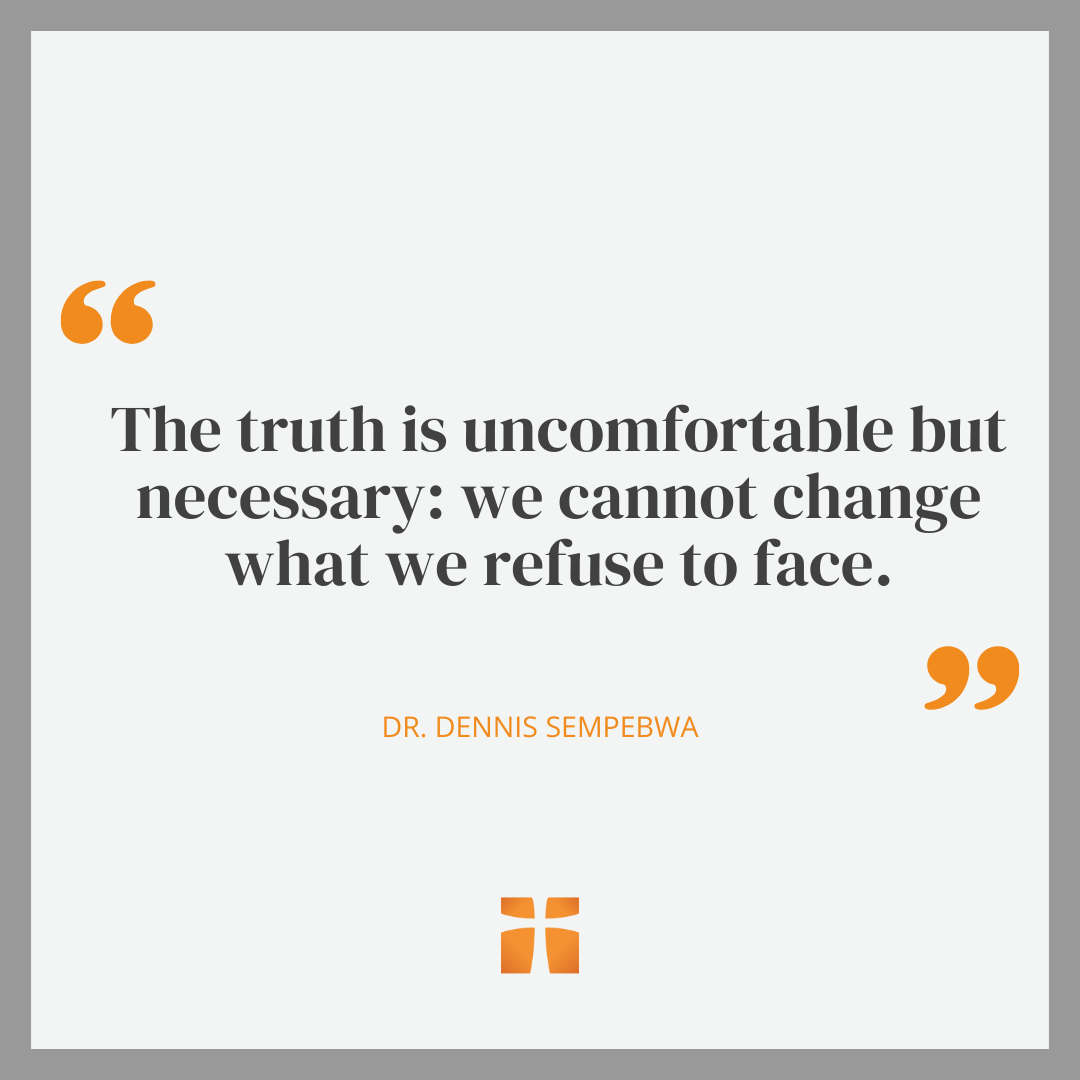
The truth is uncomfortable but necessary: we cannot change what we refuse to face.
How Biblical Hope Shapes Real Change
Facing reality, however, is not the end of the Christian story. It is the place where faith begins. Scripture defines faith with remarkable clarity: “Now faith is the substance of things hoped for, the evidence of things not seen” (Heb. 11:1). Faith is not wishful thinking. It has substance. It gives weight and form to hope before results appear. So what do we hope for?
We hope for restored families.
We hope for safer neighborhoods.
We hope for healed divisions.
We hope for young people who can dream again.
Hope is the womb in which new futures are conceived. Dr. Martin Luther King Jr., standing amid brutal racial segregation, dared to hope for something different. That hope incubated his audacious dream—that one day, the world could be otherwise. History moved not because the moment was easy, but because hope refused to die. But Scripture presses us further.
“Faith without works is dead.” Faith that remains abstract never becomes transformative.
What Is Courageous Faith?
Real faith is not loud. It is embodied.
Real faith says, “I will invite my neighbor for a cup of tea because I refuse to believe they are beyond redemption.”
Real faith says, “Son, I didn’t know how to be a father—but will you allow me to try again?”
Real faith rolls up its sleeves. It chooses responsibility over retreat, engagement over apathy, and courage over cynicism. It rises from the ruins of hopelessness, victimhood, and tribalism and dares to imagine a different future.
Faith does not deny the brokenness of the world. It refuses to let brokenness have the final word.
Finding Stable Faith in the Chaos at Christmas
One of the quiet temptations of this season is to turn faith into an escape—religious language that comforts us without calling us. But Christmas will not allow that. God did not send an idea. He sent a child.
He did not shout solutions from heaven. He entered the chaos of Earth.
Born into poverty. Laid in borrowed space. Raised under political threat, Christ did not come to explain suffering away. He came to dwell within it. Faith, then, is not denial. It is defiance—defiance against despair, resignation, and the lie that nothing can change.
Embracing a Sturdy, Strong Faith
As this year draws to a close, hope may not arrive with fanfare. It often comes quietly—in reconciliation, in responsibility, in the decision to stay present when it would be easier to withdraw.
Christmas does not promise us a painless future. It promises us a meaningful one. May you find, in this holy season, a faith strong enough to face the truth, gentle enough to love well, and courageous enough to act. May the light that entered the darkness at Bethlehem steady your heart as the year ends. And may you step into the coming year not untouched by the world’s pain, but anchored in a hope that is real, resilient, and alive.
Christ has come. The light has entered. And the darkness does not get the final word.
Photo Credit: @Unsplash/Nadine Rupprecht


 English
 Arabic
 French
 Spanish
 Portuguese
 Deutsch
 Turkish
 Italiano
 Russian
 Romaian
 Portuguese (Brazil)
 Greek
Greek